

MSC VIRTUOSA: Southampton (London),United Kingdom - Southampton (London),United Kingdom - 31.10.2026. - 8 days
1 available date
Itinerary
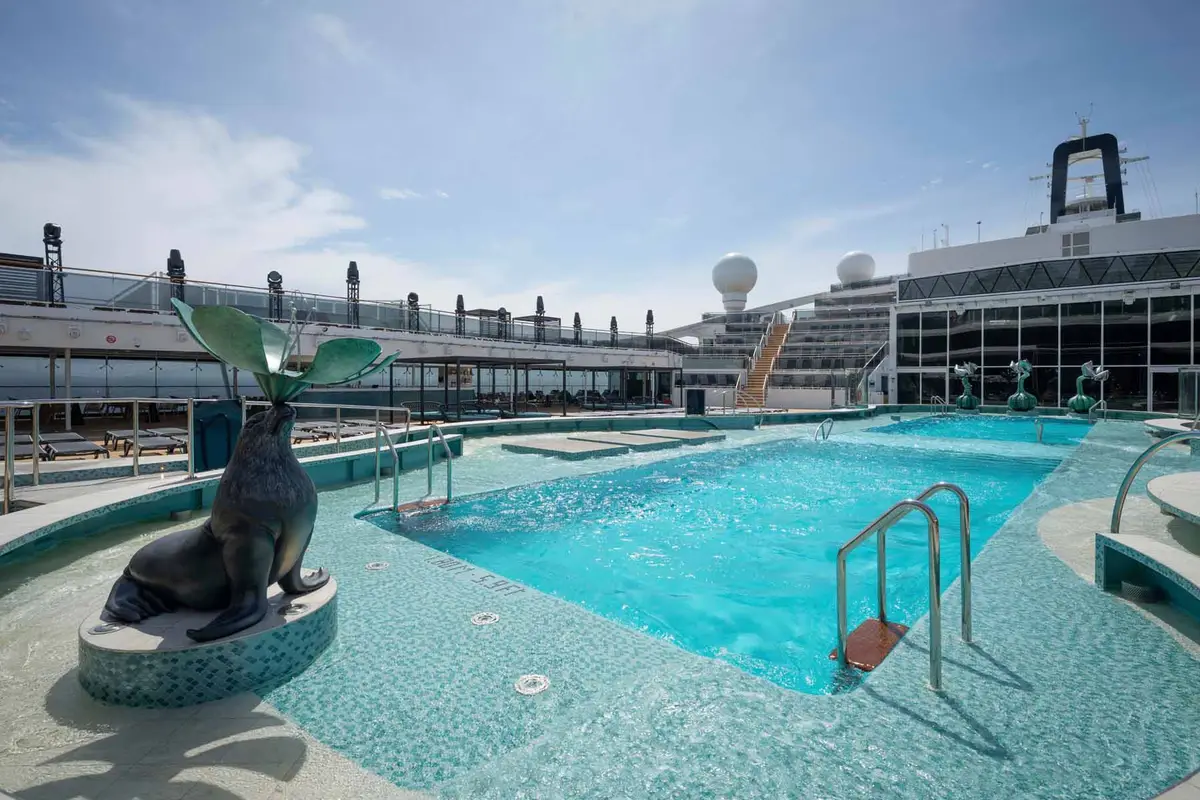
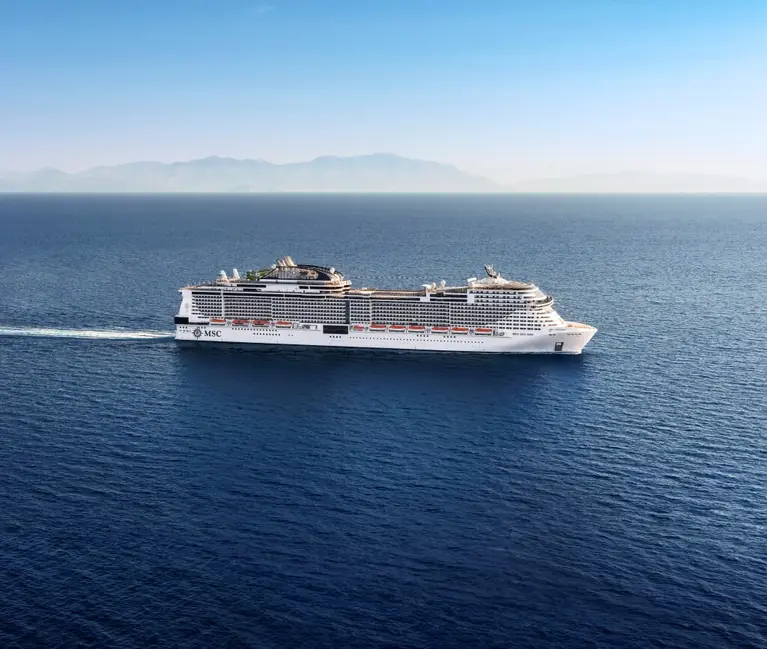
MSC Virtuosa’s namesake comes from the word virtuoso, meaning someone highly skilled in any field of activity, and so MSC Virtuosa was named to pay homage to the skill and expertise of the MSC Cruises architects.
MSC Virtuosa belongs to the “Meraviglia Class”, where the impressive array of onboard experiences come together in perfect harmony with the space and the destinations, to deliver the ultimate cruise holiday experience.
In addition, MSC Virtuosa is featured with an advanced wastewater treatment system, and she is actively contributing to impactful environmental conservation and humanitarian programs at the MSC Foundation Centre on board.
-
 BELLA EXPERIENCE BENEFITS×Bella Experience Benefits: Guaranteed cabin (cabin N° confirmed at least 4 days prior to departure) Cruise changes for a fee (applicable either on the cruise dates or on the destination. Must be performed up to 30 calendar days before departure, for a new cruise to sail within 90 calendar days from the original departure) Full board available in buffet and main restaurant Discounted drink package option at the time the cruise is booked Free continental breakfast in cabin (delivery for a fee) Broadway-style theater shows Pool area Kids club and activities Fitness center free access (from 14 years Booking Terms and Conditions apply) Sport facilities Entertainment activities MSC for Me app (where available) MSC Voyagers Club points.
Southampton (London),United Kingdom
Cruises from Southampton are part of a rich maritime heritage. Some of the most famous ships have set sail from this port, which, before the rise of commercial air travel, was the main gateway to the world. Hollywood stars like Bette Davis and Elizabeth Taylor passed through here to board cruises from Southampton, and it is also known as the port from which the Titanic departed in 1912.
In the picturesque Old Town, walking along cobbled streets reveals 12th-century churches, Tudor-style houses, and one of the best-preserved medieval city walls in the UK, featuring the historic Bargate entrance. The city also offers lively marina-side bars, modern shopping districts, and a cultural quarter where the Mayflower Theatre stages popular West End musicals, while the SeaCity Museum documents Southampton’s rich maritime past.
Some of England’s most famous landmarks are just a short drive away: the Neolithic wonder Stonehenge, the picturesque spa city of Bath, or iconic London attractions like Buckingham Palace, Tate Modern, and Tower Bridge.
Discover 5,000 years of history and much more on a cruise from Southampton.

Brest, France
At sea


Lisbon (Cascais), Portugal
Lisbon, the capital and largest city of Portugal, is situated at the mouth of the Tagus River along the Atlantic coast. This historic and dynamic city is known for its unique blend of traditional charm, modern culture, and impressive architecture, making it one of Europe’s most attractive metropolitan destinations.
The city boasts a rich history dating back to Roman times, with vibrant neighborhoods like Alfama, Bairro Alto, and Belém exuding an authentic Mediterranean spirit. Narrow streets, picturesque squares, vintage trams, and the aromas of traditional cuisine create a special atmosphere that captivates visitors. Lisbon is also famous for its historic landmarks, including the imposing Belém Tower, the Jerónimos Monastery, and São Jorge Castle, which offers magnificent panoramic views of the city and the river.
A special highlight of Lisbon is fado – traditional Portuguese music filled with emotion and melancholy, often performed in small, intimate venues in the old quarters of the city. This unique musical form is deeply connected to the spirit of Lisbon and is a must-experience for anyone seeking authentic Portuguese culture. The gastronomy scene is especially notable, ranging from traditional pastéis de nata to top-tier restaurants blending Portuguese and international flavors.
The promenade along the Tagus River and lively squares such as Praça do Comércio are ideal spots for leisurely walks, coffee breaks, or evening outings. The city also offers numerous green spaces, parks, and viewpoints perfect for relaxation and enjoying the views.
Lisbon is a perfect destination for those wanting to experience a blend of history, culture, art, and modern urban life, with a warm Mediterranean atmosphere and welcoming local people.


Vigo (Santiago de Compostela), Spain
Santiago de Compostela is one of the most famous holy places of Christianity; in Mediaeval times it was just as important as Jerusalem or Rome. According to legend, James the Apostle (Santiago) came to Spain after the death of Jesus to preach the Gospel. Later he returned to Judea where, under the orders of Herod, he was decapitated.
His disciples took his body back to Spain to be buried. At first the faithful came to his tomb to pray but, after years of war and disorder, it lay abandoned and forgotten. At the beginning of the 9th century a hermit noticed a star shining above a hill in a field ("campus stellae" or "field of the star"). An altar and a tomb were discovered on the site, containing a decapitated body. King Alfonso II of Asturias ordered a church to be built on the tomb of the saint, which was later replaced by a larger one in 900 AD. Al-Mansur sacked the city in 997 and destroyed the church, but the tomb was left intact.
The present cathedral was largely rebuilt in the 11th and 12th centuries. The cult of Saint James grew more and more with stories of his presumed brave intervention in the battles against the Moors. The Saint was seen to appear for the first time at the battle of Clavijo in 884. Over the years, Saint James killer of the Moors, who went down in history as "Santiago Matamoros", was honoured as the Patron Saint of the country. Pilgrims from all over Europe, ever greater in number, travelled along the so-called "Camino de Santiago" (The Way of Saint James) to the sanctuary, around which grew up a town.
Along the way they found hospitality with monks and knights of religious orders. With their rough cloaks, robust sandals and wide brimmed hats decorated with a mollusc shell - the symbol of the saint - the pilgrims on their way to Santiago were easy to recognise. Many visitors are surprised to find a baroque rather than a mediaeval cathedral at Santiago. The first view of the cathedral in fact is the highly ornate Obradoiro facade, added in the 18th century. Behind this, however, is the old church with its magnificent doorway, the Pórtico de la Gloria (1188), a Roman masterpiece by Maestro Matheo. The narthex is comprised of three portals decorated with figures and sculptures in relief.
In front of the central column, where there is a statue of St. James with a pilgrim's stick, the faithful would lean with their hands on the stone, which, repeated so often over the centuries, has left fingerprints in the stone. The inside of the cathedral, always in semi-darkness, is simple but enlivened by the magnificent ceremonies that take place on festival days, when eight men dressed in red carry an enormous silver thurible ("botafumeiro"), hang it from the vault and let it swing. Whistling and throwing off sparks, the thurible spreads the scent of incense throughout the cathedral evoking ancient rites. The immense Plaza de España, on the west side of the cathedral is lined with beautiful buildings from various eras and in various styles, but which nevertheless blend together harmoniously.
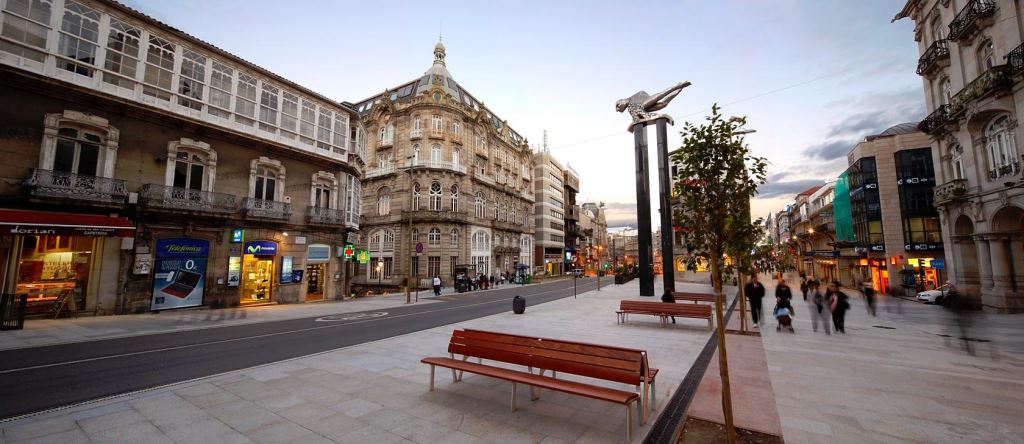
The Hostal de los Reyes Católicos was built by King Fernando and Queen Isabel, "The Catholic Monarchs", as a hostel and hospital for the pilgrims. Its plateresque facade conceals a magnificent hotel. You can treat your palate to some Spanish specialities par excellence: paella and gazpacho vary widely from one place to the next. In fact there are at least thirty recipes for gazpacho, a chilled soup of Moorish origin, whose main ingredients are tomatoes, cucumbers, peppers, oil, vinegar and basil. The saffron rice in paella can be accompanied by chicken, rabbit, sausage, ham, prawns, shellfish, squid and lobster.
The region produces the good white wines Albarino and Ribeiro; Agullo and Condado are slightly sparkling and go especially well with shellfish. As for shopping, we recommend leather goods, candlesticks and other handmade wrought-iron articles and silver jewellery, for which the Galicians are famous. In Santiago look for the pilgrim's symbol, the silver mollusc shell.
At sea
Cherbourg (Mt St Michel), France
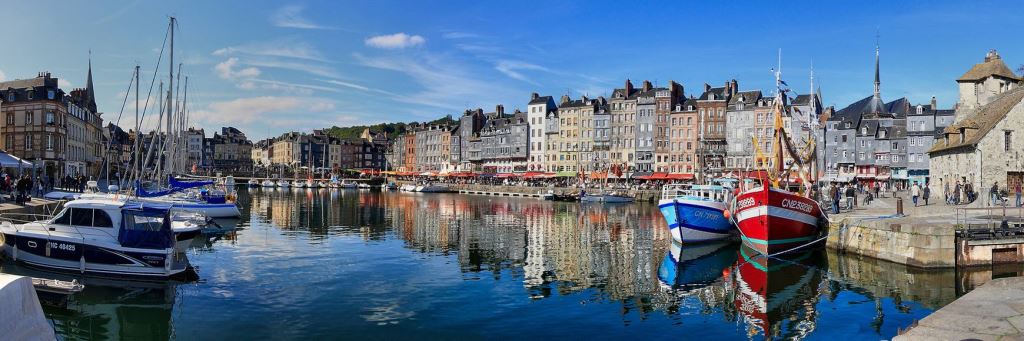
Cherbourg is located on the northeastern coast of the Cotentin Peninsula in the Manche department of Normandy. A city infused with the scent of the sea and a rich maritime tradition, Cherbourg is a blend of nautical importance, cultural diversity, and a relaxed yet vibrant atmosphere.
The port of Cherbourg is impressive—one of the most important French ports, with numerous ferry connections to the United Kingdom and Ireland, making the city a gateway between the English Channel and continental Europe. A stroll along the waterfront reveals various restaurants, cafés, and spots to enjoy fresh seafood while watching ships come and go across the open sea.
In the historic center, you can explore a rich heritage of seafaring, naval history, and defense—the city's forts, museums, and architectural landmarks reflect Cherbourg's significance throughout the centuries. The Emmanuel Liais Museum, although currently closed for renovation, is a fine example of a local natural history museum that reflects the town’s passion for science and the surrounding environment.
Cherbourg is also a great base for exploring Normandy—whether for seaside walks, quiet park spaces, bakeries offering local specialties, or easy ferry access for day trips.
Mont Saint‑Michel is one of the most iconic landmarks in France, located on a rocky islet in the middle of a bay at the border between Normandy and Brittany. During high tide, the island appears to float above the sea, while at low tide, vast sandbanks emerge to create a dramatic landscape.
At its heart stands a Benedictine abbey, built between the 11th and 16th centuries—an architectural blend of Gothic and Romanesque styles, uniquely adapted to the island’s harsh conditions, powerful tides, and strategic defensive needs. Surrounding the abbey is a medieval-style village, with narrow lanes, shops, and restaurants tucked beneath old stone walls. Panoramic viewpoints offer breathtaking views over the bay, especially when the tide surges back in, covering the sand like a silken sheet of water.
At sunset or under night lighting, Mont Saint‑Michel becomes especially magical—a place of grandeur and stillness, where nature, water, and human history intertwine to create a sense of spirit and timelessness that transcends the ordinary.
Southampton (London),United Kingdom
Cruises from Southampton are part of a rich maritime heritage. Some of the most famous ships have set sail from this port, which, before the rise of commercial air travel, was the main gateway to the world. Hollywood stars like Bette Davis and Elizabeth Taylor passed through here to board cruises from Southampton, and it is also known as the port from which the Titanic departed in 1912.
In the picturesque Old Town, walking along cobbled streets reveals 12th-century churches, Tudor-style houses, and one of the best-preserved medieval city walls in the UK, featuring the historic Bargate entrance. The city also offers lively marina-side bars, modern shopping districts, and a cultural quarter where the Mayflower Theatre stages popular West End musicals, while the SeaCity Museum documents Southampton’s rich maritime past.
Some of England’s most famous landmarks are just a short drive away: the Neolithic wonder Stonehenge, the picturesque spa city of Bath, or iconic London attractions like Buckingham Palace, Tate Modern, and Tower Bridge.
Discover 5,000 years of history and much more on a cruise from Southampton.
Available cabins for Sat. 31.10. - Sat. 07.11.2026.




MSC VIRTUOSA
Masterpiece at sea
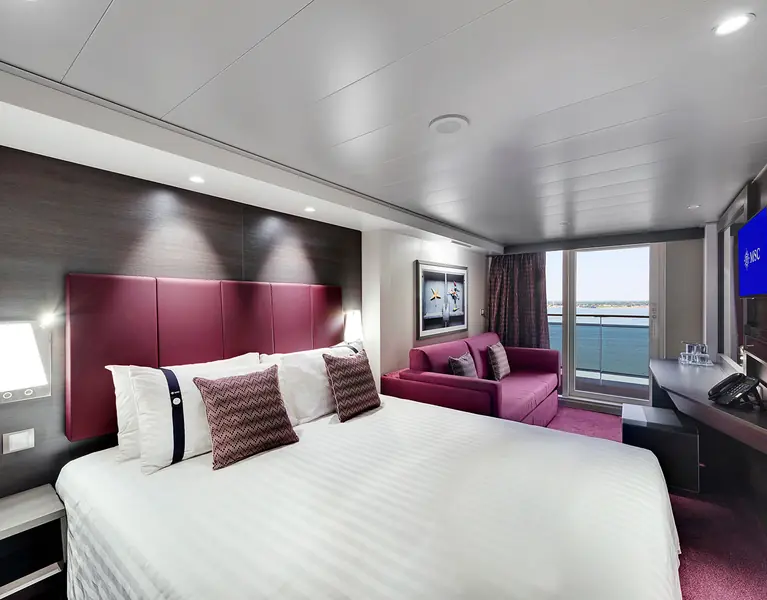
MSC Virtuosa’s namesake comes from the word virtuoso, meaning “someone highly skilled in any field of activity”, and so MSC Virtuosa was named to pay homage to the skills and expertise of the MSC Cruises architects and shipyard partners at Chantiers de l’Atlantique who designed and built this innovative class of ships.
MSC Virtuosa, along with her sister ships MSC Meraviglia, MSC Bellissima, MSC Grandiosa and MSC Euribia, belongs to the “Meraviglia Class”, where the impressive array of onboard experiences come together in perfect harmony with the space and the destinations, to deliver the ultimate cruise holiday experience.