

MSC PREZIOSA: Rotterdam (Amsterdam), Netherlands - Rotterdam (Amsterdam), Netherlands - 20.10.2026. - 9 days
3 available dates
Itinerary
-
 BELLA EXPERIENCE BENEFITS×Bella Experience Benefits: Guaranteed cabin (cabin N° confirmed at least 4 days prior to departure) Cruise changes for a fee (applicable either on the cruise dates or on the destination. Must be performed up to 30 calendar days before departure, for a new cruise to sail within 90 calendar days from the original departure) Full board available in buffet and main restaurant Discounted drink package option at the time the cruise is booked Free continental breakfast in cabin (delivery for a fee) Broadway-style theater shows Pool area Kids club and activities Fitness center free access (from 14 years Booking Terms and Conditions apply) Sport facilities Entertainment activities MSC for Me app (where available) MSC Voyagers Club points.
Rotterdam (Amsterdam), Netherlands
Rotterdam, the largest port in the world, is located at the heart of a network of rivers and artificial canals that together form the outlet of the Rhine (Rijn) and Meuse (Maas) rivers. After being devastated during World War II, Rotterdam has grown into a vibrant and powerful city, rich in world-class cultural attractions.
Among the most notable sights to visit are the Kunsthal, a museum of contemporary art, and the Boijmans van Beuningen Museum, which boasts an exceptional collection that includes works by nearly all of the most important Dutch painters. Both are located in the city's designated cultural district, the Museumpark.
The historic areas of the port, such as Oude Haven and Delfshaven, offer insight into the city’s rich heritage and authentic Dutch charm. Rotterdam also hosts a variety of top-tier festivals that attract visitors from around the globe.
With its modern infrastructure and wide range of cultural and leisure offerings, this is a destination that caters to every type of traveler—whether you're seeking an urban adventure, an artistic experience, or a peaceful escape by the sea.


Cherbourg (Mt St Michel), France
Cherbourg is located on the northeastern coast of the Cotentin Peninsula in the Manche department of Normandy. A city infused with the scent of the sea and a rich maritime tradition, Cherbourg is a blend of nautical importance, cultural diversity, and a relaxed yet vibrant atmosphere.
The port of Cherbourg is impressive—one of the most important French ports, with numerous ferry connections to the United Kingdom and Ireland, making the city a gateway between the English Channel and continental Europe. A stroll along the waterfront reveals various restaurants, cafés, and spots to enjoy fresh seafood while watching ships come and go across the open sea.
In the historic center, you can explore a rich heritage of seafaring, naval history, and defense—the city's forts, museums, and architectural landmarks reflect Cherbourg's significance throughout the centuries. The Emmanuel Liais Museum, although currently closed for renovation, is a fine example of a local natural history museum that reflects the town’s passion for science and the surrounding environment.
Cherbourg is also a great base for exploring Normandy—whether for seaside walks, quiet park spaces, bakeries offering local specialties, or easy ferry access for day trips.
Mont Saint‑Michel is one of the most iconic landmarks in France, located on a rocky islet in the middle of a bay at the border between Normandy and Brittany. During high tide, the island appears to float above the sea, while at low tide, vast sandbanks emerge to create a dramatic landscape.
At its heart stands a Benedictine abbey, built between the 11th and 16th centuries—an architectural blend of Gothic and Romanesque styles, uniquely adapted to the island’s harsh conditions, powerful tides, and strategic defensive needs. Surrounding the abbey is a medieval-style village, with narrow lanes, shops, and restaurants tucked beneath old stone walls. Panoramic viewpoints offer breathtaking views over the bay, especially when the tide surges back in, covering the sand like a silken sheet of water.
At sunset or under night lighting, Mont Saint‑Michel becomes especially magical—a place of grandeur and stillness, where nature, water, and human history intertwine to create a sense of spirit and timelessness that transcends the ordinary.
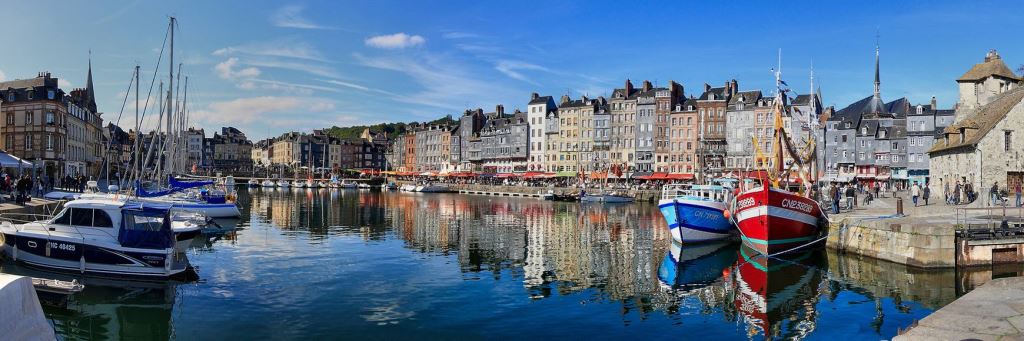
Le Havre (Paris), France
The local gastronomy is rich in fresh seafood and traditional Norman specialties such as cheeses, cider, and calvados.
Easily accessible from Paris, Le Havre is the perfect escape from the bustle of the capital and a chance to discover a unique mix of modern urban architecture and authentic French coastal charm.


Southampton (London),United Kingdom
Cruises from Southampton are part of a rich maritime heritage. Some of the most famous ships have set sail from this port, which, before the rise of commercial air travel, was the main gateway to the world. Hollywood stars like Bette Davis and Elizabeth Taylor passed through here to board cruises from Southampton, and it is also known as the port from which the Titanic departed in 1912.
In the picturesque Old Town, walking along cobbled streets reveals 12th-century churches, Tudor-style houses, and one of the best-preserved medieval city walls in the UK, featuring the historic Bargate entrance. The city also offers lively marina-side bars, modern shopping districts, and a cultural quarter where the Mayflower Theatre stages popular West End musicals, while the SeaCity Museum documents Southampton’s rich maritime past.
Some of England’s most famous landmarks are just a short drive away: the Neolithic wonder Stonehenge, the picturesque spa city of Bath, or iconic London attractions like Buckingham Palace, Tate Modern, and Tower Bridge.
Discover 5,000 years of history and much more on a cruise from Southampton.

At sea


Hamburg, Germany
Founded in 808 by Charlemagne, the fortress of Hammaburg was the original nucleus of Hamburg. The city immediately grew thanks to the institution of the archbishop’s see. Following the invasions of the Vikings, the Danes and the Slavs, Hamburg formed an alliance with the German cities of Bremen and Lubeck forming the Hanseatic League, which was to have a strong commercial influence in the North and Baltic Seas. Occupied by the French from 1806-11 during the Napoleonic wars, Hamburg became part of the German Confederation in 1815. The city was devastated by the bombardments of World War II which claimed 40,000 victims, but the post-war reconstruction saw Hamburg regain its historical and commercial importance as well as primary roles in industry and culture. With a population of over 1.7 million it is Germany’s second city after Berlin. In fact Hamburg is not just a city but also a city-state - Freie und Hansestadt Hamburg (the Free and Hanseatic City of Hamburg) – and is one of the 16 Länder that form the Bundesrepublik, the Federal Republic of Germany. Only the capital Berlin and nearby Bremen have been afforded the same status.
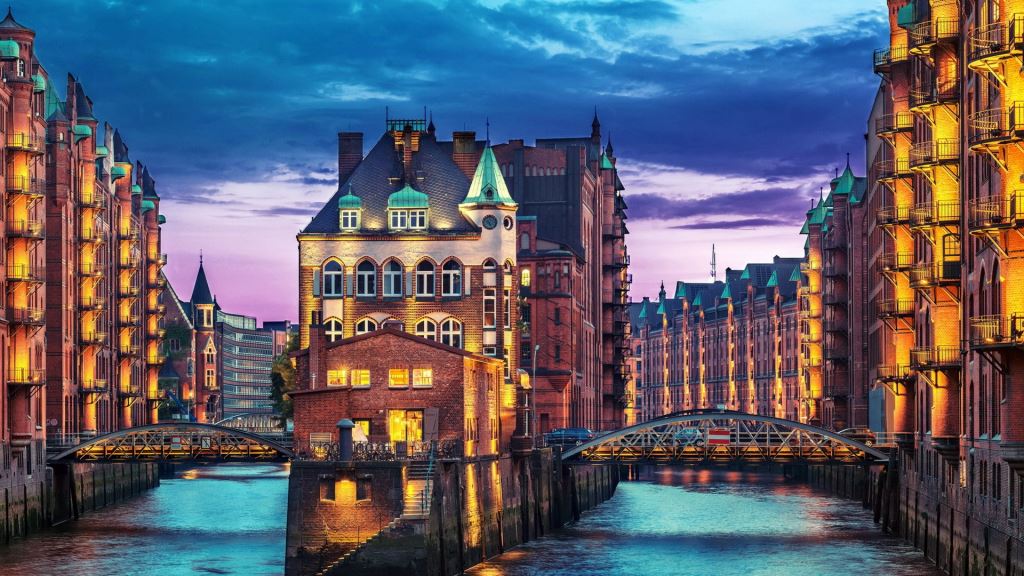
Hamburg stands at the point at which the Alster and Bille flow into the River Elbe, around 110km from the North Sea. It is one of Europe’s busiest and most important ports and is connected to a large proportion of the continent via canals and other waterways. The building of the Kiel Canal in 1895 further increased traffic in the port making water transport between the city and the Baltic region that much easier. The port extends across the entire width of the Elbe, covering an area of around 40km2, and stands principally on the south bank of the river. One of the most characteristic areas of the city is around the Speicherstadt, the free port or warehouse district constructed between 1881 and 1887, where the buildings stand right on the edges of the canals. This district is also home to the majestic Kohlbrandbrücke bridge, the new emblem of Hamburg.
Meanwhile on the north bank of the Elbe, directly opposite the old port, are the modern districts of St. Pauli and Altona, the ideal places for those looking for an evening of entertainment. As well as being the heart of Hamburg’s nightlife, the area is famous for the Reeperbahn red-light district. The banks of the river are connected by bridges and two tunnels: one for pedestrians and cyclists built in 1911 and the other, the Elbtunnel, designed for transport and constructed in 1975. Before flowing into the Elbe the Alster forms two lakes, the Aussenalster and the Binnenalster. From these two basins the water is channelled into the network of waterways that makes Hamburg distinctive.
The Binnenalster, with the famous Alster fountain at its centre, is flanked by the historic town centre, the most elegant area of the city. At the heart of the Alstadt is the town hall (the Rathaus), which, built in 1897, boasts 646 rooms and dominates the square of the same name (Rathausmarkt) and also houses the stock exchange. Not far away you can also visit St. Peter’s Church, construction of which began in the 12th century. Other religious buildings of particular interest are the churches of St. Jacob (13th-15th century), St. Catherine (14th-15th century) and St. Michael, which dates back to the end of the 18th century. Also of note are the best examples of 20th century architecture that characterise a large part of the new city and its cultural buildings: the Musikhalle (1904-1908), the Landungsbrücken (1909), the Chilehaus (1923), the Shell-Haus (1931), and the Amerikahaus (1957). Capital of Germany when it comes to musicals, Hamburg has one of the most lively and enterprising cultural scenes in Europe: the city has 31 theatres, 6 comedy theatres, 10 cabaret theatres and 50 state and private museums.
Most well-known of the museums is the Hamburger Kunsthalle which has been restored many times since its opening in 1869. Here you will find a large collection of paintings by European artists such as Manet, Munch and Rembrandt, as well as works from the German Romantic painters such as Friedrich and Otto Runge. 1997 saw the opening of the Gallery of Contemporary Art Wing, a cube-like structure designed by Mathias Ungers.

At sea
Zeebrugge (Bruges), Belgium
Zeebrugge, a vibrant port on the North Sea coast, offers the perfect balance between industrial energy and tourist appeal. Its greatest advantage is its proximity to one of Europe’s most beautiful cities: the enchanting Bruges, which, thanks to its reputation as a perfectly preserved medieval town, has become the most popular tourist destination in Belgium.
Its museums house some of the most valuable works of Flemish art, while the intimate, winding streets, interwoven with narrow canals and surrounded by stunning old buildings, fully live up to the glowing praise of countless visitors.
Don’t miss a visit to its museums, especially the Groeninge Museum, with an excellent collection of early Flemish art, St. John’s Hospital (St-Janshospitaal), as well as the two most impressive churches – the Church of Our Lady (Onze Lieve Vrouwekerk) and St. Saviour’s Cathedral (St-Salvatorskathedraal).
Lovers of history, culture, and gastronomy will feel right at home here – whether exploring Flemish museums, enjoying local breweries, or admiring Gothic churches and historic squares.
At every turn, Bruges surprises with its subtle and diverse architecture: from narrow archways and curved tiled roofs, to leaning chimneys, discreet shrines, and miniature statues – the city is truly an open-air treasure trove of art and history.

Rotterdam (Amsterdam), Netherlands
Rotterdam, the largest port in the world, is located at the heart of a network of rivers and artificial canals that together form the outlet of the Rhine (Rijn) and Meuse (Maas) rivers. After being devastated during World War II, Rotterdam has grown into a vibrant and powerful city, rich in world-class cultural attractions.
Among the most notable sights to visit are the Kunsthal, a museum of contemporary art, and the Boijmans van Beuningen Museum, which boasts an exceptional collection that includes works by nearly all of the most important Dutch painters. Both are located in the city's designated cultural district, the Museumpark.
The historic areas of the port, such as Oude Haven and Delfshaven, offer insight into the city’s rich heritage and authentic Dutch charm. Rotterdam also hosts a variety of top-tier festivals that attract visitors from around the globe.
With its modern infrastructure and wide range of cultural and leisure offerings, this is a destination that caters to every type of traveler—whether you're seeking an urban adventure, an artistic experience, or a peaceful escape by the sea.
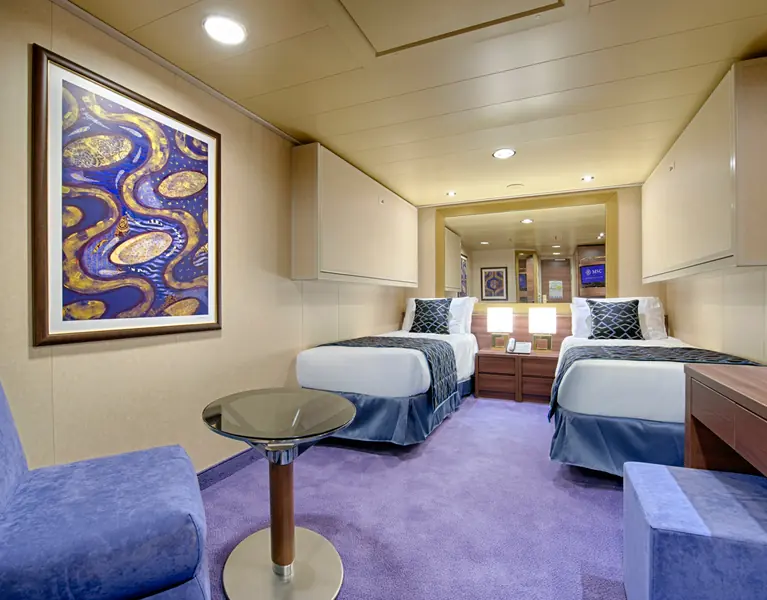
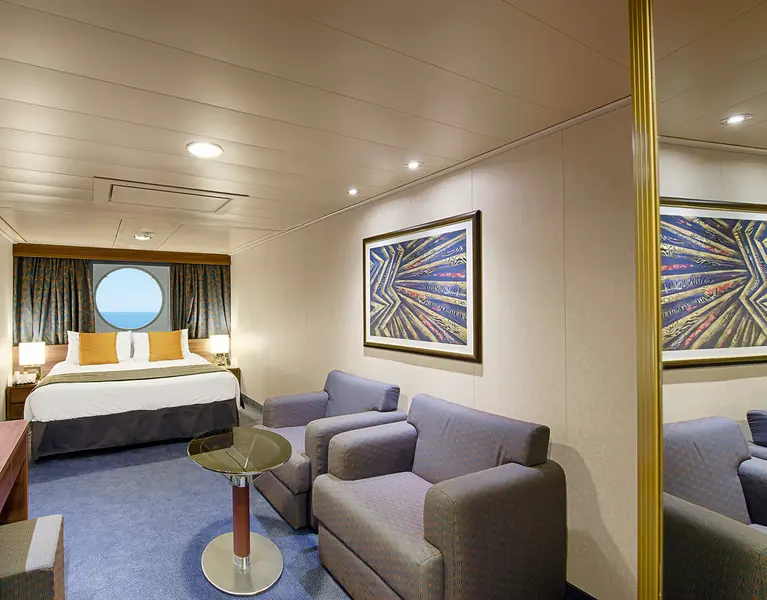
Available cabins for Tue. 20.10. - Wed. 28.10.2026.





MSC PREZIOSA

Spectacular Days
Welcome aboard MSC Preziosa
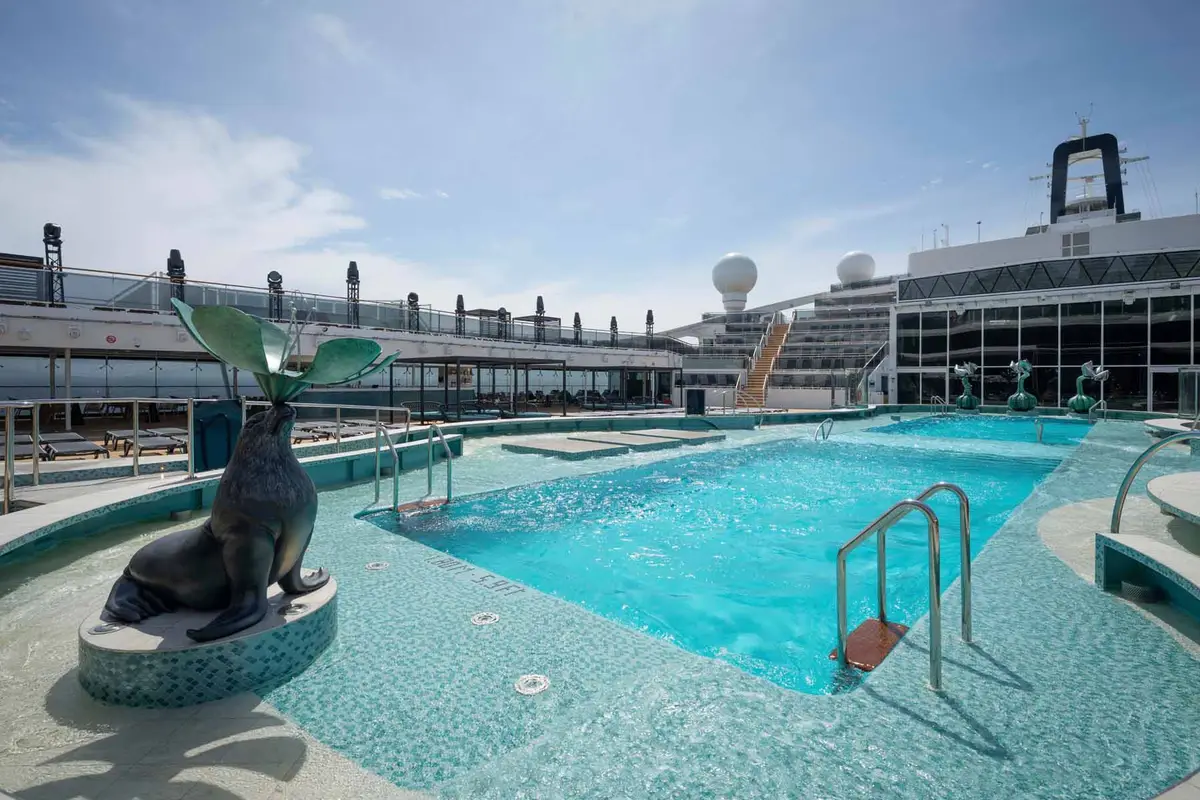
MSC Preziosa is where classic style meets pure luxury! Its breathtaking staircase is adorned with the finest Swarovski crystals, while the spacious stone piazza and the grand pool that seems to blend seamlessly with the sea are just some of the many remarkable features awaiting you on this enchanting ship.