

MSC MAGNIFICA: Warnemunde (Berlin), Germany - Warnemunde (Berlin), Germany - 16.08.2026. - 8 days
1 available date
Itinerary
-
 DEEP TISSUE MASSAGE - 50 MIN×A DEEP RHYTHMIC FULL BODY MASSAGE THAT WORKS THERAPEUTICALLY TO TARGET THE DEEPER MUSCLE LAYERS WHICH ALLEVIATES STRESS, KNOTS AND DEEP MUSCLE TENSION.
 -
 BUTCHER×ONE MEAL IN STEAKHOUSE
 -
 INTERNET BROWSE & STREAM - 2 DEVICES×Book now and save up to 25% vs onboard price!
The "Browse & Stream - 2 devices Cruise Package" keeps you connected with friends and family all cruise long.
With this package you can browse the web, send and receive emails and images, chat on messenger apps (e.g. WhatsApp), video chat, stream music and videos and post and live stream on social media.- Internet access for 2 devices
- Duration: entire cruise
- Data limit: unlimited
-
 INTERNET BROWSE - 2 DEVICES×Book now and save up to 25% vs onboard price!
The "Browse - 2 devices Internet Cruise Package" keeps you connected with friends and family all cruise long.
With this package you can browse the web, send and receive emails and images and chat on messenger apps (e.g. WhatsApp)- Internet access for 2 devices
- Duration: entire cruise
- Data limit: unlimited
- Not recommended for video chat
-
 Swedish Massage - 50 min×Book now and save up to 45% vs onboard price!
A traditional full body massage that promotes relaxation and well being, easing tired and aching muscles.
- Duration: approx. 50 minutes of treatments
This offer is only valid to anyone over the age of 18 years old.Your package is valid for the full cruise length and can only be used during our opening hours depending on availability.To secure your preferred day and time, please visit the MSC Aurea Spa reception on your embarkation day.
-
 FANTASTICA EXPERIENCE BENEFITS×Fantastica Experience Benefits: Choice of cabin category and location (In the event of change cabin due to operational reasons, guests will be granted a cabin category upgrade) One free cruise change (Must be performed up to 30 calendar days before departure, for a cruise within 90 calendar days from the original departure) Discounted drink package option at the time the cruise is booked Dinner sitting preference (subject to availability) Full board available in buffet and main restaurant 24-hour room service (free delivery) Free continental breakfast in cabin (free delivery) Broadway-style theater shows Pool area Kids club and activities Fitness center free access (from 14 years Booking Terms and Conditions apply) Sport facilities Entertainment activities MSC for Me (where available) MSC Voyagers Club points Discounted packages offer.
Warnemunde (Berlin), Germany
The port of Warnemünde is about a dozen kilometres from Rostock, the largest city of the German state of Mecklenburg-Vorpommern (whose capital is Schwerin).
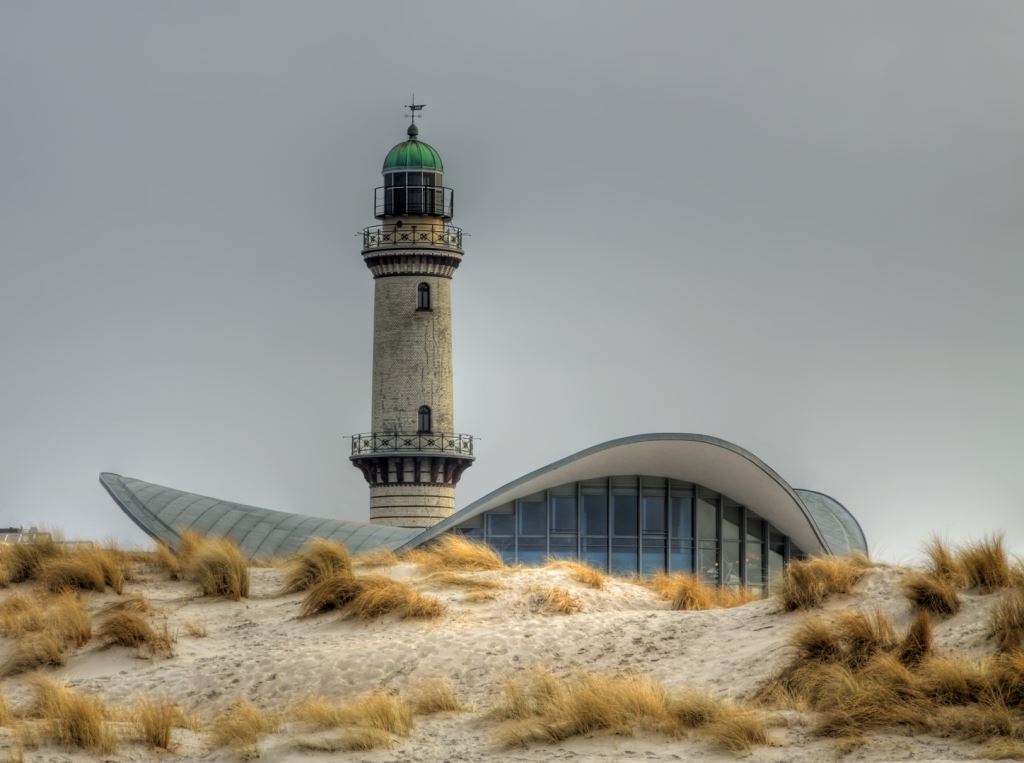
The new passenger terminal was opened in 2005 in the Neuer Strom area. Alter Strom is home to cafés, restaurants and souvenir shops. From an architectural point of view, there is not much to see, with the exception of the 37-metre-tall lighthouse, which stands next to the so-called Teepott (“teapot”), a typical example of 1960s architecture, which was restored and reopened in 2001. The house of the Norwegian painter Edvard Munch, who lived in the city between 1907 and 1908, is picturesque.
A trip to the city of Rostock is certainly interesting for visitors. Rostock was one of the cities of the Hanseatic League, an alliance of cities founded in the twelfth century that maintained a trade monopoly in northern Europe and the Baltic during the Middle Ages and into the early modern period. The main city of the League was initially Lubeck, also in Germany. Although the earliest official documentation in history books dates from 24 June 1218, the first settlements actually originated in the seventh century. Following a period during which the League flourished, the Thirty Years' War (1618–48) signalled its decline and the city of Rostock did not recover until the advent of industrialisation, when the port and shipbuilding yards were established. During the Second World War it was almost completely razed to the ground and until 1989 it was part of the DDR, the former East Germany.
Visitors can enjoy a pleasant stroll around the old town, which has been entirely rebuilt, but preserves its characteristic red-brick buildings. Sights include the city walls, with the Kuhtor (“Cow Gate”), the oldest building.
The main churches are the Gothic-style Marienkirche (Saint Mary’s Church), Nikolaikirche (Saint Nicholas’ Church) and Petrikirche (Saint Peter’s Church). The Gothic-style Rathaus (Town Hall), dating from the thirteenth and fourteenth centuries, is also very handsome. Other noteworthy buildings include the University and the Fünfgiebelhaus (“House of the Five Gables”).
Gdynia (Gdansk-Danzig), Poland
Klaipeda, Lithuania
Riga, Latvia
Stockholm, Sweden
The first human presence in Sweden dates back to 3000BC, when settlers following the retreating ice-floes to the north arrived on the coastline near Stockholm.
The writings of Tacitus, the first clearly to mention the Swedes, described them as 'a population on the northern coasts, devoted to farming, fishing and cattle raising'. The Vikings, who originated in Norway, did not make their presence felt until some 4,000 years later. These legendary sailors then went on to reach the coastline of distant lands including England, Iceland, Greenland and perhaps even North America. They also sailed east towards Russia.
In 1397, Sweden formed a union with Norway and Denmark under Danish Queen Margareth II. There followed a lengthy period of growing Swedish nationalism, culminating in severe bloodshed when an uprising in Stockholm was crushed by Denmark and many of the rebels were beheaded. This dark period in Sweden's history came to be known as the 'November Days'. A few years later, in 1525, Gustav Vasa was crowned king of Sweden.
Stockholm's roots go back to the arrival of Christian missionaries after 1000AD. This was followed by a period of rapid development, including the building of many churches. The city grew steadily until it became the capital of Sweden in the middle of the 17th Century. The next 200 years saw the city become rich in beautiful buildings and consolidate its position as the cultural, political and administrative centre of the country. Of Sweden's nine million inhabitants, one million live in Stockholm.
The city stretches from the Maelaren Lake to the Baltic Sea, built on an archipelago of 14 islands connected by at least 40 bridges. Gamla Stan, the mediaeval city, is particularly charming, with picturesque narrow alleyways and pretty squares. One of the most attractive is Stortorget, the site of the 'Stockholm Blood Bath' in 1520 when more than 80 Swedish nobles were beheaded, their heads piled up in the middle of the square. The 600-room Royal Palace, which was previously home to the court of Queen Christine, but is no longer the residence of Sweden's Royal Family, includes impressive state rooms, a treasury and arms museum. The ceremonial changing of the guards is a particular attraction. Nearby is the cathedral and ancient church of Storkyrkan, where many Swedish kings were crowned. The most visited museum in


At sea


Copenhagen, Denmark
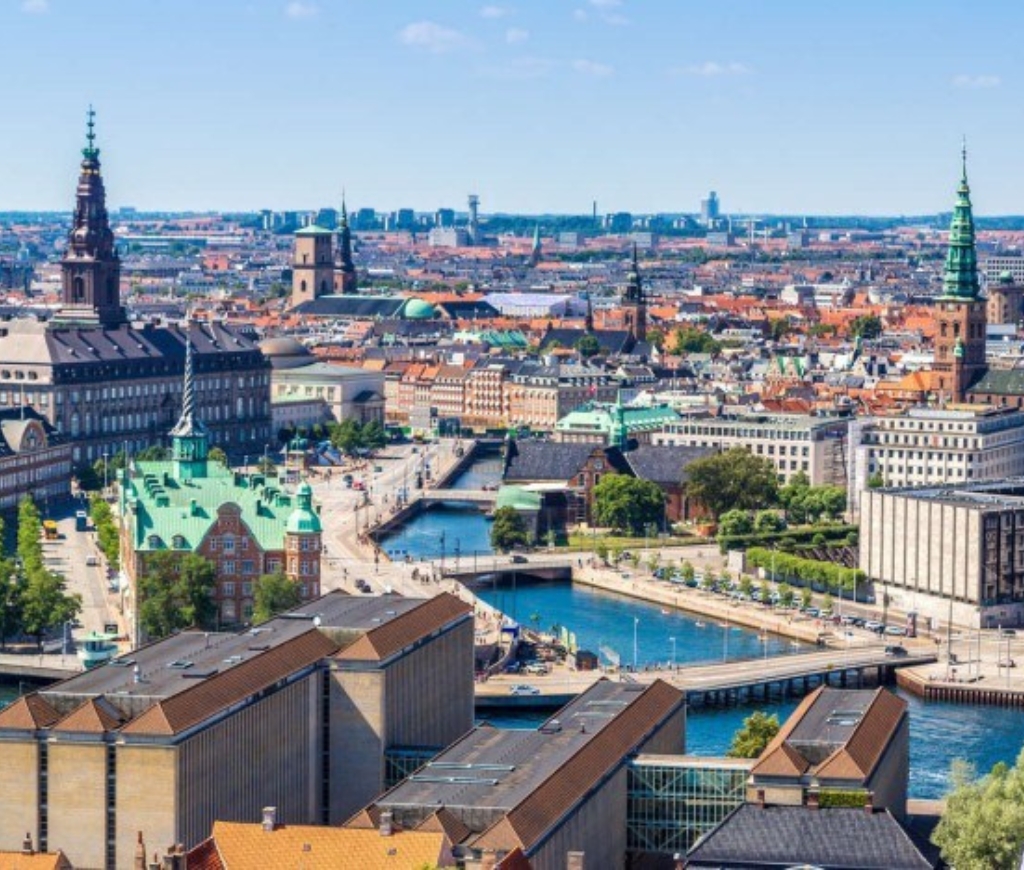
Copenhagen, the capital of Denmark, delights everyone – from history lovers eager to explore magnificent Baroque palaces to gourmands looking to indulge in Michelin-starred restaurants.
In the city center, you’ll find three impressive royal landmarks: Christiansborg Palace (seat of the Danish Parliament), Rosenborg Castle (home to the Danish crown jewels), and Amalienborg Palace (residence of the Danish royal family).
Culture and history enthusiasts can enjoy numerous museums and galleries, while those seeking relaxation will appreciate the city's laid-back pace, extensive cycling paths, and beautiful parks – we recommend a leisurely coffee along the Nyhavn canal or the thrill of historic rides at the Tivoli Gardens amusement park. The city’s symbol, The Little Mermaid statue, pays homage to the fairy tales of Hans Christian Andersen and is a must-see photo spot.
Whether you're looking for an urban adventure, royal grandeur, world-class dining, or simply want to soak up the atmosphere of Scandinavian life – Copenhagen will win you over with its effortless elegance and warm hospitality.

Warnemunde (Berlin), Germany
The port of Warnemünde is about a dozen kilometres from Rostock, the largest city of the German state of Mecklenburg-Vorpommern (whose capital is Schwerin).
The new passenger terminal was opened in 2005 in the Neuer Strom area. Alter Strom is home to cafés, restaurants and souvenir shops. From an architectural point of view, there is not much to see, with the exception of the 37-metre-tall lighthouse, which stands next to the so-called Teepott (“teapot”), a typical example of 1960s architecture, which was restored and reopened in 2001. The house of the Norwegian painter Edvard Munch, who lived in the city between 1907 and 1908, is picturesque.
A trip to the city of Rostock is certainly interesting for visitors. Rostock was one of the cities of the Hanseatic League, an alliance of cities founded in the twelfth century that maintained a trade monopoly in northern Europe and the Baltic during the Middle Ages and into the early modern period. The main city of the League was initially Lubeck, also in Germany. Although the earliest official documentation in history books dates from 24 June 1218, the first settlements actually originated in the seventh century. Following a period during which the League flourished, the Thirty Years' War (1618–48) signalled its decline and the city of Rostock did not recover until the advent of industrialisation, when the port and shipbuilding yards were established. During the Second World War it was almost completely razed to the ground and until 1989 it was part of the DDR, the former East Germany.
Visitors can enjoy a pleasant stroll around the old town, which has been entirely rebuilt, but preserves its characteristic red-brick buildings. Sights include the city walls, with the Kuhtor (“Cow Gate”), the oldest building.
The main churches are the Gothic-style Marienkirche (Saint Mary’s Church), Nikolaikirche (Saint Nicholas’ Church) and Petrikirche (Saint Peter’s Church). The Gothic-style Rathaus (Town Hall), dating from the thirteenth and fourteenth centuries, is also very handsome. Other noteworthy buildings include the University and the Fünfgiebelhaus (“House of the Five Gables”).
Available cabins for Sun. 16.08. - Sun. 23.08.2026.

MSC MAGNIFICA
Balconies to the world
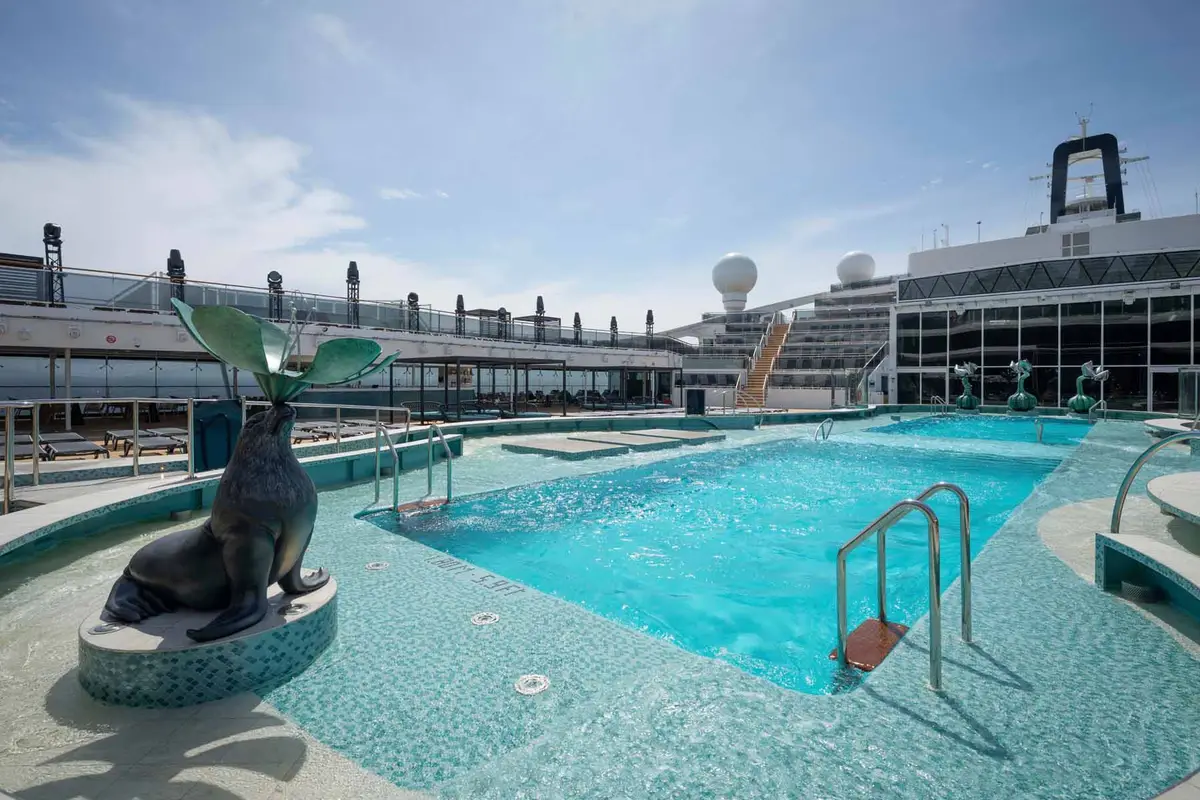
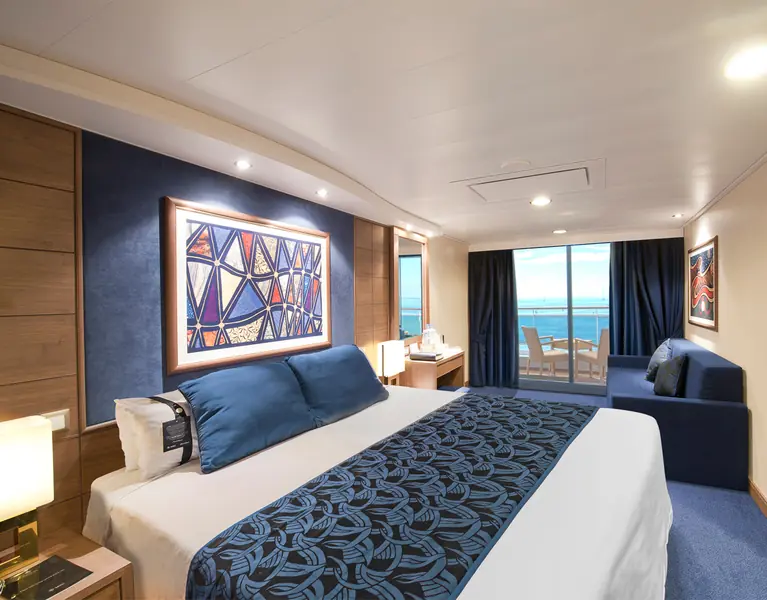
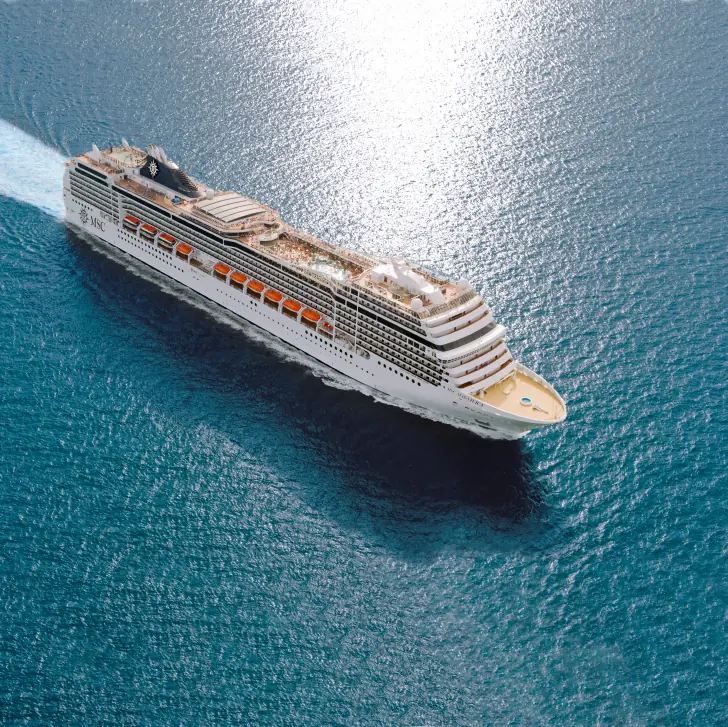
MSC Magnifica is thoughtfully designed for longer voyages, offering almost exclusively balcony cabins and exceptionally generous indoor and outdoor spaces. Guests can enjoy a range of water facilities, including an indoor pool ideal for all-weather relaxation, as well as dedicated kids' areas, restaurants where personalised service enhance every dining experience, along with a theatre presenting a spectacular show every evening.
Masterfully combining variety with luxury, MSC Magnifica is introducing a brand-new MSC Yacht Club, launching in summer 2026. This exceptional remodelling opens the way for an elevated and exclusive onboard experience where privacy meets exclusivity, where every detail is crafted to exceed your highest expectations.
This is a captivating new chapter in the story of a much-loved ship: a brand-new MSC Yacht Club, an upgraded wellness offering with a new MSC Aurea Spa and a reimagined gym.
MSC Magnifica lives up to her name – she offers a cruise that’s memorably magnificent.