
MSC MAGNIFICA: Warnemunde (Berlin), Germany - Warnemunde (Berlin), Germany - 09.08.2026. - 8 days
1 available date
Itinerary
-
 BELLA EXPERIENCE BENEFITS×Bella Experience Benefits: Guaranteed cabin (cabin N° confirmed at least 4 days prior to departure) Cruise changes for a fee (applicable either on the cruise dates or on the destination. Must be performed up to 30 calendar days before departure, for a new cruise to sail within 90 calendar days from the original departure) Full board available in buffet and main restaurant Discounted drink package option at the time the cruise is booked Free continental breakfast in cabin (delivery for a fee) Broadway-style theater shows Pool area Kids club and activities Fitness center free access (from 14 years Booking Terms and Conditions apply) Sport facilities Entertainment activities MSC for Me app (where available) MSC Voyagers Club points.
Warnemunde (Berlin), Germany
The port of Warnemünde is about a dozen kilometres from Rostock, the largest city of the German state of Mecklenburg-Vorpommern (whose capital is Schwerin).
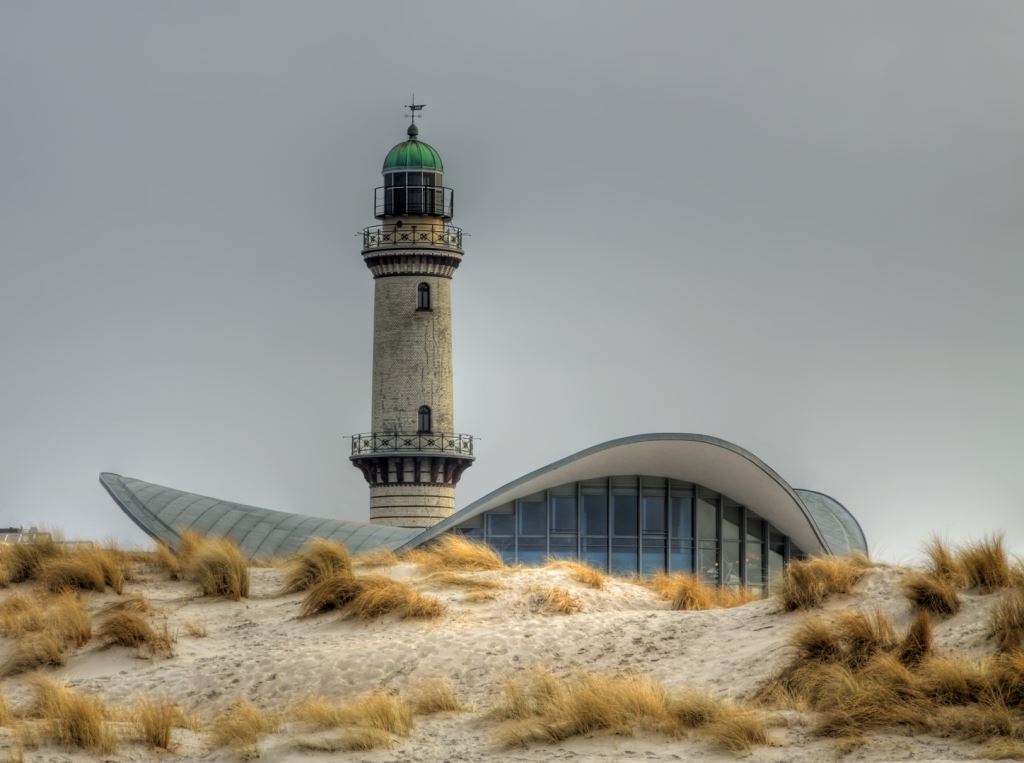
The new passenger terminal was opened in 2005 in the Neuer Strom area. Alter Strom is home to cafés, restaurants and souvenir shops. From an architectural point of view, there is not much to see, with the exception of the 37-metre-tall lighthouse, which stands next to the so-called Teepott (“teapot”), a typical example of 1960s architecture, which was restored and reopened in 2001. The house of the Norwegian painter Edvard Munch, who lived in the city between 1907 and 1908, is picturesque.
A trip to the city of Rostock is certainly interesting for visitors. Rostock was one of the cities of the Hanseatic League, an alliance of cities founded in the twelfth century that maintained a trade monopoly in northern Europe and the Baltic during the Middle Ages and into the early modern period. The main city of the League was initially Lubeck, also in Germany. Although the earliest official documentation in history books dates from 24 June 1218, the first settlements actually originated in the seventh century. Following a period during which the League flourished, the Thirty Years' War (1618–48) signalled its decline and the city of Rostock did not recover until the advent of industrialisation, when the port and shipbuilding yards were established. During the Second World War it was almost completely razed to the ground and until 1989 it was part of the DDR, the former East Germany.
Visitors can enjoy a pleasant stroll around the old town, which has been entirely rebuilt, but preserves its characteristic red-brick buildings. Sights include the city walls, with the Kuhtor (“Cow Gate”), the oldest building.
The main churches are the Gothic-style Marienkirche (Saint Mary’s Church), Nikolaikirche (Saint Nicholas’ Church) and Petrikirche (Saint Peter’s Church). The Gothic-style Rathaus (Town Hall), dating from the thirteenth and fourteenth centuries, is also very handsome. Other noteworthy buildings include the University and the Fünfgiebelhaus (“House of the Five Gables”).
At sea


Eidfjord, Norway
Bergen, Norway
Norway's second largest city with a population of around 200,000, Bergen is a destination of architectural, historical and natural fascination. The city lies facing the sea with a dramatic backdrop of seven hills. Some 50,000 tourists visit Bergen annually, attracted by the beauty of the region and the accessibility of Norway's spectacular fjords. Bergen's port has throughout its history been crucial to the city's prosperity - and even the very survival of its people. In 1702, when a fire swept through the wooden houses of the then village of Bergen, the sea provided an escape route for thousands.
Bergen was founded as Norway's capital in the 11th Century by King Olav Kyrre and its high status remained until the 13th Century when the powerful Lubeck Hanseatic League made the 'Bryggen' quarter into a German ghetto, contained by a barrier and with special localised rules which gave great favour - and power - to the merchant classes. German dominance remained for 400 years, eventually being replaced by the Danes, and then the Swedes, until Norway gained peaceful independence in 1905. Only four houses remain from the days of the Hanseatic League, although the area of the former ghetto is the financial centre of the city.
One of Bergen's most illustrious sons was the composer Edvard Grieg, whose life and work is celebrated in his former home Troldhaugen. The contemporary cultural life of Bergen is also thriving and the city was selected as one of the Cultural Cities of Europe for the year 2000. Architecturally, Bergen has much to offer. Of particular note is the stone-built 12th Century St Mary Church. The Hanseatic Museum in the centre of Bergen near the Fish Market is one of the city's best-preserved wooden buildings. The wooden Fantoft Stave Church is another structure of particular fascination. The original church, which also dates to the 12th Century, was destroyed by fire in 1992 and the present structure is a faithful restoration.
Norway has much to offer souvenir hunters, including high quality hand-made glassware and china. Pewter items are particularly popular and have the distinctive feature of being lead-free. Other Norwegian specialities include jewellery made from the national semi-precious stone thulite, and woollen clothing. Among the culinary specialities of Norway are smoked salmon dishes called lads, and pickled herring.

Kristiansand, Norway
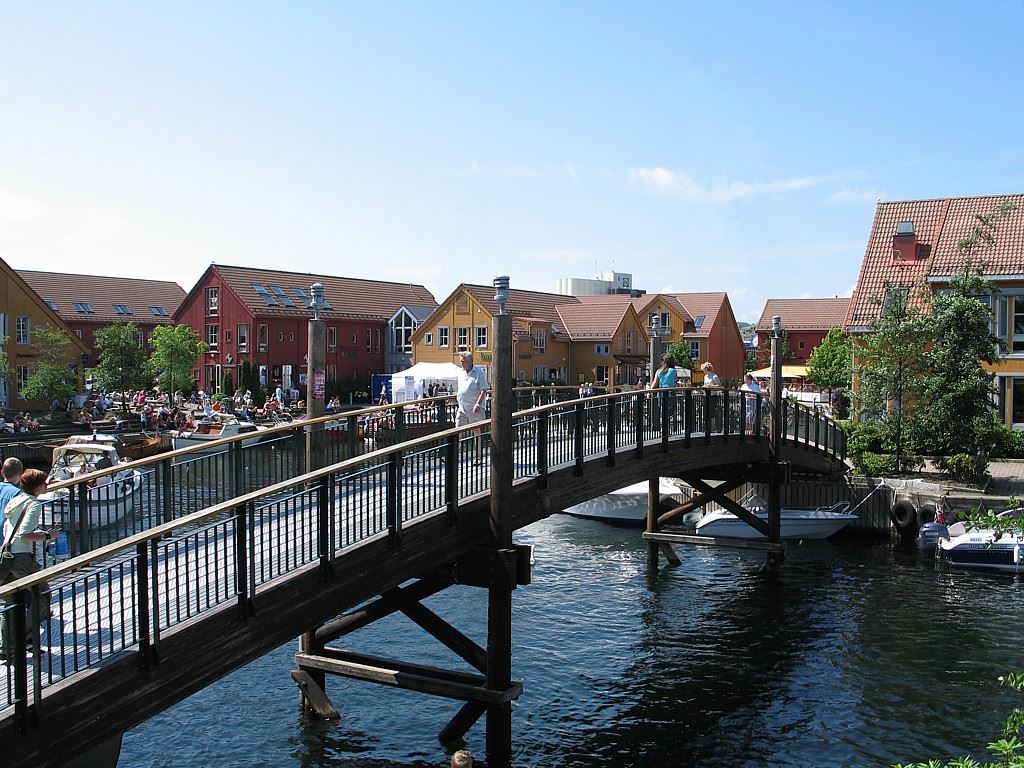
Oslo, Norway
The historic city of Oslo has a population of less than half a million inhabitants, spread over an area of more than 453 square kilometres - so there is no lack of space! Indeed, 'there's enough room here' is one of the local sayings.
According to tradition, the city was founded in 1050 by the Viking king Harald Hardråde (the Strong), who called the town Oslo. Centuries later, in 1624, King Christian IV renamed the city Christiana. The King significantly influenced the architectural and urban structure of the city, which was renamed Oslo again only in 1925.
In prehistoric times, Norway was a land covered by ice and it remained uninhabited for many centuries. The earliest evidence of Viking settlement dates back to 800BC when Viken, Oslo fjord, was first explored. During the era of the Vikings, many Englishmen, Scotsmen and Irishmen were imprisoned, and forced to farm the land in slavery. But as the centuries progressed, the Vikings became more interested in commerce, until the reign of Harald the Fair, who reunited the kingdom of Norway.
For many decades after Oslo was founded, its fortunes flourished, becoming a regional centre of power and influence. But in the 14th Century the population was decimated by the bubonic plague and Oslo's power was diminished. For the next 400 years Norway was controlled by Denmark, followed by Sweden, until the country gained independence in 1905. Norway has long held a preference for neutrality and has avoided all recent conflicts. During World War II, Norway remained neutral but had to suffer German invasion. Since the end of the war and liberation, Norway has maintained its neutral outlook, for example voting to stay out of the European Union.
Oslo is a city of many architectural and cultural highlights. One of the top attractions is a museum featuring recovered and restored Viking ships, displaying in fascinating detail impressive Viking craftsmanship. Another attraction is the 14th Century Akershus Castle, complete with dark grimy dungeons and splendid banqueting halls.
The open-air Vigeland Park features 200 works of celebrated Norwegian artist Gustav Vigeland. The Slottet is the residential palace of the Norwegian Royal Family, headed by King Harald. A red and gold flag flies above the palace when the King is at home. Also worth seeing is the Stortinget building where the Norwegian Parliament sits.
Nearby to Oslo is the winter Olympic ski resort of Holmenkollen, which affords spectacular views of Norway's capital city.
The basic food of Norway is fish, particularly lobster and salmon. Other typical dishes include arctic grouse with cream sauce, roasted elk, gjatost cheese and multers, arctic strawberries. Vienerbrod is a renowned royal speciality.

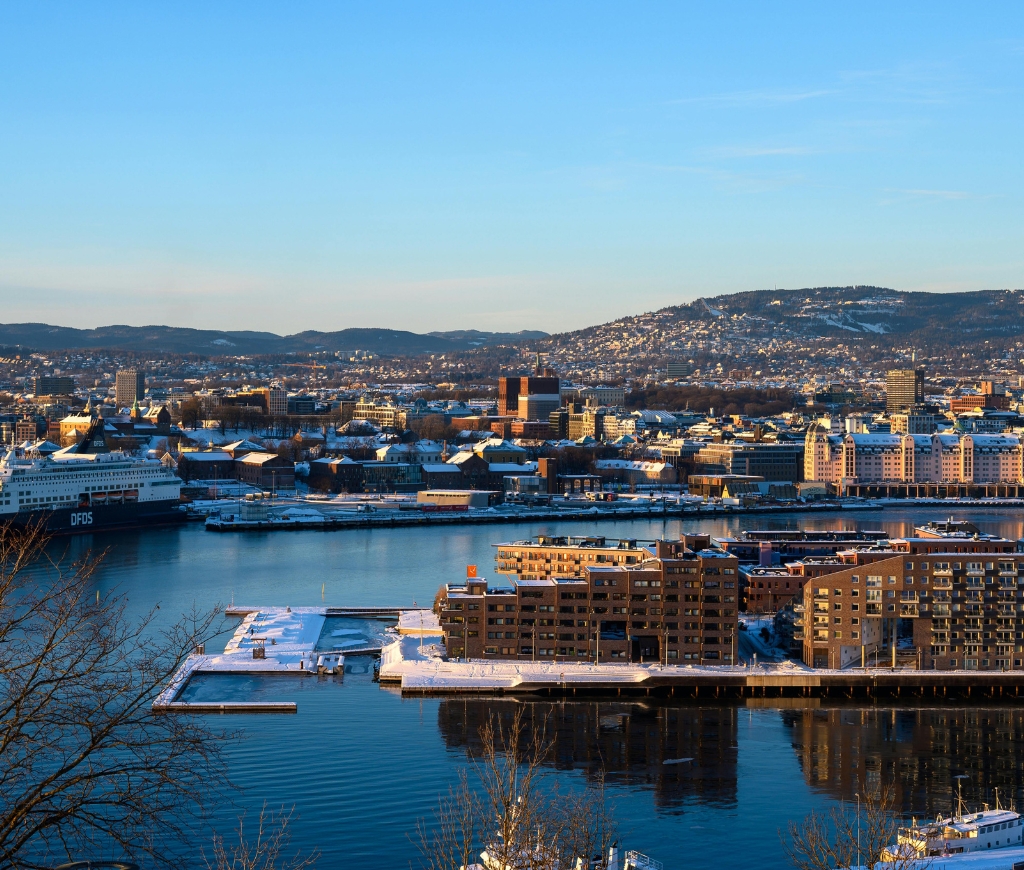
Copenhagen, Denmark
Copenhagen, the capital of Denmark, delights everyone – from history lovers eager to explore magnificent Baroque palaces to gourmands looking to indulge in Michelin-starred restaurants.
In the city center, you’ll find three impressive royal landmarks: Christiansborg Palace (seat of the Danish Parliament), Rosenborg Castle (home to the Danish crown jewels), and Amalienborg Palace (residence of the Danish royal family).
Culture and history enthusiasts can enjoy numerous museums and galleries, while those seeking relaxation will appreciate the city's laid-back pace, extensive cycling paths, and beautiful parks – we recommend a leisurely coffee along the Nyhavn canal or the thrill of historic rides at the Tivoli Gardens amusement park. The city’s symbol, The Little Mermaid statue, pays homage to the fairy tales of Hans Christian Andersen and is a must-see photo spot.
Whether you're looking for an urban adventure, royal grandeur, world-class dining, or simply want to soak up the atmosphere of Scandinavian life – Copenhagen will win you over with its effortless elegance and warm hospitality.

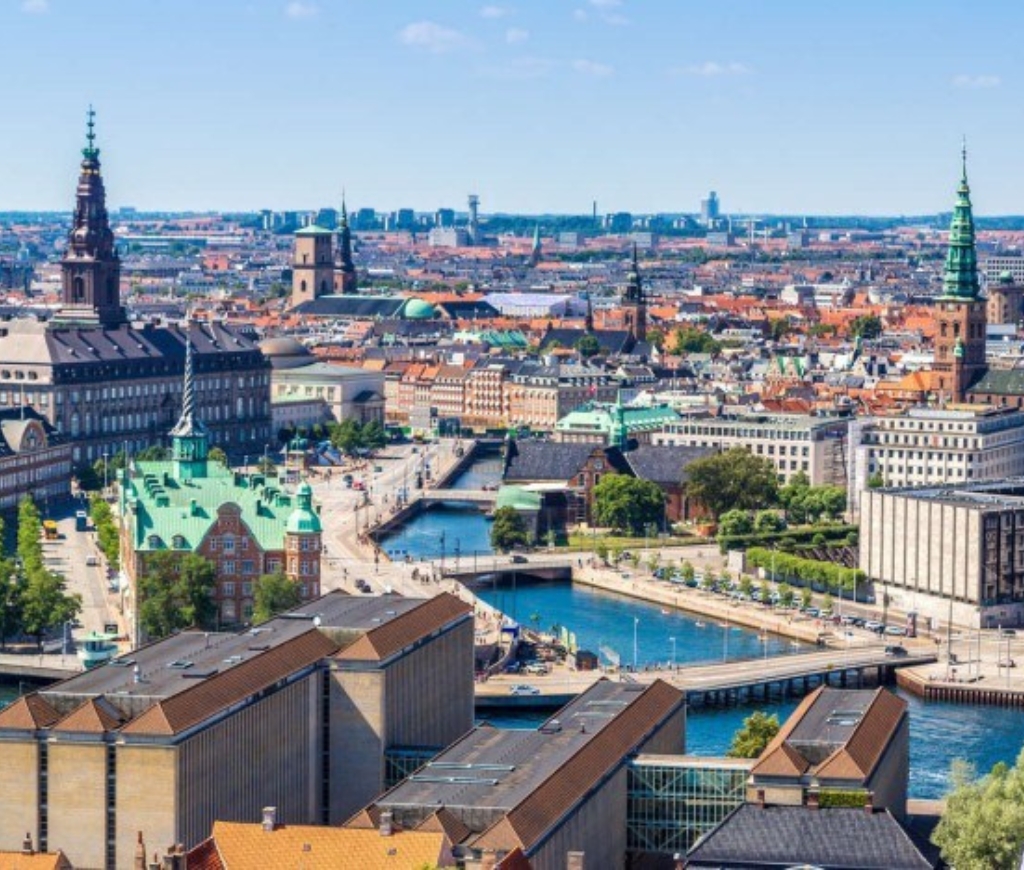
Warnemunde (Berlin), Germany
The port of Warnemünde is about a dozen kilometres from Rostock, the largest city of the German state of Mecklenburg-Vorpommern (whose capital is Schwerin).
The new passenger terminal was opened in 2005 in the Neuer Strom area. Alter Strom is home to cafés, restaurants and souvenir shops. From an architectural point of view, there is not much to see, with the exception of the 37-metre-tall lighthouse, which stands next to the so-called Teepott (“teapot”), a typical example of 1960s architecture, which was restored and reopened in 2001. The house of the Norwegian painter Edvard Munch, who lived in the city between 1907 and 1908, is picturesque.
A trip to the city of Rostock is certainly interesting for visitors. Rostock was one of the cities of the Hanseatic League, an alliance of cities founded in the twelfth century that maintained a trade monopoly in northern Europe and the Baltic during the Middle Ages and into the early modern period. The main city of the League was initially Lubeck, also in Germany. Although the earliest official documentation in history books dates from 24 June 1218, the first settlements actually originated in the seventh century. Following a period during which the League flourished, the Thirty Years' War (1618–48) signalled its decline and the city of Rostock did not recover until the advent of industrialisation, when the port and shipbuilding yards were established. During the Second World War it was almost completely razed to the ground and until 1989 it was part of the DDR, the former East Germany.
Visitors can enjoy a pleasant stroll around the old town, which has been entirely rebuilt, but preserves its characteristic red-brick buildings. Sights include the city walls, with the Kuhtor (“Cow Gate”), the oldest building.
The main churches are the Gothic-style Marienkirche (Saint Mary’s Church), Nikolaikirche (Saint Nicholas’ Church) and Petrikirche (Saint Peter’s Church). The Gothic-style Rathaus (Town Hall), dating from the thirteenth and fourteenth centuries, is also very handsome. Other noteworthy buildings include the University and the Fünfgiebelhaus (“House of the Five Gables”).
Available cabins for Sun. 09.08. - Sun. 16.08.2026.
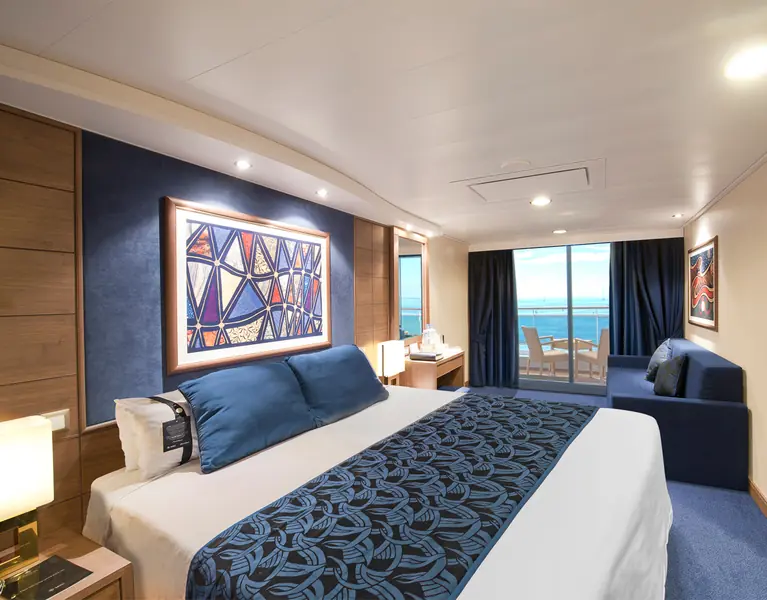




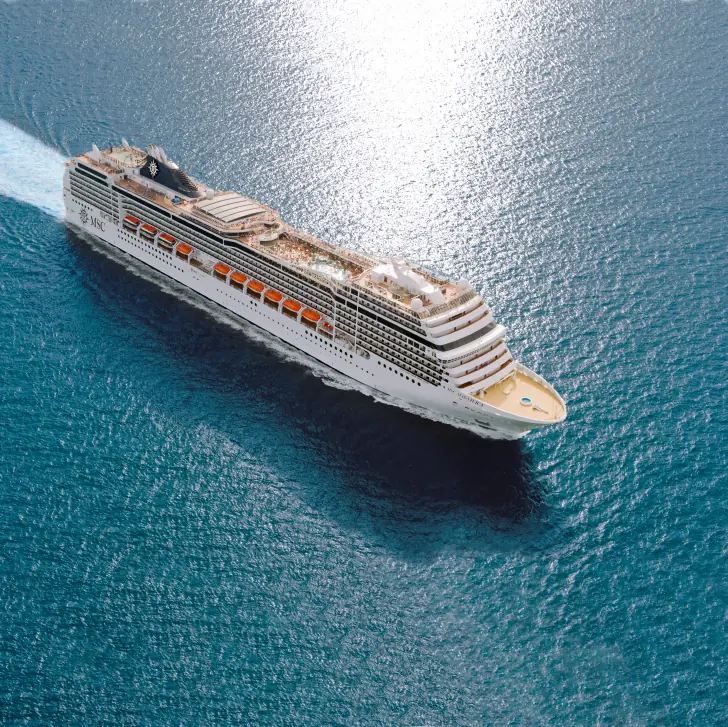
MSC MAGNIFICA
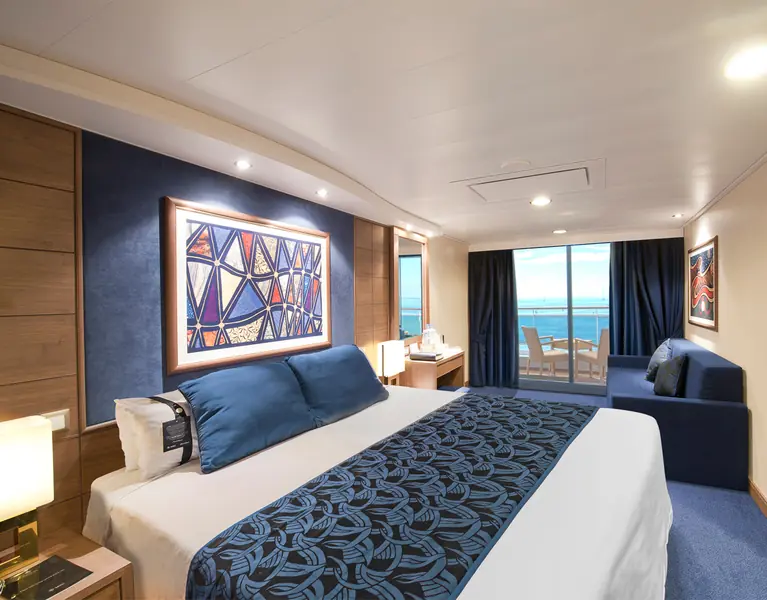
Balconies to the world
MSC Magnifica is thoughtfully designed for longer voyages, offering almost exclusively balcony cabins and exceptionally generous indoor and outdoor spaces. Guests can enjoy a range of water facilities, including an indoor pool ideal for all-weather relaxation, as well as dedicated kids' areas, restaurants where personalised service enhance every dining experience, along with a theatre presenting a spectacular show every evening.
Masterfully combining variety with luxury, MSC Magnifica is introducing a brand-new MSC Yacht Club, launching in summer 2026. This exceptional remodelling opens the way for an elevated and exclusive onboard experience where privacy meets exclusivity, where every detail is crafted to exceed your highest expectations.
This is a captivating new chapter in the story of a much-loved ship: a brand-new MSC Yacht Club, an upgraded wellness offering with a new MSC Aurea Spa and a reimagined gym.
MSC Magnifica lives up to her name – she offers a cruise that’s memorably magnificent.