

Costa Favolosa: LEH - FDF - LEH21A00
1 available date
Itinerary
Le Havre (Paris), France
The local gastronomy is rich in fresh seafood and traditional Norman specialties such as cheeses, cider, and calvados.
Easily accessible from Paris, Le Havre is the perfect escape from the bustle of the capital and a chance to discover a unique mix of modern urban architecture and authentic French coastal charm.


Lisbon (Cascais), Portugal
Lisbon, the capital and largest city of Portugal, is situated at the mouth of the Tagus River along the Atlantic coast. This historic and dynamic city is known for its unique blend of traditional charm, modern culture, and impressive architecture, making it one of Europe’s most attractive metropolitan destinations.
The city boasts a rich history dating back to Roman times, with vibrant neighborhoods like Alfama, Bairro Alto, and Belém exuding an authentic Mediterranean spirit. Narrow streets, picturesque squares, vintage trams, and the aromas of traditional cuisine create a special atmosphere that captivates visitors. Lisbon is also famous for its historic landmarks, including the imposing Belém Tower, the Jerónimos Monastery, and São Jorge Castle, which offers magnificent panoramic views of the city and the river.
A special highlight of Lisbon is fado – traditional Portuguese music filled with emotion and melancholy, often performed in small, intimate venues in the old quarters of the city. This unique musical form is deeply connected to the spirit of Lisbon and is a must-experience for anyone seeking authentic Portuguese culture. The gastronomy scene is especially notable, ranging from traditional pastéis de nata to top-tier restaurants blending Portuguese and international flavors.
The promenade along the Tagus River and lively squares such as Praça do Comércio are ideal spots for leisurely walks, coffee breaks, or evening outings. The city also offers numerous green spaces, parks, and viewpoints perfect for relaxation and enjoying the views.
Lisbon is a perfect destination for those wanting to experience a blend of history, culture, art, and modern urban life, with a warm Mediterranean atmosphere and welcoming local people.


Cadiz (Seville), Spain
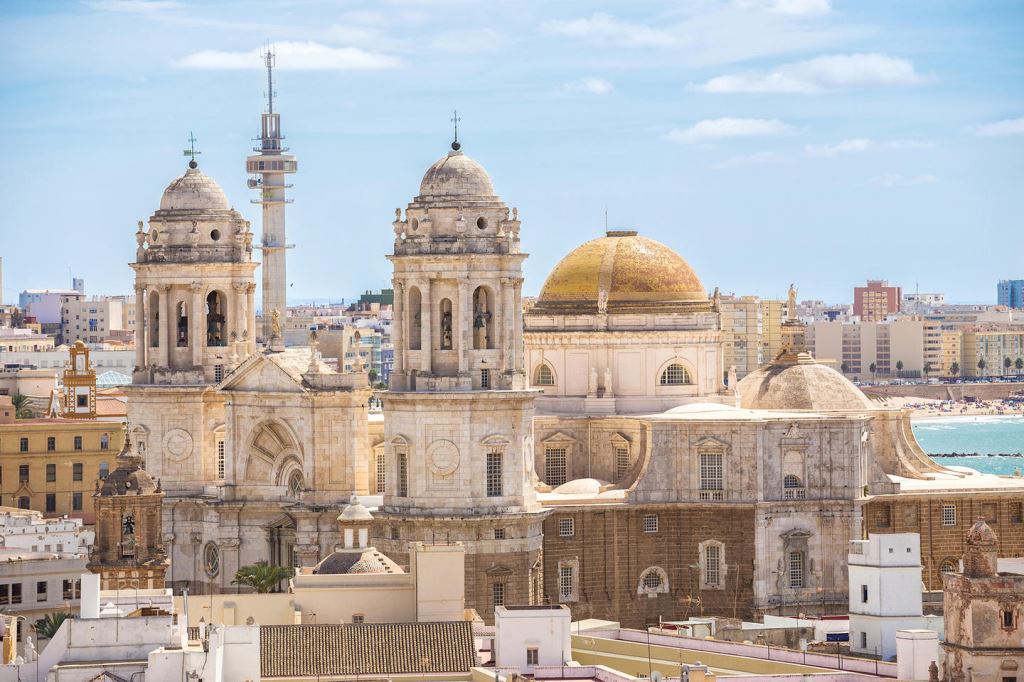
Cadiz is one of the oldest continuously inhabited cities in Europe, founded over 3,000 years ago by the Phoenicians as the trading port of Gadir. Throughout history, it was conquered by the Romans, Visigoths, and Moors, and during the Spanish Golden Age, it became an important port for trade with the New World. Today, the city offers a rich history and cultural landmarks.
Notable sights include the cathedral with its distinctive golden dome, the Torre Tavira tower with panoramic views and the Camera Obscura optical device, the Roman theater dating back to the 1st century BC, the Plaza de las Flores square, and the historic La Viña district known for its restaurants and authentic atmosphere. Cadiz also boasts beautiful beaches such as La Caleta and La Victoria Beach, which offer various activities and amenities.
The local cuisine is based on fresh seafood, with famous dishes like fried fish called ‘pescaíto frito’ and shrimp fritters known as ‘tortillitas de camarones’. The Mercado Central de Abastos market provides an opportunity to taste local delicacies.
The city is also known for the flamenco singer El Chano, whose music has become a symbol of authentic flamenco and an important part of the cultural heritage.

Las Palmas de G.Canaria (Canary Is.), Spain
Las Palmas de Gran Canaria, the largest city in the Canary Islands, is located on the northeastern coast of the island of Gran Canaria. This vibrant city combines a rich history, a cosmopolitan atmosphere, and a relaxed Mediterranean-Atlantic lifestyle. The historic heart of the city, Vegueta, is the perfect place to explore colonial architecture and cultural heritage. Its cobbled streets are home to important museums, churches, and buildings from the 15th and 16th centuries, including the House of Christopher Columbus. In contrast, the modern parts of the city offer a wide range of shops, restaurants, galleries, and the dynamic rhythm of urban life.
One of the city’s main attractions is Las Canteras Beach, over three kilometres long and located right in the city centre. Thanks to a natural reef that softens the waves, it's ideal for swimming, snorkelling, and seaside walks. The city hosts numerous cultural events throughout the year, including the well-known carnival, famous for its costumes, parades, and music. The cultural scene is enriched with theatres, concert halls, and museums.
The local cuisine features traditional Canarian flavours – fresh fish dishes, local vegetables, papas arrugadas with mojo sauce – along with influences from Latin America and Africa, reflecting the city’s historical ties to trade and the sea.
Thanks to its mild year-round climate and excellent transport connections, Las Palmas de Gran Canaria is an ideal destination for those looking to combine culture, the sea, nature, and urban life all in one place.


Fort de France, Martinique
ChatGPT je rekao:
Fort-de-France, the capital of the Caribbean island of Martinique, is the perfect destination for those who want to experience authentic Caribbean charm combined with modern urban life.
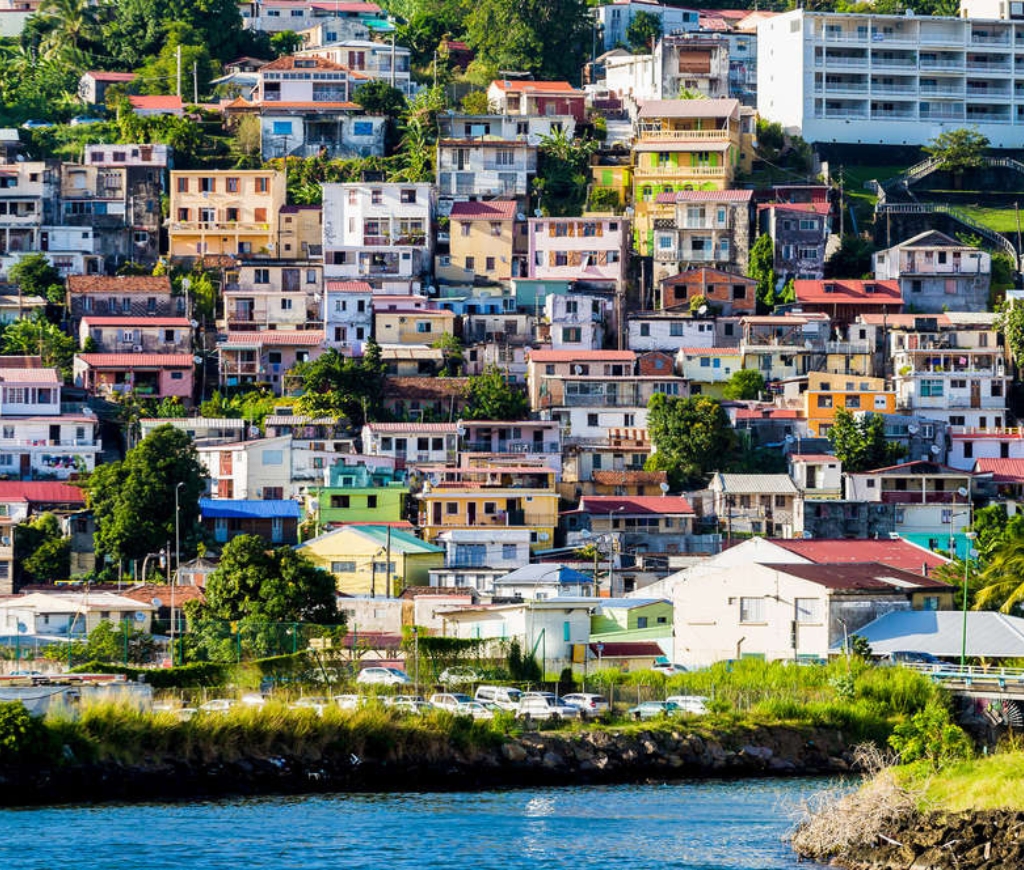
Fort-de-France has a rich history, and today it is a lively hub that reflects French colonial elegance mixed with African and Caribbean influences. Here, you feel as if you are walking through history – narrow streets, colorful shops, local cafes, and museums make Fort-de-France a true cultural gem.
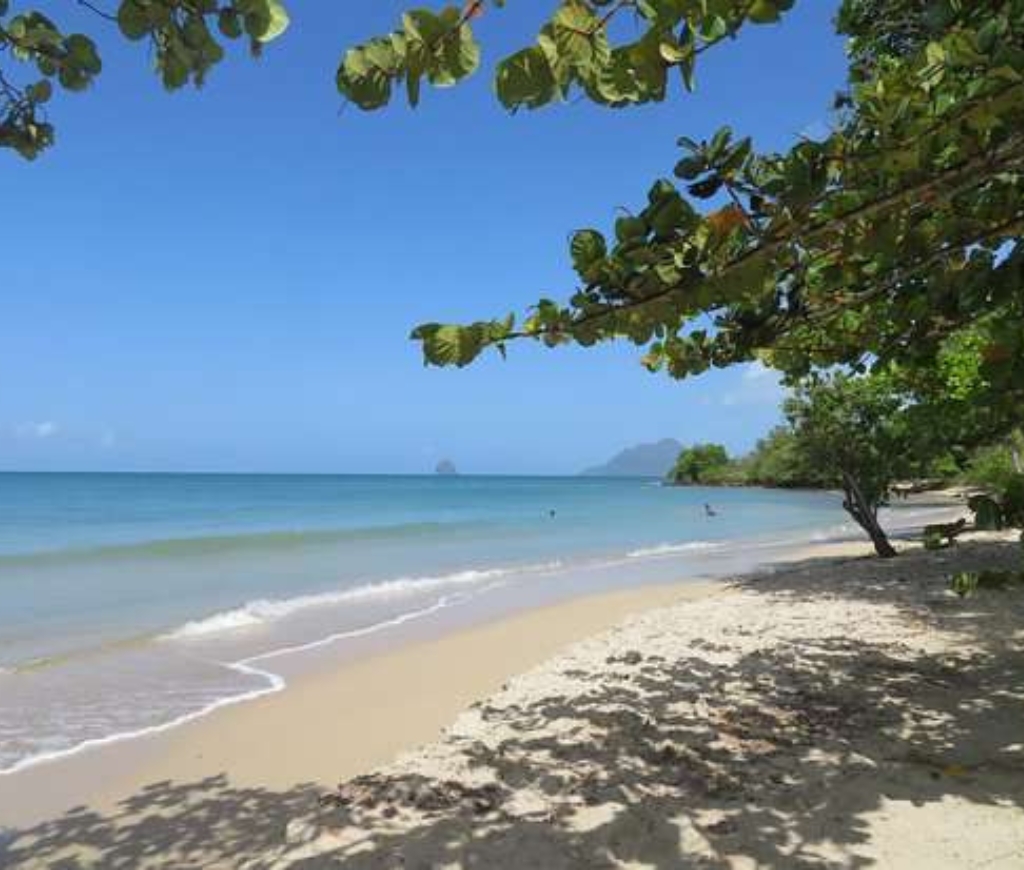
Must-see attractions include Fort Saint-Louis – a historic 17th-century fortress that offers an incredible view of the entire bay, Cathedrale Saint-Louis de Fort-de-France, and the Jardin de Balata, a botanical garden that is an ideal place to escape the hustle and bustle of the city. Surrounded by natural beauty, the city is also a perfect starting point for exploring the stunning Caribbean beaches, such as those in areas like Anse Mitan and La Baie des Flamands.
Fort-de-France is also a gastronomic paradise. The city offers a wealth of flavors – from fresh seafood to various local specialties like colombo (Caribbean curry) and accras (fried fish balls).
Water sports: Fort-de-France and its surroundings provide excellent conditions for sailing, snorkeling, and diving. Martinique is of volcanic origin, and Mount Pelée is a popular destination for hikers and nature lovers.
Nestled along the coastline under the tropical sky, Fort-de-France offers an unforgettable experience that blends history, culture, and natural beauty, all set in a charming, romantic atmosphere.
Pointe-a-Pitre, Guadeloupe
The beautiful island of Guadeloupe is part of the French Antilles and is geologically two islands joined together, Grande Terre and Basse Terre. Point a Pitre is on Grande Terre and is Guadeloupe's largest commercial centre. When Christopher Columbus landed on the southern coast of Basse Terre in 1493 he baptised the beach Santa Maria, and the island Santa Maria de Guadeloupe de Estremadura, subsequently changed to Guadeloupe.
First Spanish settlers, and then French, developed sugar cane production on the islands, which also became centres of the slave trade. Eventually, with the initial help of French revolutionary Victor Hugues and later Victor Schoelcher, the slaves of Guadeloupe were freed. The island is still French territory, administered by a governor appointed by the Paris Ministry of the Interior. The two halves of Guadeloupe are quite different in character.
Grande Terre has a gentler landscape, but is the more lively side, with Pointe a Pitre market, narrow alleyways, picturesque villages and large sugar cane plantations. Basse Terre is more lush and mountainous. It also has one of the Caribbean's few national parks, complete with rivers, rainforest and the dominating presence of the 1,467-metre high Soufrière volcano. The hot springs of Soufrière Park are masterpieces of nature. Both sides of the island have some excellent beaches.
The lifestyle of Guadeloupe is simple and relaxed. A substantial number of the island's villagers still barter for their goods and services rather than use money. And although tourism has flourished, the local economy is still largely based on agriculture. Island attractions include a museum dedicated to local poet, St. John Perse, awarded the Nobel Prize for Literature in 1960, the Schoelcher Museum, dedicated to the slavery abolitionist, and the beach resort of Gosier, one of the most bustling tourist centres in the Lesser Antilles.

Basseterre, St Kitts & Nevis
St Kitts and its sister island Nevis comprise a tiny nation with a unique history. St Kitts - on which Basseterre is the main town - is the popular derivation of St Christopher, the name given to the island by Christopher Columbus in 1493. Its inhabitants are called "Kittitians". Nevis gets its name from the Spanish word for snow in description of a curtain of white clouds that at one time supposedly always covered the top of the mountain that dominates the island. In 1623, the two islands became a British colony.
The islands maintain a close link to their English heritage, although throughout their modern history the English dominance has been regularly challenged, particularly by the French and Spanish eager to control the islands' considerable sugar cane crop. Nevis in particular attracted much commercial interest - and rivalry - as well as considerable piracy. Many of the islands' 45,000 inhabitants can trace their ancestors to the African slave trade of the 17th Century.
The symbol of contemporary culture on the islands is a carnival, which starts of Christmas Eve and embraces the entire population - and visitors - in a joyous celebration. The St. Kitts Music Festival is also very popular, attracting musicians from all over the Caribbean. The islands, which are part of the British Commonwealth, became independent on September 19, 1983, and have since continued to attract thousands of visitors from around the world.

Antigua
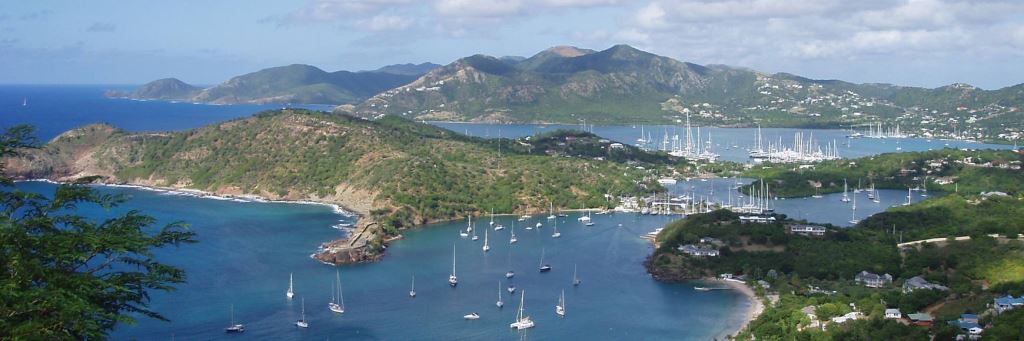
The verdant, undulating island of Antigua is the largest of the Leeward Islands, and is blessed with some of the most beautiful beaches in the Caribbean. The island has a long association with Britain, having only gained independence in 1981. One of the island's most picturesque spots is English Harbour, where a fortress was erected, at Shirley Heights, to protect Antigua's commerce.
Within the harbour is Nelson's Dockyard, with a monument dedicated to the English Admiral Horatio, who was based on the island for three years in the 18th Century. The Dockyard fell into disrepair on being abandoned by the Navy at the end of the 19th Century but was reopened in 1961 after 20 years of restoration work. The waters around the Dockyard and the Harbour are now filled with splendid yachts making their way to and from Antigua. The capital of St John's was during the 18th Century the principal British military stronghold in the area. Today it is a thriving Caribbean town, where nearly half of all Antiguans live.
The Museum of Antigua and Barbuda in St John's features extensive exhibits of Indian arts and crafts - and even has signs that say 'please touch' - plus colonial and Antiguan artefacts, and fossils dating back 35 million years. The first known settlements on Antigua were established in around 2400BC by Siboney Indians, devoted to farming, followed by the Arawaks. Substantial European settlement began in the 17th Century when British entrepreneur Sir Christopher Codrington introduced large-scale production of sugar cane. This brought great prosperity to the island for some 100 years, and a large population of African slaves were brought to Antigua to work the sugar cane plantations. Hence the majority of Antiguans are of African descent.
Several farms, hotels and restaurants on the island are located on the sites of former plantations.
Sea of Antilles Darkest Spot
Tortola
Road Harbour is the port of Road Town, the capital town on the island of Tortola (Turtle Dove) and the British Virgin Islands. Tortola is blessed with glorious secluded beaches, crystal clear waters and lush mountain scenery. The first inhabitants were Arawak and Siboney Indians, to be followed by Spanish, Dutch and English colonists. As in the rest of the Virgin Islands, Tortola was once blighted by pirates and privateers, including Sir Francis Drake, who gave his name to the channel that separates the two main groups of islands. The islands remain a Crown Colony of Britain, with a governor officially appointed by the Queen. Since the 1960s, however, the islands have attracted massive investment by Americans, one of the first being Rockerfeller, to develop tourism. The island's landscape is dominated by Sage Mountain, the highest peak in the Virgin Islands.
The upper section of the mountain is covered in beautiful rainforest. Most of the 17,000 inhabitants of the British Virgin Islands live on Tortola. The commercial and cultural centre of the island is Road Town and its busy port. In the centre of Road Town is the four-acre J.R.O'Neill Botanical Gardens which features 62 species of palm tree, multitudes of tropical flowers, birds and parrots. Popular attractions on the island include picturesque Cane Garden Bay, a frequent venue for street festivals and beach parties. It is also the home of celebrated local musician Quito Rymer, who regularly performs at his restaurant, Quito's Bar & Grill. Another highlight is Mount Healthy Windmill , which preserves one of the first plantations in the archipelago. Bicycle rides and jeep exploration are popular activities on Tortola, as is trekking.
Santo Domingo, Dominican Repub

Pointe-a-Pitre, Guadeloupe
The beautiful island of Guadeloupe is part of the French Antilles and is geologically two islands joined together, Grande Terre and Basse Terre. Point a Pitre is on Grande Terre and is Guadeloupe's largest commercial centre. When Christopher Columbus landed on the southern coast of Basse Terre in 1493 he baptised the beach Santa Maria, and the island Santa Maria de Guadeloupe de Estremadura, subsequently changed to Guadeloupe.
First Spanish settlers, and then French, developed sugar cane production on the islands, which also became centres of the slave trade. Eventually, with the initial help of French revolutionary Victor Hugues and later Victor Schoelcher, the slaves of Guadeloupe were freed. The island is still French territory, administered by a governor appointed by the Paris Ministry of the Interior. The two halves of Guadeloupe are quite different in character.
Grande Terre has a gentler landscape, but is the more lively side, with Pointe a Pitre market, narrow alleyways, picturesque villages and large sugar cane plantations. Basse Terre is more lush and mountainous. It also has one of the Caribbean's few national parks, complete with rivers, rainforest and the dominating presence of the 1,467-metre high Soufrière volcano. The hot springs of Soufrière Park are masterpieces of nature. Both sides of the island have some excellent beaches.
The lifestyle of Guadeloupe is simple and relaxed. A substantial number of the island's villagers still barter for their goods and services rather than use money. And although tourism has flourished, the local economy is still largely based on agriculture. Island attractions include a museum dedicated to local poet, St. John Perse, awarded the Nobel Prize for Literature in 1960, the Schoelcher Museum, dedicated to the slavery abolitionist, and the beach resort of Gosier, one of the most bustling tourist centres in the Lesser Antilles.
Fort de France, Martinique
ChatGPT je rekao:
Fort-de-France, the capital of the Caribbean island of Martinique, is the perfect destination for those who want to experience authentic Caribbean charm combined with modern urban life.
Fort-de-France has a rich history, and today it is a lively hub that reflects French colonial elegance mixed with African and Caribbean influences. Here, you feel as if you are walking through history – narrow streets, colorful shops, local cafes, and museums make Fort-de-France a true cultural gem.
Must-see attractions include Fort Saint-Louis – a historic 17th-century fortress that offers an incredible view of the entire bay, Cathedrale Saint-Louis de Fort-de-France, and the Jardin de Balata, a botanical garden that is an ideal place to escape the hustle and bustle of the city. Surrounded by natural beauty, the city is also a perfect starting point for exploring the stunning Caribbean beaches, such as those in areas like Anse Mitan and La Baie des Flamands.
Fort-de-France is also a gastronomic paradise. The city offers a wealth of flavors – from fresh seafood to various local specialties like colombo (Caribbean curry) and accras (fried fish balls).
Water sports: Fort-de-France and its surroundings provide excellent conditions for sailing, snorkeling, and diving. Martinique is of volcanic origin, and Mount Pelée is a popular destination for hikers and nature lovers.
Nestled along the coastline under the tropical sky, Fort-de-France offers an unforgettable experience that blends history, culture, and natural beauty, all set in a charming, romantic atmosphere.
Available cabins for Thu. 12.11. - Thu. 03.12.2026.
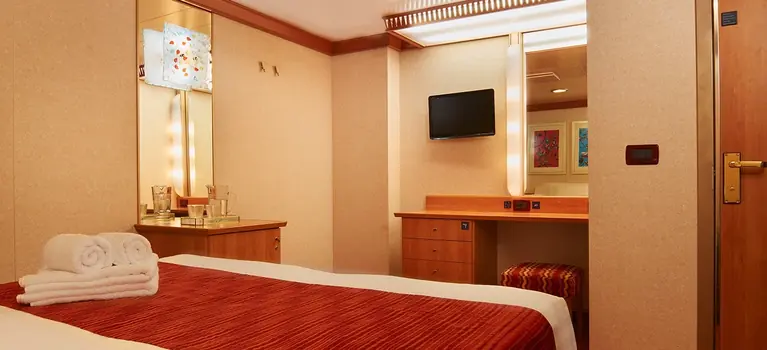


Costa Favolosa

Welcome on board Costa Favolosa
On Costa Favolosa you will feel like you are in a fairy tale, on board everything around you will fill you with delight and inspire moments of wonder. This is the charm of Costa Favolosa. It is there every time you wake up in your balcony cabin looking out at the day’s new sea view.
The best way to relax is at the spa or in one of the outdoor hot tubs, followed by a fantastic glass of wine at the wine bar.
It’s already time for dinner, world renowned cuisine or Neapolitan pizza? You’ll be spoiled for choices and you’ll really feel like you’re living in a fairy tale!
Featured activities