

MSC WORLD EUROPA: Pointe-a-Pitre, Guadeloupe - Pointe-a-Pitre, Guadeloupe - 27.12.2026. - 7 days
1 available date
Itinerary
-
 BELLA EXPERIENCE BENEFITS×Bella Experience Benefits: Guaranteed cabin (cabin N° confirmed at least 4 days prior to departure) Cruise changes for a fee (applicable either on the cruise dates or on the destination. Must be performed up to 30 calendar days before departure, for a new cruise to sail within 90 calendar days from the original departure) Full board available in buffet and main restaurant Discounted drink package option at the time the cruise is booked Free continental breakfast in cabin (delivery for a fee) Broadway-style theater shows Pool area Kids club and activities Fitness center free access (from 14 years Booking Terms and Conditions apply) Sport facilities Entertainment activities MSC for Me app (where available) MSC Voyagers Club points.
Pointe-a-Pitre, Guadeloupe
The beautiful island of Guadeloupe is part of the French Antilles and is geologically two islands joined together, Grande Terre and Basse Terre. Point a Pitre is on Grande Terre and is Guadeloupe's largest commercial centre. When Christopher Columbus landed on the southern coast of Basse Terre in 1493 he baptised the beach Santa Maria, and the island Santa Maria de Guadeloupe de Estremadura, subsequently changed to Guadeloupe.
First Spanish settlers, and then French, developed sugar cane production on the islands, which also became centres of the slave trade. Eventually, with the initial help of French revolutionary Victor Hugues and later Victor Schoelcher, the slaves of Guadeloupe were freed. The island is still French territory, administered by a governor appointed by the Paris Ministry of the Interior. The two halves of Guadeloupe are quite different in character.
Grande Terre has a gentler landscape, but is the more lively side, with Pointe a Pitre market, narrow alleyways, picturesque villages and large sugar cane plantations. Basse Terre is more lush and mountainous. It also has one of the Caribbean's few national parks, complete with rivers, rainforest and the dominating presence of the 1,467-metre high Soufrière volcano. The hot springs of Soufrière Park are masterpieces of nature. Both sides of the island have some excellent beaches.
The lifestyle of Guadeloupe is simple and relaxed. A substantial number of the island's villagers still barter for their goods and services rather than use money. And although tourism has flourished, the local economy is still largely based on agriculture. Island attractions include a museum dedicated to local poet, St. John Perse, awarded the Nobel Prize for Literature in 1960, the Schoelcher Museum, dedicated to the slavery abolitionist, and the beach resort of Gosier, one of the most bustling tourist centres in the Lesser Antilles.

At sea


Bridgetown, Barbados
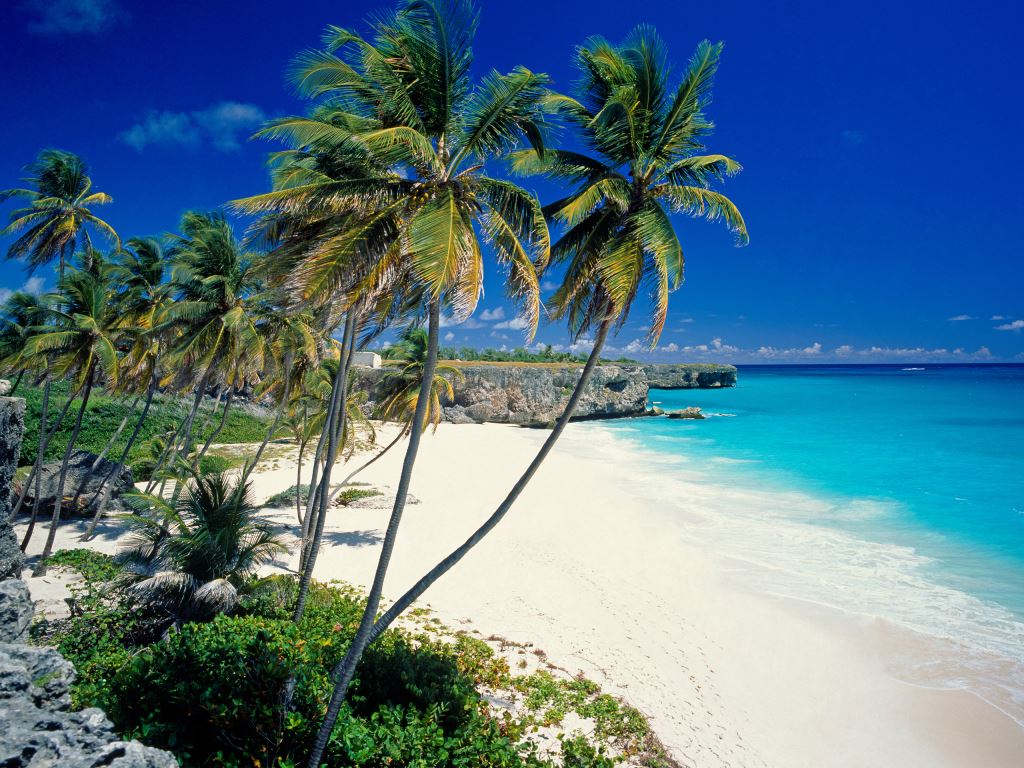
Barbados offers UK visitors an enticing mixture of the exotic and the familiar. The tropical landscape, coral reefs, white sand beaches and some 3,000 hours of sunshine a year, along with a vibrant nightlife, mouth-watering Bajan cuisine and strong cultural links to England - particularly an obsession with cricket - add up to a delightful and thrilling destination.
The island capital of Bridgetown, situated on the south-western Carlisle Bay (named after the Count of Carlisle who founded Bridgetown in 1630), is a bustling town that encapsulates the verve of Barbadan life. More than a third of the island's 300,000 inhabitants, 'bajans', live in Bridgetown. One of the most pleasant tourist spots in the city is the Careenage inlet waterway, which is lined with recreational boats and dissects the centre of the town.
The English colonial influence in Bridgetown is widely evident, from the street obelisks to the Anglican Cathedral. Broad Street and Trafalgar Square represent the heart of the town, peppered with numerous historical monuments such as a War Memorial and statue of Lord Nelson in addition to the Parliament. The Parliament building has been rebuilt several times, notably after being struck by fire in 1860. Of distinctive interest is the historically important Bridgetown Synagogue on Swan Street - formerly called Jewish Street - originally built in 1654 and restored in the 19th Century. The Barbados Museum and Barbados Garrison will provide history buffs with ample fascination.
When a sightseeing break beckons the numerous foodstalls and rum shops along Bridgetown's streets should provide some suitable refreshment. The town is also a convenient starting point to explore some of the rest of the 33km by 15km island of Barbados. There is an extensive public and private bus service that covers most of the island. The 'mini-moke' is very popular, together with bicycles and scooters.
Kingstown, St Vincent & The Grenadines

Saint George, Grenada
Castries, Saint Lucia
The first inhabitants of St Lucia were Arawak Indians, probably taking refuge from the aggressive attentions of the Caribs in 200AD. Evidence of their presence can be found on the coast and inland. Christopher Columbus supposedly landed on the island in 1502, although his visit has been disputed by historians. How the island came to be named St Lucia is somewhat of a riddle.
The sailor Juan De La Cosa, who had travelled with Columbus in 1502, told how he returned to the island in 1504. He discovered that although he had previously named the island El Falcon, it had mysteriously been renamed St Lucia.
The history of the island during the following hundred years is scarce, until 1605, when an English ship carrying a group of aristocrats landed after being blown off course. Their attempt at colonisation failed disastrously and most were killed by the island's native Indians. Another English attempt in 1639, led by Sir Thomas Warner, met the same fate. Then, in 1651, it was the turn of the French to try and take possession. Thus the see-saw position continued for the next 150 years as the French and British battled for dominance.
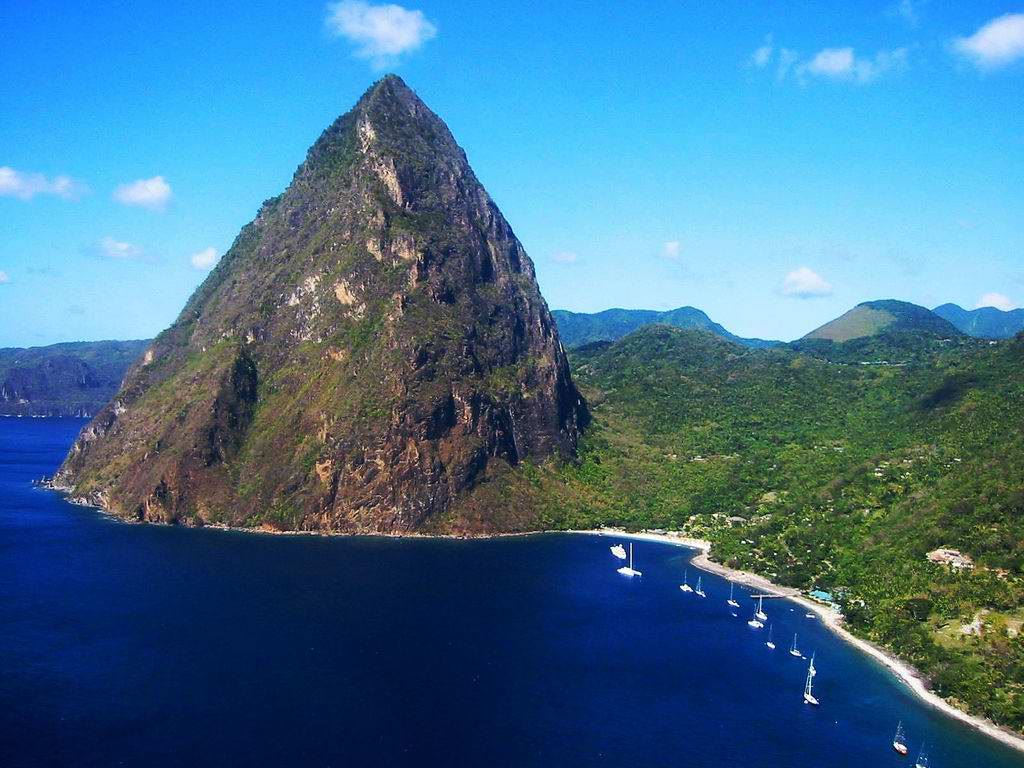
The British were finally victorious in 1814. Villages such as Soufrière began a period of considerable development, becoming fairly prosperous towns, while slavery ensured that the plantations brought the colonists substantial riches. After the abolition of slavery on the island in 1834, conflict between the French and British persisted, along with devastating typhoons and fires, particularly affecting Soufrière and Castries. From 1863, the British began to develop coaling stations on the island, with Castries becoming one of the main stations in the Caribbean, further enhanced by the opening of the Panama Canal in 1914. Demands for independence gradually gained favour, and came to fruition in 1979. The local culture of the island is creole and the population speak both English and a French-sounding patois. The tropical landscape is dominated by the twin volcanic peaks of the Pitons and the coastline is blessed with some glorious beaches.
In recent years the island has produced two Nobel Prize Winners; Arthur Lewis in 1979 for Economics and Derek Walcot in 1992 for Literature.
Fort de France, Martinique
ChatGPT je rekao:
Fort-de-France, the capital of the Caribbean island of Martinique, is the perfect destination for those who want to experience authentic Caribbean charm combined with modern urban life.
Fort-de-France has a rich history, and today it is a lively hub that reflects French colonial elegance mixed with African and Caribbean influences. Here, you feel as if you are walking through history – narrow streets, colorful shops, local cafes, and museums make Fort-de-France a true cultural gem.
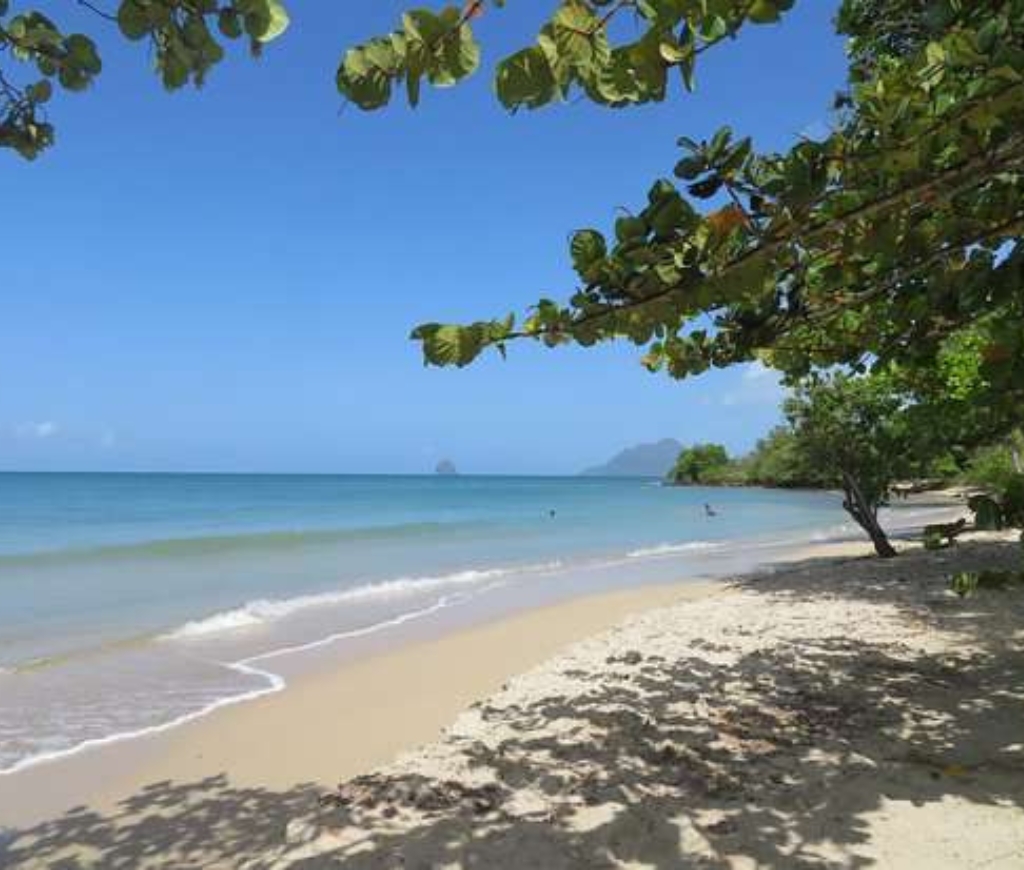
Must-see attractions include Fort Saint-Louis – a historic 17th-century fortress that offers an incredible view of the entire bay, Cathedrale Saint-Louis de Fort-de-France, and the Jardin de Balata, a botanical garden that is an ideal place to escape the hustle and bustle of the city. Surrounded by natural beauty, the city is also a perfect starting point for exploring the stunning Caribbean beaches, such as those in areas like Anse Mitan and La Baie des Flamands.
Fort-de-France is also a gastronomic paradise. The city offers a wealth of flavors – from fresh seafood to various local specialties like colombo (Caribbean curry) and accras (fried fish balls).
Water sports: Fort-de-France and its surroundings provide excellent conditions for sailing, snorkeling, and diving. Martinique is of volcanic origin, and Mount Pelée is a popular destination for hikers and nature lovers.
Nestled along the coastline under the tropical sky, Fort-de-France offers an unforgettable experience that blends history, culture, and natural beauty, all set in a charming, romantic atmosphere.
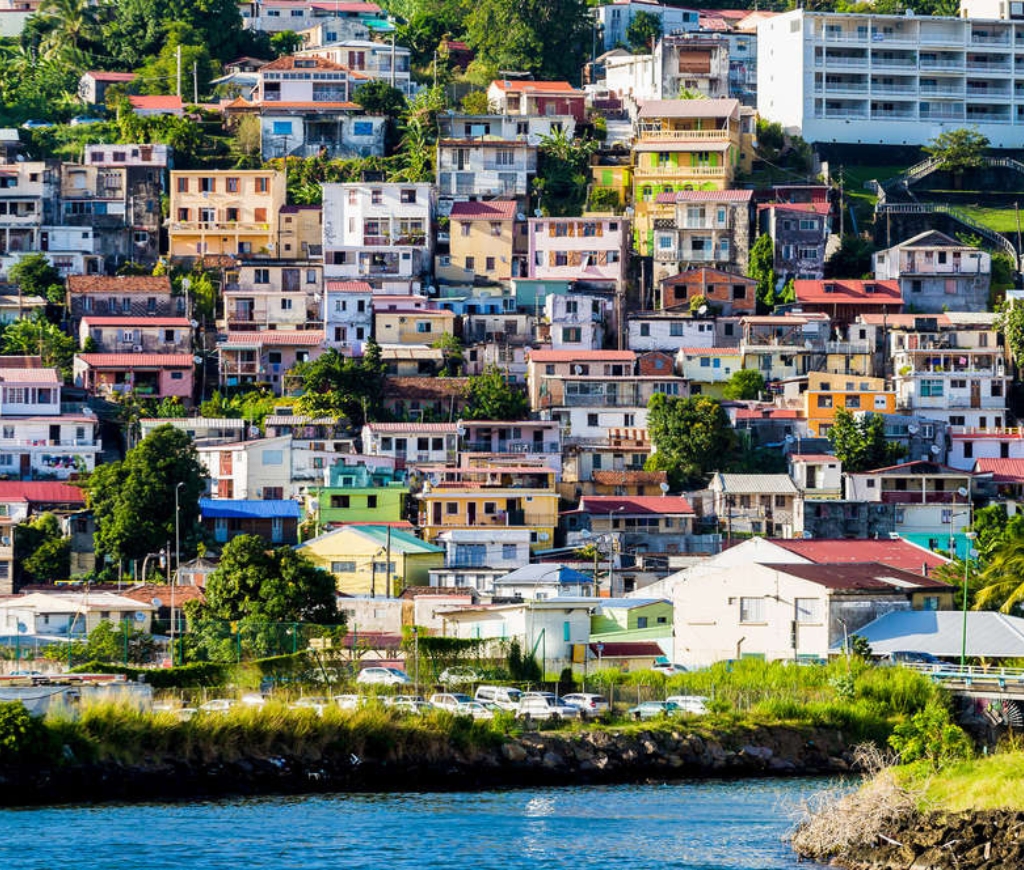
Pointe-a-Pitre, Guadeloupe
The beautiful island of Guadeloupe is part of the French Antilles and is geologically two islands joined together, Grande Terre and Basse Terre. Point a Pitre is on Grande Terre and is Guadeloupe's largest commercial centre. When Christopher Columbus landed on the southern coast of Basse Terre in 1493 he baptised the beach Santa Maria, and the island Santa Maria de Guadeloupe de Estremadura, subsequently changed to Guadeloupe.
First Spanish settlers, and then French, developed sugar cane production on the islands, which also became centres of the slave trade. Eventually, with the initial help of French revolutionary Victor Hugues and later Victor Schoelcher, the slaves of Guadeloupe were freed. The island is still French territory, administered by a governor appointed by the Paris Ministry of the Interior. The two halves of Guadeloupe are quite different in character.
Grande Terre has a gentler landscape, but is the more lively side, with Pointe a Pitre market, narrow alleyways, picturesque villages and large sugar cane plantations. Basse Terre is more lush and mountainous. It also has one of the Caribbean's few national parks, complete with rivers, rainforest and the dominating presence of the 1,467-metre high Soufrière volcano. The hot springs of Soufrière Park are masterpieces of nature. Both sides of the island have some excellent beaches.
The lifestyle of Guadeloupe is simple and relaxed. A substantial number of the island's villagers still barter for their goods and services rather than use money. And although tourism has flourished, the local economy is still largely based on agriculture. Island attractions include a museum dedicated to local poet, St. John Perse, awarded the Nobel Prize for Literature in 1960, the Schoelcher Museum, dedicated to the slavery abolitionist, and the beach resort of Gosier, one of the most bustling tourist centres in the Lesser Antilles.
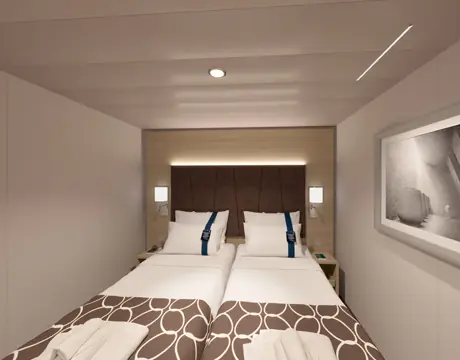
Available cabins for Sun. 27.12. - Sun. 03.01.2027.

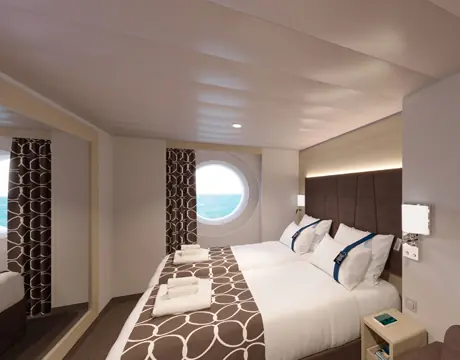


MSC WORLD EUROPA
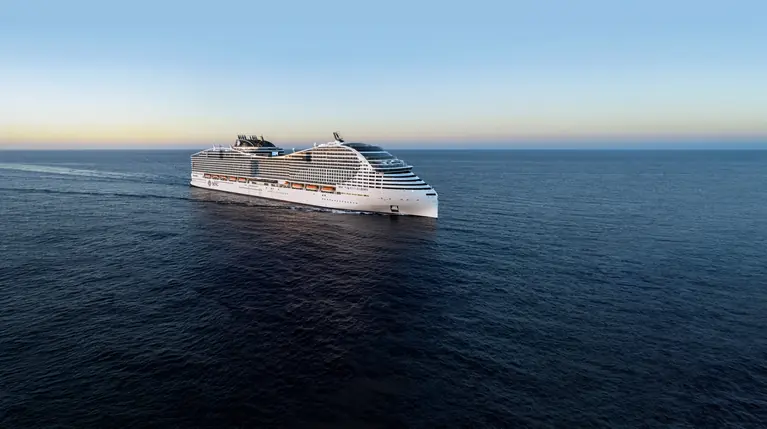
MSC WORLD EUROPA - Welcome to The Future of Cruising
Imagine the future of cruising and discover it in the revolutionary MSC World Class fleet.
Entering service in 2022, MSC World Europa was the first ship in this trailblazing new generation.
With their futuristic silhouette, signature plumb bow and Y-shaped aft, the ships in the MSC World class will looks like nothing else at sea, cutting through the water with ease and grace.
To complete this revolution, we have also developed an immersive guest experience, so on MSC World Europa, guests can look forward to a holiday like no other.
It’s a new class of emotions, for the future of cruising.
Featured activities

