MSC SEASIDE: New Year's cruise from Miami to Jamaica and Mexico
1 available date
Itinerary
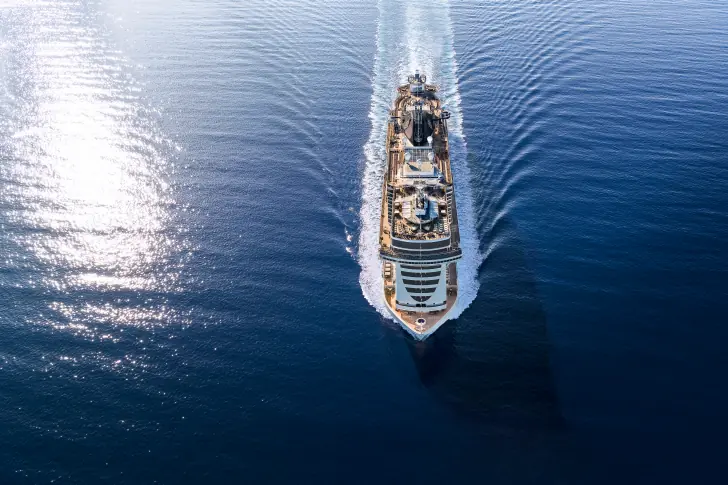
Ring in the New Year in unforgettable style on a grand cruise aboard MSC Seaside through the heart of the Caribbean. From sunny Miami, the route continues to the private island of Ocean Cay MSC Marine Reserve, Jamaican Falmouth, George Town in the Cayman Islands, Mexican Cozumel with its rich Mayan heritage, and historic Nassau in the Bahamas. A unique seafront promenade on deck 8 and glass corridors make this holiday voyage truly unforgettable.
-
 Trilogy - Three Exclusive Dining Experiences×
Book now and save up to 15%!
Take the chance to taste the variety of our exclusive and distinctive cuisine available in the Specialty Restaurants of our ships.
Includes:
- Three unique dining experiences in three different Specialty Restaurants
- Great savings vs onboard prices
A dining experience (lunch or dinner) menu will be offered to guests who purchase the Trilogy package. The menu delivers the Specialty Restaurants concepts experience. The package includes food only. Day of booking to be confirmed on board. Specialty restaurants vary by ship and must be part of each ship's Trilogy Package selection.
-
 Balinese Massage 50 Minute×Book now and save up to 45% vs onboard price! This powerful massage rooted in the healing traditions of Bali, Indonesia, balances the body and restores vitality by releasing muscle tension and stress and improving the flow of circulation around the body.
 -
 SWEDISH MASSAGE - 80 MIN×A TRADITIONAL LIGHT PRESSURE FULL BODY MASSAGE UTILIZING A COMBINATION OF GENTLE FLOWING STROKES AND KNEADING THAT PROMOTES RELAXATION AND WELL BEING, EASING TIRED AND ACHING MUSCLES.
 -
 MSC YACHT CLUB BENEFITS×MSC Yacht Club Benefits: Lavishly fitted luxury suites Dedicated priority check in & check out 24-hour butler service and dedicated concierge 24h room service available Relaxation amenities in cabin (Bathrobe and slippers) Pillow menu Premium Extra drink package in all ships areas including the mini bar in your suite Gourmet dining in the exclusive MSC YC Panoramic dedicated Top Sail Lounge with light food selection, dedicated exclusive sun deck with pool, solarium and bar 10% off on all spa treatments purchased on board Browse Internet Package (2 devices Unlimited Internet Package) Fitness center free access Broadway-style theatre shows Pool area Kids club and activities Fitness center free access (from 14 years Booking Terms and Conditions apply) Sport facilities Entertainment activities MSC for Me (where available) MSC Voyagers Club points Discounted packages offer.
Miami, United States
With a population of around 360,000, but almost 5 million in the entire urban area, Miami is Florida's most heavily populated city. It began to expand in 1896 when railway reached the city and Miami became a municipality. The pleasant climate and idyllic landscapes with numerous kilometres of beach propelled the city towards its first economic boom in the 1930s, although even greater development was to take place in the '50s.
Thanks to the mild climate, particularly in the winter when the majority of major cities on the East Coast of the US are at freezing point, Miami quickly carved out a role for itself in the tourism industry.
The city is also strategically located opposite the Caribbean and just 145km from Cuba: heavy Cuban immigration has consequently helped shape the identity of Miami in terms of culture and language. Indeed half of the city's population is now of Hispanic origin.
The city is divided into distinct neighbourhoods, some of which have separate and independent local governments, such as Miami Beach. Biscayne Boulevard is the main attraction in the area around the port and is flanked by large parks such as Bayfront Park and the Bicentennial Park; to the south of the port lies the financial district.
In downtown Miami, Flager Street is where to head to do a bit of shopping in the department stores and clothes, electronics, sports and jewellery shops. In the Metro Dade Center you can visit the Museum of Southern Florida, the city's main library, and the Museum of Fine Arts, which holds temporary modern art exhibitions. Coconut Grove is Miami's oldest district and has become, over time, an exclusive and refined residential area. Here you will find the local government offices, City Hall's home is an ex-1930s hangar. Other places of note in the neighbourhood include Peacock Park and the Dinner Key, Miami's tourist port.
Little Havana is the Cuban district characterised by an almost Caribbean atmosphere where Spanish is spoken more readily than English. The main road Calle Ocho runs through the district, which is lined with shops and cafés, whilst other places of interest include the Museum of the Cuban Arts and Culture, the Museum of Science and the Máximo Gómez Park.
Six kilometres to the east of Miami is Miami Beach, an island comprising a long, thin strip of sand connected to the mainland by a system of bridges. The southern end of Miami Beach is called South Beach and it is here that the city's recent rebirth began.
Miami's image had been tarnished in the '80s by heavy crime, racial violence, and the drugs and gambling culture that has been synonymous with the city since the 1930s when it was one of the few places in the States untouched by Prohibition.
The Art Deco Historic District, built up in the 1920s and noted for its pastel, rose, lavender and turquoise colour houses, has recently been restored and represents an excellent example of the urban restoration of modern architecture, attracting thousands of tourists each year. But Miami Beach also means the seafront and the famous Ocean Drive that separates the beach from the infinite numbers of bars and restaurants. An never-ending parade of bizarre cars, roller-skaters, skateboarders, and super-accessorised Harley Davidsons ensure that visitors remain amused.
As with the rest of the culture in Florida, food and drink in Miami has a heavy Cuban and Caribbean influence: the fish and seafood caught in the Atlantic and the Gulf of Mexico form the base of the most popular dishes.
Florida is also known for its large-scale production of fruit and vegetables, and is one of the biggest producers in the States.


Ocean Cay MSC Marine Reserve,Bahamas
At sea


Falmouth, Jamaica
George Town, Cayman Islands
Cozumel, Mexico
The island of Cozumel is one of the most popular tourist destinations in the world, attracting an estimated 20 million people a year keen to enjoy its unique mix of glorious beaches, superb diving and ancient archaeological sites. The town of Cozumel is the perfect place to relax in the tropical sun and the perfect gateway to the island's ancient treasures.
The first evidence of civilisation on Cozumel dates back to the Mayans of 300 BC. Cozumel's importance to Mayan society came from its vantage point as a port and from its apparent powers of fertility. Mayan women would travel to the island in their thousands in the hope that the special properties of the area would furnish their children with good health and good luck. It is possible today to see the excavated ruins of San Gervasio, a holy Mayan monument, originally a temple built to honour Ixchel, the Mayan god of medicine, love and fertility.
The Mayans' fortunes suffered after the arrival of the Spanish conquistadors in 1519 and many of its culture masterpieces were plundered. This beleaguered state, during which the island remained virtually deserted, remained for several hundred years until Cozumel's importance as a trading post in the gum trade and then as an American anti-submarine base during World War II revived its importance.
On the south of the island, Chankanaab national park offers some delightful diving in a lagoon packed with a colourful array of tropical fish and turtles. It is also on this side of the island that the village of Cedral is situated, which includes a Mayan site decorated with ancient drawings.

At sea
Miami, United States
With a population of around 360,000, but almost 5 million in the entire urban area, Miami is Florida's most heavily populated city. It began to expand in 1896 when railway reached the city and Miami became a municipality. The pleasant climate and idyllic landscapes with numerous kilometres of beach propelled the city towards its first economic boom in the 1930s, although even greater development was to take place in the '50s.
Thanks to the mild climate, particularly in the winter when the majority of major cities on the East Coast of the US are at freezing point, Miami quickly carved out a role for itself in the tourism industry.
The city is also strategically located opposite the Caribbean and just 145km from Cuba: heavy Cuban immigration has consequently helped shape the identity of Miami in terms of culture and language. Indeed half of the city's population is now of Hispanic origin.
The city is divided into distinct neighbourhoods, some of which have separate and independent local governments, such as Miami Beach. Biscayne Boulevard is the main attraction in the area around the port and is flanked by large parks such as Bayfront Park and the Bicentennial Park; to the south of the port lies the financial district.
In downtown Miami, Flager Street is where to head to do a bit of shopping in the department stores and clothes, electronics, sports and jewellery shops. In the Metro Dade Center you can visit the Museum of Southern Florida, the city's main library, and the Museum of Fine Arts, which holds temporary modern art exhibitions. Coconut Grove is Miami's oldest district and has become, over time, an exclusive and refined residential area. Here you will find the local government offices, City Hall's home is an ex-1930s hangar. Other places of note in the neighbourhood include Peacock Park and the Dinner Key, Miami's tourist port.
Little Havana is the Cuban district characterised by an almost Caribbean atmosphere where Spanish is spoken more readily than English. The main road Calle Ocho runs through the district, which is lined with shops and cafés, whilst other places of interest include the Museum of the Cuban Arts and Culture, the Museum of Science and the Máximo Gómez Park.
Six kilometres to the east of Miami is Miami Beach, an island comprising a long, thin strip of sand connected to the mainland by a system of bridges. The southern end of Miami Beach is called South Beach and it is here that the city's recent rebirth began.
Miami's image had been tarnished in the '80s by heavy crime, racial violence, and the drugs and gambling culture that has been synonymous with the city since the 1930s when it was one of the few places in the States untouched by Prohibition.
The Art Deco Historic District, built up in the 1920s and noted for its pastel, rose, lavender and turquoise colour houses, has recently been restored and represents an excellent example of the urban restoration of modern architecture, attracting thousands of tourists each year. But Miami Beach also means the seafront and the famous Ocean Drive that separates the beach from the infinite numbers of bars and restaurants. An never-ending parade of bizarre cars, roller-skaters, skateboarders, and super-accessorised Harley Davidsons ensure that visitors remain amused.
As with the rest of the culture in Florida, food and drink in Miami has a heavy Cuban and Caribbean influence: the fish and seafood caught in the Atlantic and the Gulf of Mexico form the base of the most popular dishes.
Florida is also known for its large-scale production of fruit and vegetables, and is one of the biggest producers in the States.
Nassau, Bahamas
Nassau is the capital city of the Bahamas, a group of islands 50 miles from the coast of Florida, named 'Baja Mar' by Spanish settlers. Christopher Colombus was one of the first Europeans to visit the islands, and called the inhabitants 'lucaiani', derived from 'lukku-cairi' in their native language, meaning people from the island.
The first foreigners to have a substantial presence were British Lutherans who settled there after abandoning Bermuda in 1647. They made their home near Nassau, which is on New Providence Island, and developed a substantial maritime trade. The islands' commercial activities soon gained the unwanted attention of pirates, who for some 70 years terrorised the islands.
Among the more notorious pirates were Barbanera, Morgan and Anne Booney, as well as the legendary Blackbeard. The Bahamas' close proximity to America encouraged trade between the two, particularly during the American War of Independence in 1776 and the Anglo-Spanish War. But following the American Civil War, the Bahamas suffered lengthy and frequent periods of economic downturn, which lasted until the end of World War II.
Tourism became an increasingly important source of revenue, particularly after Castro came to power in Cuba and Americans had to look for an alternative nearby holiday destination. The Bahamas became part of the Commonwealth in 1969 and gained full independence in 1973. The capital Nassau, a fiscal haven, is rich in history, tradition, charm and folklore. Established in 1656, it has survived the colonial age, piracy and economic recession. Only ancient city walls and fortresses testify to the city's former troubles.
A number of gardens and fountains punctuate the busy city streets, lined with a host of restaurants, bars and duty-free shops. The port is the busiest in the Bahamas, with a constant stream of yachts and passenger ships arriving and leaving. And there are a number of glorious sandy beaches nearby, both on New Providence Island and its sister Paradise Island, connected by bridge from Nassau.

Ocean Cay MSC Marine Reserve,Bahamas
Ocean Cay MSC Marine Reserve,Bahamas
Miami, United States
With a population of around 360,000, but almost 5 million in the entire urban area, Miami is Florida's most heavily populated city. It began to expand in 1896 when railway reached the city and Miami became a municipality. The pleasant climate and idyllic landscapes with numerous kilometres of beach propelled the city towards its first economic boom in the 1930s, although even greater development was to take place in the '50s.
Thanks to the mild climate, particularly in the winter when the majority of major cities on the East Coast of the US are at freezing point, Miami quickly carved out a role for itself in the tourism industry.
The city is also strategically located opposite the Caribbean and just 145km from Cuba: heavy Cuban immigration has consequently helped shape the identity of Miami in terms of culture and language. Indeed half of the city's population is now of Hispanic origin.
The city is divided into distinct neighbourhoods, some of which have separate and independent local governments, such as Miami Beach. Biscayne Boulevard is the main attraction in the area around the port and is flanked by large parks such as Bayfront Park and the Bicentennial Park; to the south of the port lies the financial district.
In downtown Miami, Flager Street is where to head to do a bit of shopping in the department stores and clothes, electronics, sports and jewellery shops. In the Metro Dade Center you can visit the Museum of Southern Florida, the city's main library, and the Museum of Fine Arts, which holds temporary modern art exhibitions. Coconut Grove is Miami's oldest district and has become, over time, an exclusive and refined residential area. Here you will find the local government offices, City Hall's home is an ex-1930s hangar. Other places of note in the neighbourhood include Peacock Park and the Dinner Key, Miami's tourist port.
Little Havana is the Cuban district characterised by an almost Caribbean atmosphere where Spanish is spoken more readily than English. The main road Calle Ocho runs through the district, which is lined with shops and cafés, whilst other places of interest include the Museum of the Cuban Arts and Culture, the Museum of Science and the Máximo Gómez Park.
Six kilometres to the east of Miami is Miami Beach, an island comprising a long, thin strip of sand connected to the mainland by a system of bridges. The southern end of Miami Beach is called South Beach and it is here that the city's recent rebirth began.
Miami's image had been tarnished in the '80s by heavy crime, racial violence, and the drugs and gambling culture that has been synonymous with the city since the 1930s when it was one of the few places in the States untouched by Prohibition.
The Art Deco Historic District, built up in the 1920s and noted for its pastel, rose, lavender and turquoise colour houses, has recently been restored and represents an excellent example of the urban restoration of modern architecture, attracting thousands of tourists each year. But Miami Beach also means the seafront and the famous Ocean Drive that separates the beach from the infinite numbers of bars and restaurants. An never-ending parade of bizarre cars, roller-skaters, skateboarders, and super-accessorised Harley Davidsons ensure that visitors remain amused.
As with the rest of the culture in Florida, food and drink in Miami has a heavy Cuban and Caribbean influence: the fish and seafood caught in the Atlantic and the Gulf of Mexico form the base of the most popular dishes.
Florida is also known for its large-scale production of fruit and vegetables, and is one of the biggest producers in the States.
Available cabins for Mon. 28.12. - Fri. 08.01.2027.

MSC SEASIDE