
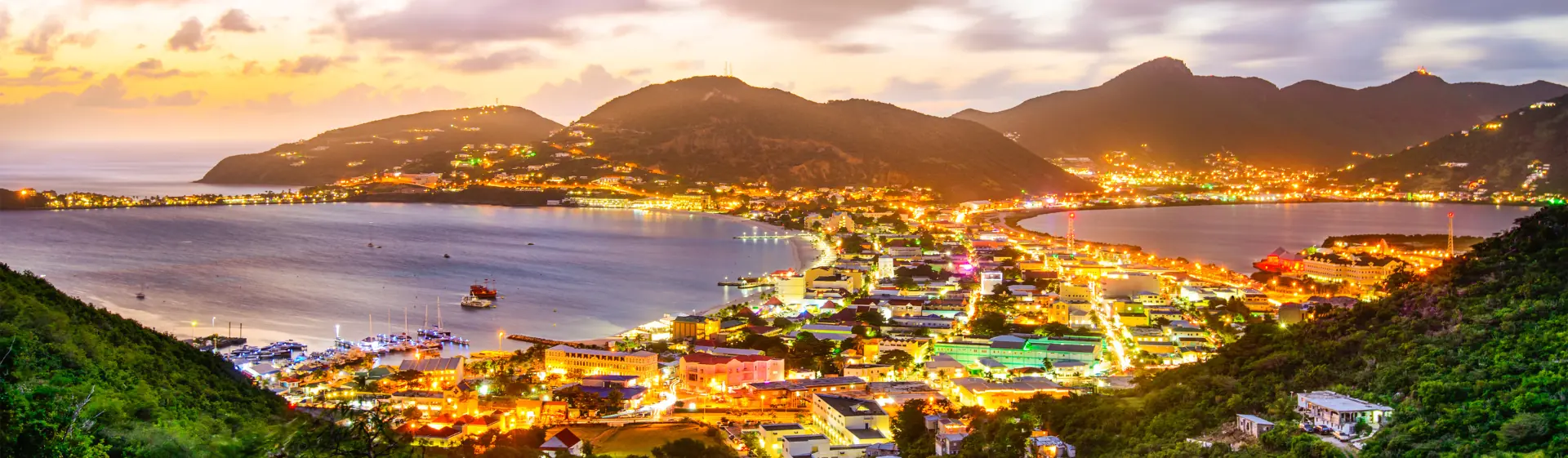
MSC MERAVIGLIA: Cruise from Miami to Puerto Rico and the Caribbean
1 available date
Itinerary
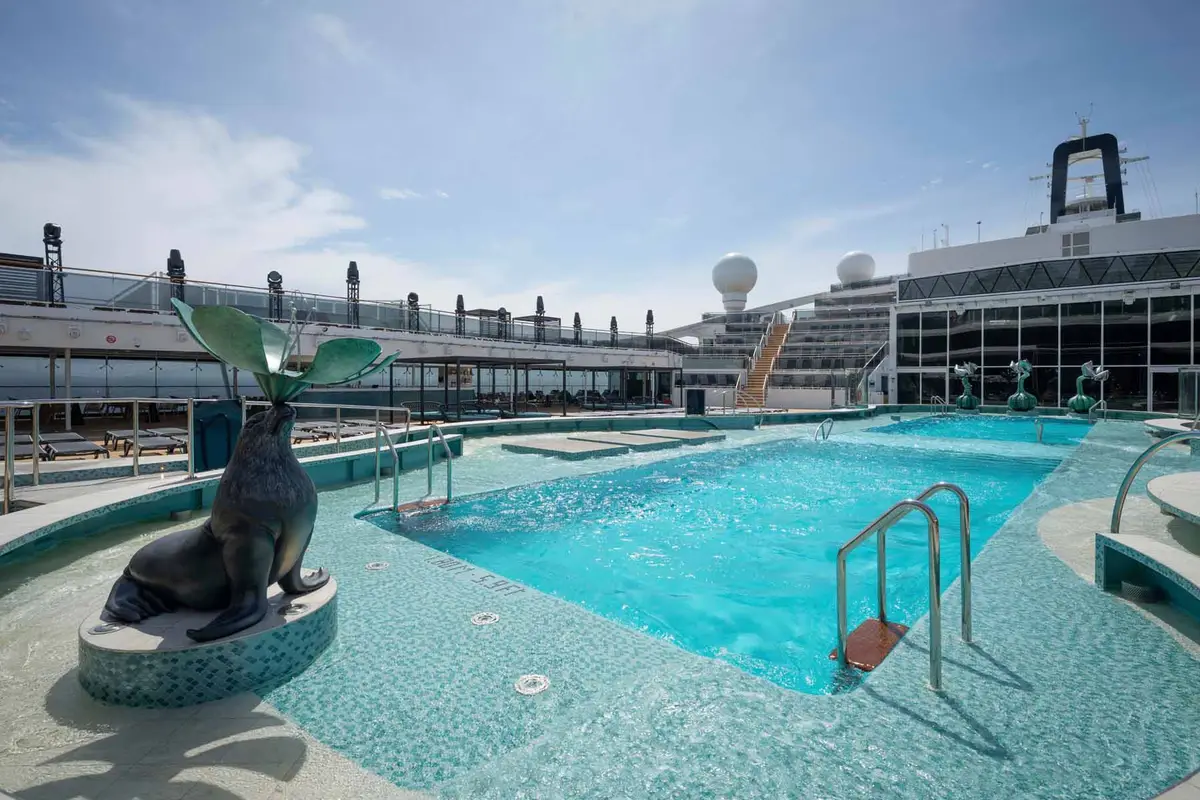
Set sail on an extended cruise aboard MSC Meraviglia through the heart of the Caribbean. From sunny Miami, the route continues to historic Nassau in the Bahamas, colonial San Juan in Puerto Rico, Dutch Philipsburg in Sint Maarten, and American Charlotte Amalie in St. Thomas. An indoor promenade with an LED dome, an outdoor water park and innovative sea-view lounges make this cruise a true Caribbean experience.
-
 BELLA EXPERIENCE BENEFITS×Bella Experience Benefits: Guaranteed cabin (cabin N° confirmed at least 4 days prior to departure) Cruise changes for a fee (applicable either on the cruise dates or on the destination. Must be performed up to 30 calendar days before departure, for a new cruise to sail within 90 calendar days from the original departure) Full board available in buffet and main restaurant Discounted drink package option at the time the cruise is booked Free continental breakfast in cabin (delivery for a fee) Broadway-style theater shows Pool area Kids club and activities Fitness center free access (from 14 years Booking Terms and Conditions apply) Sport facilities Entertainment activities MSC for Me app (where available) MSC Voyagers Club points.
Miami, United States
With a population of around 360,000, but almost 5 million in the entire urban area, Miami is Florida's most heavily populated city. It began to expand in 1896 when railway reached the city and Miami became a municipality. The pleasant climate and idyllic landscapes with numerous kilometres of beach propelled the city towards its first economic boom in the 1930s, although even greater development was to take place in the '50s.
Thanks to the mild climate, particularly in the winter when the majority of major cities on the East Coast of the US are at freezing point, Miami quickly carved out a role for itself in the tourism industry.
The city is also strategically located opposite the Caribbean and just 145km from Cuba: heavy Cuban immigration has consequently helped shape the identity of Miami in terms of culture and language. Indeed half of the city's population is now of Hispanic origin.
The city is divided into distinct neighbourhoods, some of which have separate and independent local governments, such as Miami Beach. Biscayne Boulevard is the main attraction in the area around the port and is flanked by large parks such as Bayfront Park and the Bicentennial Park; to the south of the port lies the financial district.
In downtown Miami, Flager Street is where to head to do a bit of shopping in the department stores and clothes, electronics, sports and jewellery shops. In the Metro Dade Center you can visit the Museum of Southern Florida, the city's main library, and the Museum of Fine Arts, which holds temporary modern art exhibitions. Coconut Grove is Miami's oldest district and has become, over time, an exclusive and refined residential area. Here you will find the local government offices, City Hall's home is an ex-1930s hangar. Other places of note in the neighbourhood include Peacock Park and the Dinner Key, Miami's tourist port.
Little Havana is the Cuban district characterised by an almost Caribbean atmosphere where Spanish is spoken more readily than English. The main road Calle Ocho runs through the district, which is lined with shops and cafés, whilst other places of interest include the Museum of the Cuban Arts and Culture, the Museum of Science and the Máximo Gómez Park.
Six kilometres to the east of Miami is Miami Beach, an island comprising a long, thin strip of sand connected to the mainland by a system of bridges. The southern end of Miami Beach is called South Beach and it is here that the city's recent rebirth began.
Miami's image had been tarnished in the '80s by heavy crime, racial violence, and the drugs and gambling culture that has been synonymous with the city since the 1930s when it was one of the few places in the States untouched by Prohibition.
The Art Deco Historic District, built up in the 1920s and noted for its pastel, rose, lavender and turquoise colour houses, has recently been restored and represents an excellent example of the urban restoration of modern architecture, attracting thousands of tourists each year. But Miami Beach also means the seafront and the famous Ocean Drive that separates the beach from the infinite numbers of bars and restaurants. An never-ending parade of bizarre cars, roller-skaters, skateboarders, and super-accessorised Harley Davidsons ensure that visitors remain amused.
As with the rest of the culture in Florida, food and drink in Miami has a heavy Cuban and Caribbean influence: the fish and seafood caught in the Atlantic and the Gulf of Mexico form the base of the most popular dishes.
Florida is also known for its large-scale production of fruit and vegetables, and is one of the biggest producers in the States.


Nassau, Bahamas
Nassau is the capital city of the Bahamas, a group of islands 50 miles from the coast of Florida, named 'Baja Mar' by Spanish settlers. Christopher Colombus was one of the first Europeans to visit the islands, and called the inhabitants 'lucaiani', derived from 'lukku-cairi' in their native language, meaning people from the island.
The first foreigners to have a substantial presence were British Lutherans who settled there after abandoning Bermuda in 1647. They made their home near Nassau, which is on New Providence Island, and developed a substantial maritime trade. The islands' commercial activities soon gained the unwanted attention of pirates, who for some 70 years terrorised the islands.
Among the more notorious pirates were Barbanera, Morgan and Anne Booney, as well as the legendary Blackbeard. The Bahamas' close proximity to America encouraged trade between the two, particularly during the American War of Independence in 1776 and the Anglo-Spanish War. But following the American Civil War, the Bahamas suffered lengthy and frequent periods of economic downturn, which lasted until the end of World War II.
Tourism became an increasingly important source of revenue, particularly after Castro came to power in Cuba and Americans had to look for an alternative nearby holiday destination. The Bahamas became part of the Commonwealth in 1969 and gained full independence in 1973. The capital Nassau, a fiscal haven, is rich in history, tradition, charm and folklore. Established in 1656, it has survived the colonial age, piracy and economic recession. Only ancient city walls and fortresses testify to the city's former troubles.
A number of gardens and fountains punctuate the busy city streets, lined with a host of restaurants, bars and duty-free shops. The port is the busiest in the Bahamas, with a constant stream of yachts and passenger ships arriving and leaving. And there are a number of glorious sandy beaches nearby, both on New Providence Island and its sister Paradise Island, connected by bridge from Nassau.

At sea


San Juan, Puerto Rico
American-owned Puerto Rico is the largest and most populated of an archipelago of several islands. It is a rectangular shaped island with fertile coasts and a rugged, fairly mountainous interior with lush rainforest. The island is one of the most densely populated areas of land in the world, with more than a third of the three million-plus inhabitants living in the busy capital, San Juan.
Numerous American companies operate on the island, while tourism remains one of the main industries. Christopher Columbus first landed on Puerto Rico in 1493. Fifteen years later Spanish conquistadors arrived and fought off the objecting native Taino Indians, killing a large number of them. The first governor was Ponce de Leon, who had previously travelled with Columbus and who thought the island might be the location of the Fountain of Youth. When this proved not to be the case, he left the island to continue his quest elsewhere.
Spain continued to develop the island, exploiting its crops of sugar and cotton and expanding its maritime activities. The Spanish hung on to the island in the face of rivalry from the English, French and Dutch, before losing out to the US in the 1898 Spanish-American war. The status of the island was consolidated by legal statute in 1917, when the population was given US citizenship, but not the US vote.
The capital of San Juan is divided into two distinct areas. One, the walled old town, is reflected in delightful Spanish colonial buildings, cobbled streets and ancient churches, the other in modern hotels, restaurants and casinos. The cultural mix of the population is also distinctive, a combination of Taino Indians, Spanish and other Europeans, Africans, Americans and, more recently, Cubans. As one of Puerto Rico's best known citizens, Ricky Martin, once said of his country: "It is not one thing, it is one thousand things together and even if I could list them all, it would be better to simply say Puerto Rico; maybe this is why I find it so easy to sing in Spanglish, the language spoken in the quarter where I was born."

Philipsburg, St. Maarten
Charlotte Amalie (St Tomas), United States
The city is named after Charles II of England (1630–85). It was founded as Charlestown, or Charles Town, in 1670 and was moved to its current site in 1680. The following century, in 1783, it was renamed Charleston. In 1690 it had a population of 1,200 and was the fifth-largest city in North America, and an important hub for the slave trade between Africa and the British colonies.
In 1886 the city was almost destroyed by a massive earthquake, but it was soon rebuilt by its industrious inhabitants. Today it is a gem of North American architecture.
Charleston is in South Carolina, one of the original 13 colonies that rebelled against British rule in the War of Independence. The declaration of their secession from the US to form the Confederate States of America sparked the American Civil War, whose first battle was fought at Fort Sumter, in Charleston Bay. The city’s history and lush natural scenery, with spectacular oak trees and palms, has made it a famous tourist destination. Rainbow Row is a series of colourful houses on East Bay Street, which has become one of the symbols of the city. Its Caribbean-style pastel hues give it a unique atmosphere.
Charleston is also home to several museums, such as the Charleston Museum, Denmark Vesey House, the Old Slave Mart Museum, Patriot’s Point Naval and Maritime Museum, the South Carolina Aquarium and the American Military Museum. The Old Exchange and Provost Dungeon is one of the most important colonial-style buildings in the entire United States. The Charleston Visitor Reception and Transportation Center not only offers historical information about the city, but also sells classic souvenirs. The Arthur Ravenel Jr. Bridge over the Cooper River is the longest cable-stayed bridge in the Americas. It was inaugurated in 2005 and spans 471 metres. It is a suspension bridge supported by a series of cables. Nearby attractions include North Charleston, Isle of Palms, Kiawah Island, Seabrook Island, Folly Beach, Summerville, Edisto Island, St. George and Mount Pleasant.

At sea
At sea
Miami, United States
With a population of around 360,000, but almost 5 million in the entire urban area, Miami is Florida's most heavily populated city. It began to expand in 1896 when railway reached the city and Miami became a municipality. The pleasant climate and idyllic landscapes with numerous kilometres of beach propelled the city towards its first economic boom in the 1930s, although even greater development was to take place in the '50s.
Thanks to the mild climate, particularly in the winter when the majority of major cities on the East Coast of the US are at freezing point, Miami quickly carved out a role for itself in the tourism industry.
The city is also strategically located opposite the Caribbean and just 145km from Cuba: heavy Cuban immigration has consequently helped shape the identity of Miami in terms of culture and language. Indeed half of the city's population is now of Hispanic origin.
The city is divided into distinct neighbourhoods, some of which have separate and independent local governments, such as Miami Beach. Biscayne Boulevard is the main attraction in the area around the port and is flanked by large parks such as Bayfront Park and the Bicentennial Park; to the south of the port lies the financial district.
In downtown Miami, Flager Street is where to head to do a bit of shopping in the department stores and clothes, electronics, sports and jewellery shops. In the Metro Dade Center you can visit the Museum of Southern Florida, the city's main library, and the Museum of Fine Arts, which holds temporary modern art exhibitions. Coconut Grove is Miami's oldest district and has become, over time, an exclusive and refined residential area. Here you will find the local government offices, City Hall's home is an ex-1930s hangar. Other places of note in the neighbourhood include Peacock Park and the Dinner Key, Miami's tourist port.
Little Havana is the Cuban district characterised by an almost Caribbean atmosphere where Spanish is spoken more readily than English. The main road Calle Ocho runs through the district, which is lined with shops and cafés, whilst other places of interest include the Museum of the Cuban Arts and Culture, the Museum of Science and the Máximo Gómez Park.
Six kilometres to the east of Miami is Miami Beach, an island comprising a long, thin strip of sand connected to the mainland by a system of bridges. The southern end of Miami Beach is called South Beach and it is here that the city's recent rebirth began.
Miami's image had been tarnished in the '80s by heavy crime, racial violence, and the drugs and gambling culture that has been synonymous with the city since the 1930s when it was one of the few places in the States untouched by Prohibition.
The Art Deco Historic District, built up in the 1920s and noted for its pastel, rose, lavender and turquoise colour houses, has recently been restored and represents an excellent example of the urban restoration of modern architecture, attracting thousands of tourists each year. But Miami Beach also means the seafront and the famous Ocean Drive that separates the beach from the infinite numbers of bars and restaurants. An never-ending parade of bizarre cars, roller-skaters, skateboarders, and super-accessorised Harley Davidsons ensure that visitors remain amused.
As with the rest of the culture in Florida, food and drink in Miami has a heavy Cuban and Caribbean influence: the fish and seafood caught in the Atlantic and the Gulf of Mexico form the base of the most popular dishes.
Florida is also known for its large-scale production of fruit and vegetables, and is one of the biggest producers in the States.
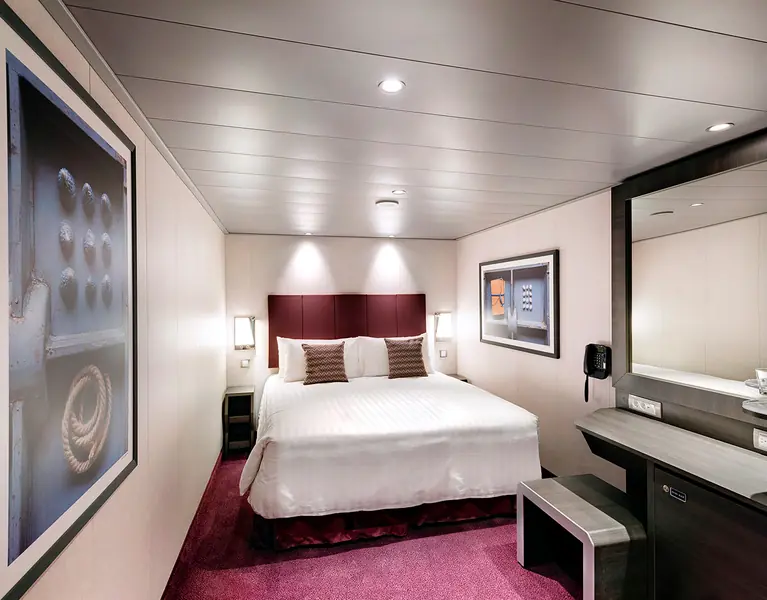
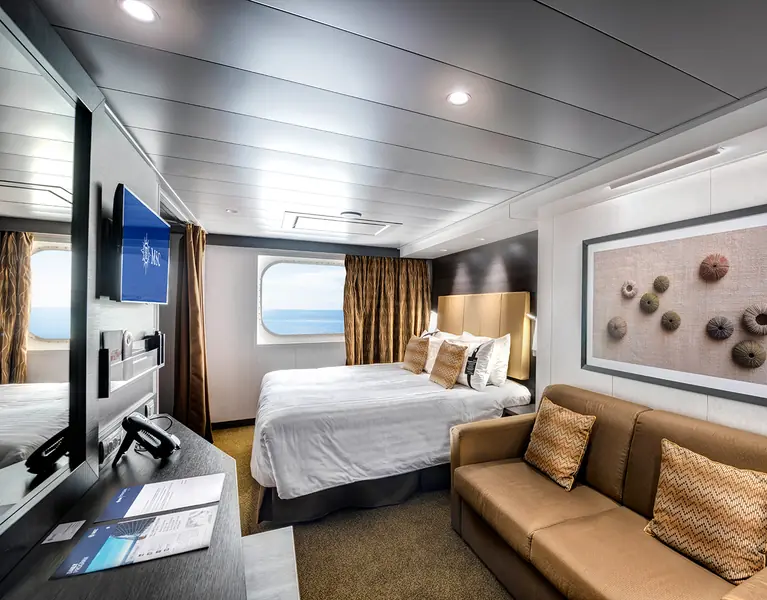
Available cabins for Sat. 30.01. - Sun. 07.02.2027.




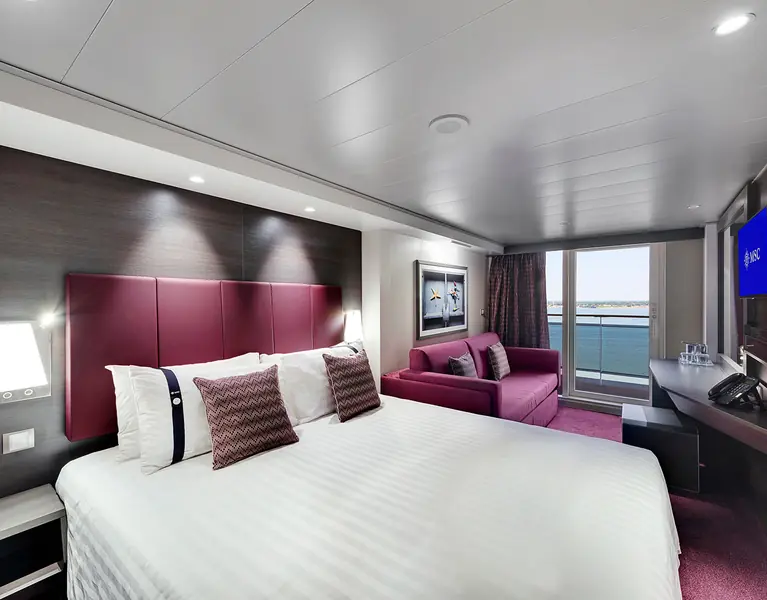

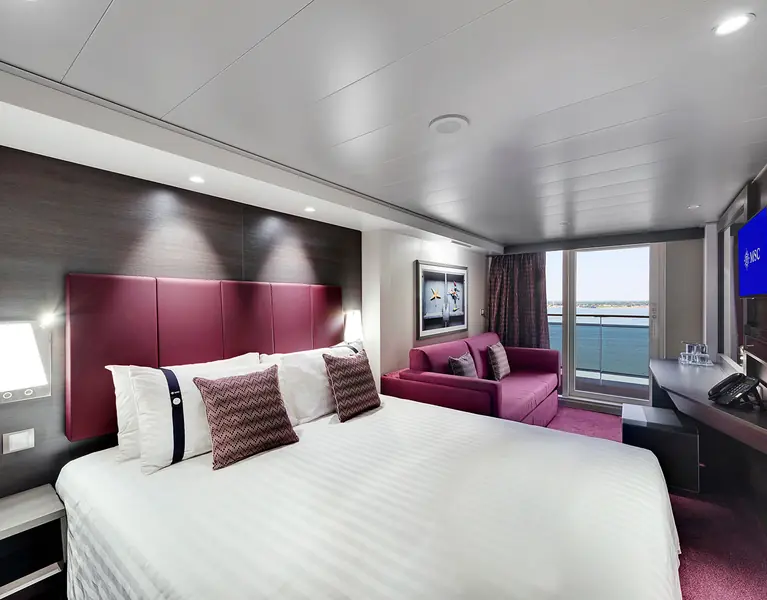


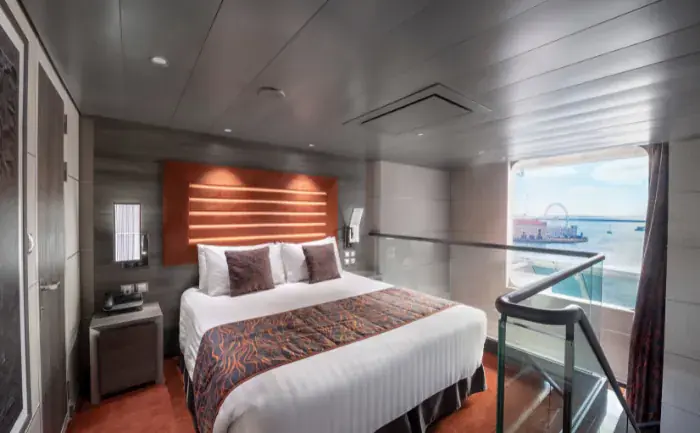
MSC MERAVIGLIA

The ship for all seasons
MSC Meraviglia is packed with extraordinary features for the perfect experience at sea in any season. Enjoy outstanding dining options and out-of-this-world entertainment with new panoramic areas, an innovative ocean-view aft lounge, a two-deck "inside promenade" with a 480m2 LED dome and a spectacular amusement area connected to an outdoor water park.
MSC Meraviglia is one of the ships that sail to our exclusive Bahamian destination Ocean Cay MSC Marine Reserve.