

MSC EURIBIA: Copenhagen, Denmark - Copenhagen, Denmark - 10.10.2027. - 7 days
2 available dates
Itinerary
-
 BELLA EXPERIENCE BENEFITS×Bella Experience Benefits: Guaranteed cabin (cabin N° confirmed at least 4 days prior to departure) Cruise changes for a fee (applicable either on the cruise dates or on the destination. Must be performed up to 30 calendar days before departure, for a new cruise to sail within 90 calendar days from the original departure) Full board available in buffet and main restaurant Discounted drink package option at the time the cruise is booked Free continental breakfast in cabin (delivery for a fee) Broadway-style theater shows Pool area Kids club and activities Fitness center free access (from 14 years Booking Terms and Conditions apply) Sport facilities Entertainment activities MSC for Me app (where available) MSC Voyagers Club points.
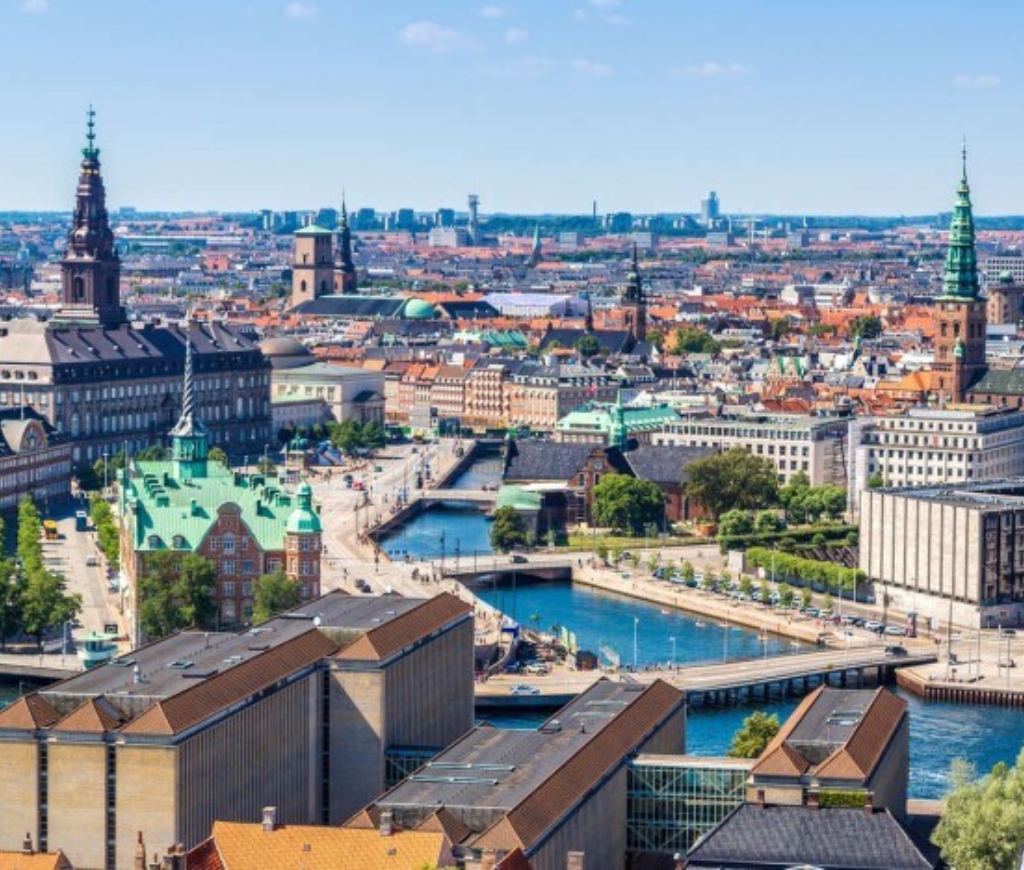
Copenhagen, Denmark
Copenhagen, the capital of Denmark, delights everyone – from history lovers eager to explore magnificent Baroque palaces to gourmands looking to indulge in Michelin-starred restaurants.
In the city center, you’ll find three impressive royal landmarks: Christiansborg Palace (seat of the Danish Parliament), Rosenborg Castle (home to the Danish crown jewels), and Amalienborg Palace (residence of the Danish royal family).
Culture and history enthusiasts can enjoy numerous museums and galleries, while those seeking relaxation will appreciate the city's laid-back pace, extensive cycling paths, and beautiful parks – we recommend a leisurely coffee along the Nyhavn canal or the thrill of historic rides at the Tivoli Gardens amusement park. The city’s symbol, The Little Mermaid statue, pays homage to the fairy tales of Hans Christian Andersen and is a must-see photo spot.
Whether you're looking for an urban adventure, royal grandeur, world-class dining, or simply want to soak up the atmosphere of Scandinavian life – Copenhagen will win you over with its effortless elegance and warm hospitality.

At sea


Visby, Sweden
The origins of the Swedish island of Gotland, simply translated as 'God's land', are steeped in legend. The ancient Swedes believed that Viking gods blessed the island with great beauty and natural wealth.
The island, which enjoys a relatively mild climate, has a population of some 60,000 inhabitants, a third of whom live in and around the charming walled city of Visby, the most important port in the region. Visby is sometimes called the 'city of roses and of ruins'. Roses grow in abundance in the area and several times a year bloom into a colourful extravaganza. The ruins are particularly well preserved and date back to the Middle Ages when Gotland was inhabited by a deeply religious and civil people. Visby keeps this tradition alive with several performances that pay homage to its cultural origins.
Visby's city walls date back to the 1300s and are one of the top attractions of the area. Built of calcareous stone, the walls extend for nearly 4km and feature 44 towers standing up to 20 metres high. Several of the towers are the subject of legend. One tells of a young girl shut away in the tower called Jungfrutornet, after her love for an enemy forced her father to betray the city.
The city centre features the remains of two ancient churches, St. Peter and St. Hans, where recent archaeological investigation revealed the presence of three even older churches. The Gotlands Museum is renowned for its runic displays and exhibits from the mediaeval and Viking eras.

Helsinki, Finland
The modern city of Helsinki is a fascinating architectural mix, partly in a style based on St Petersburg and partly a futuristic suburbia. As the capital of Finland, it is also the cultural centre, with more than 30 art galleries and museums. The history of Helsinki, known as the 'daughter of the Baltic', over the past thousand years has not been short of dramatic interludes. At the beginning of the second millennium Finland was strongly influenced by Sweden, despite maintaining official independence.
King Gustavus I of Sweden founded Helsinki in 1550 and the Swedes occupied the city until 1812 when it passed to Russian rule. When Finland gained independence in 1917, this was the beginning of further turmoil. Bloody civil war broke out and at the beginning of World War II the Russians invaded under the leadership of General Mennerheim. After more than one year of being under siege, Helsinki finally gave way to the invading forces. Since the war, Finland has pursued a policy of neutrality.
In general, the architecture of Helsinki is a mixture of 19th Century imperial design and 20th Century Art Nouveau. However, the city's most impressive buildings and landmarks are the work of Finland's famous designer Alvar Aalto.
Among the city's most important buildings are the Lutheran Cathedral in Senate Square, the Uspenski Orthodox cathedral, the University and the Presidential Palace. One of the main Lutheran temples is the renowned Temppeliaukio church, carved in rock and a venue for art exhibitions and concerts. The most important music venue is the Aalto-designed Finlandia-talo. Nearby is a park dedicated to the Finnish composer Sibelius and including a statue of celebrated writer Eila Hiltunen. The street markets of Helsinki are another of its main attractions.
The most popular is Kauppatori in the southern part of the city. Other markets can be found at Hakaniemi, Toolo and Hetalahti. A popular tourist attraction in Helsinki is Suomenlinna Island, reached by ferry shuttle, where it is possible to stroll among the ruins of an 18th Century fortress and visit a number of museums. Finland's cuisine is similar to other Scandinavian countries. Baltic herrings are widely served, often accompanied by boiled potatoes and a glass of spirit. Kalakukko is a sort of rye-bread based pizza baked in the oven and filled with fish. For a hot drink, the Finns are especially proud of their coffee.

Tallin, Estonia
The capital city of Estonia, Tallinn comprises a mediaeval section situated near the port and the more modern, hillside district. The first major power to have an interest in this stretch of coast facing the Baltic Sea were the Danes, who developed considerable commerce in the area. In the 15th Century, Tallinn became the target of Swedish ambitions, followed by the Germans and later the Russians. However, the sense of national identity has always been strong in Estonia, which led first to conflict with the Romanov Tzars, then the Soviet central government, before the country was finally granted independence in 1991.
Tallinn, the cultural and political heart of Estonia and once known as Reval, is renowned for its art galleries and open-air theatres, and each summer hosts a world-famous music festival. Sailing is one of the favourite activities of the residents of Tallinn, which hosted the sailing events of the 1980 Moscow Olympic Games. So-called 'white nights' when the sun never sets are a particular feature of the city, comparable to those of St Petersburg. The historical sites of Tallinn are within easy reach, making the city ideal to explore on foot. A major landmark is the 13th Century fortification at Toompea, the hill on which Tallinn was originally built by the Danish King Waldemar ll in 1219. The area now houses Estonia's various departments of state. The Gothic Town Hall, complete with soaring steeple, is the oldest civic building in the Baltic. Its symbol, Vana Toomas, dates from 1530 and the interior Congress Hall, with specially carved seats, is of particular interest.
Estonia is known for beautiful embroidered cloths, carpets and multicoloured tapestries. Other local specialities include leatherwear and ornate jewellery including silver, topaz and ruby.


At sea
Kiel, Germany
When it comes to the sea, there is no more important place in Germany – and arguably in Northern Europe – than Kiel. This port city in Schleswig-Holstein is a vital link between the Baltic and North Seas, located at the head of the Kiel Canal.
Kiel is also one of Northern Europe’s major cruise and shipbuilding centers, and it is especially known for Kieler Woche (Kiel Week), one of Europe’s largest regattas. Don’t miss a visit to the Kiel Aquarium, with its rich collection of marine life from the Baltic and North Seas.
Nature lovers can enjoy the expansive Baltic Sea beaches, seaside promenades, and picturesque botanical gardens with over 14,000 plant species. For those seeking historical and cultural experiences, fascinating open-air museums in Molfsee and the Baroque fortress in Eutin are located not far from Kiel.
Choose a Kiel cruise for unforgettable adventures in this captivating part of Germany.

Copenhagen, Denmark
Copenhagen, the capital of Denmark, delights everyone – from history lovers eager to explore magnificent Baroque palaces to gourmands looking to indulge in Michelin-starred restaurants.
In the city center, you’ll find three impressive royal landmarks: Christiansborg Palace (seat of the Danish Parliament), Rosenborg Castle (home to the Danish crown jewels), and Amalienborg Palace (residence of the Danish royal family).
Culture and history enthusiasts can enjoy numerous museums and galleries, while those seeking relaxation will appreciate the city's laid-back pace, extensive cycling paths, and beautiful parks – we recommend a leisurely coffee along the Nyhavn canal or the thrill of historic rides at the Tivoli Gardens amusement park. The city’s symbol, The Little Mermaid statue, pays homage to the fairy tales of Hans Christian Andersen and is a must-see photo spot.
Whether you're looking for an urban adventure, royal grandeur, world-class dining, or simply want to soak up the atmosphere of Scandinavian life – Copenhagen will win you over with its effortless elegance and warm hospitality.
Available cabins for Sun. 10.10. - Sun. 17.10.2027.


MSC EURIBIA

The future of cruising
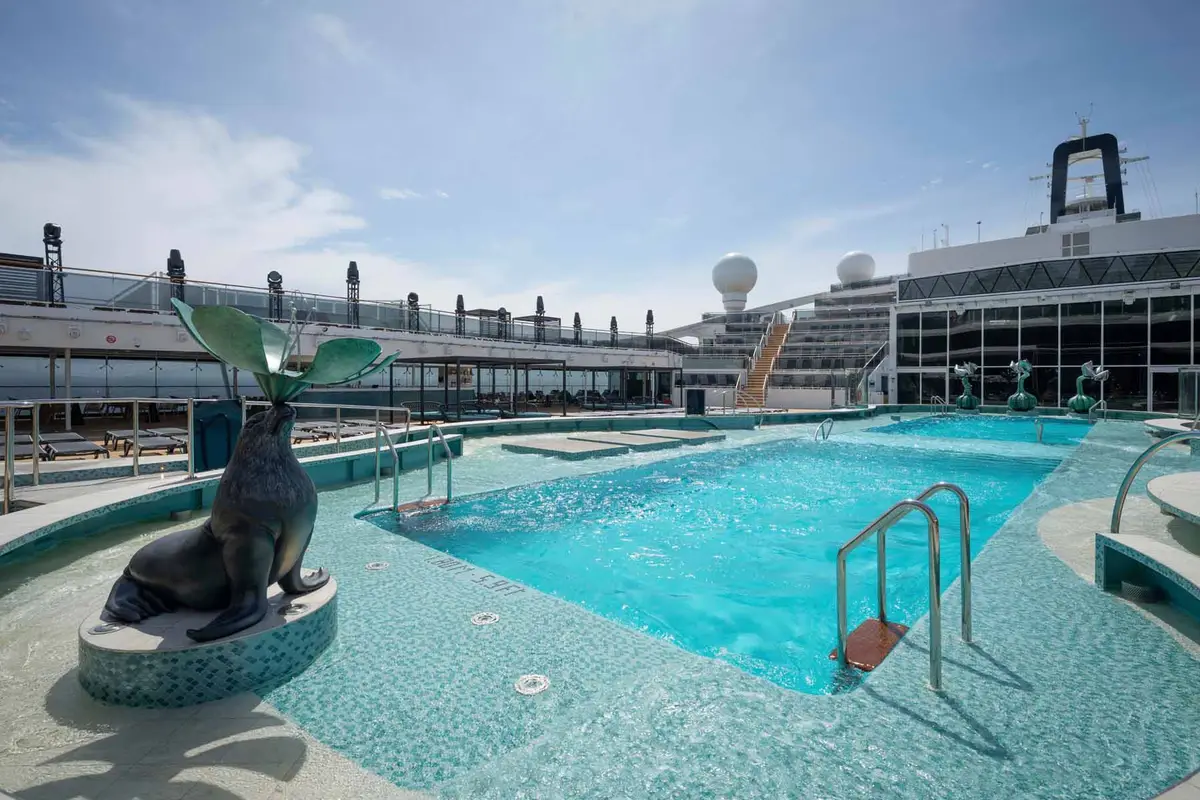
MSC Euribia is named after the ancient goddess Eurybia who harnessed the winds, weather and constellations to master the seas.
Inspired by this vision, this ship combines state-of-the-art technology with visionary design, inviting guests to experience the future of cruising.
Beyond her advanced features, MSC Euribia boast numerous original works of art and for the first time the hull itself is a visual masterpiece.