

MSC BELLISSIMA: Shanghai, China - Shanghai, China - 21.09.2027. - 9 days
1 available date
Itinerary
-
 INTERNET BROWSE & STREAM - 2 DEVICES×Book now and save up to 25% vs onboard price!
The "Browse & Stream - 2 devices Cruise Package" keeps you connected with friends and family all cruise long.
With this package you can browse the web, send and receive emails and images, chat on messenger apps (e.g. WhatsApp), video chat, stream music and videos and post and live stream on social media.- Internet access for 2 devices
- Duration: entire cruise
- Data limit: unlimited
-
 DEEP TISSUE MASSAGE - 50 MIN×A DEEP RHYTHMIC FULL BODY MASSAGE THAT WORKS THERAPEUTICALLY TO TARGET THE DEEPER MUSCLE LAYERS WHICH ALLEVIATES STRESS, KNOTS AND DEEP MUSCLE TENSION.
-
 Trilogy - Three Exclusive Dining Experiences×
Book now and save up to 15%!
Take the chance to taste the variety of our exclusive and distinctive cuisine available in the Specialty Restaurants of our ships.
Includes:
- Three unique dining experiences in three different Specialty Restaurants
- Great savings vs onboard prices
A dining experience (lunch or dinner) menu will be offered to guests who purchase the Trilogy package. The menu delivers the Specialty Restaurants concepts experience. The package includes food only. Day of booking to be confirmed on board. Specialty restaurants vary by ship and must be part of each ship's Trilogy Package selection.
-
 INTERNET BROWSE - 2 DEVICES×Book now and save up to 25% vs onboard price!
The "Browse - 2 devices Internet Cruise Package" keeps you connected with friends and family all cruise long.
With this package you can browse the web, send and receive emails and images and chat on messenger apps (e.g. WhatsApp)- Internet access for 2 devices
- Duration: entire cruise
- Data limit: unlimited
- Not recommended for video chat
-
 Swedish Massage - 50 min×Book now and save up to 45% vs onboard price!
A traditional full body massage that promotes relaxation and well being, easing tired and aching muscles.
- Duration: approx. 50 minutes of treatments
This offer is only valid to anyone over the age of 18 years old.Your package is valid for the full cruise length and can only be used during our opening hours depending on availability.To secure your preferred day and time, please visit the MSC Aurea Spa reception on your embarkation day.
-
 FANTASTICA EXPERIENCE BENEFITS×Fantastica Experience Benefits: Choice of cabin category and location (In the event of change cabin due to operational reasons, guests will be granted either a cabin category or a deck upgrade ) One free cruise change (Must be performed up to 30 calendar days before departure, for a cruise within 90 calendar days from the original departure) Discounted drink package option at the time the cruise is booked Dinner sitting preference (subject to availability) Full board available in buffet and main restaurant 24-hour room service (free delivery) Free continental breakfast in cabin (free delivery) Broadway-style theater shows Pool area Kids club and activities Fitness center free access (from 14 years Booking Terms and Conditions apply) Sport facilities Entertainment activities MSC for Me (where available) MSC Voyagers Club points Discounted packages offer.
Shanghai, China
Shanghai is the largest city in the People's Republic of China. At the beginning of 2006 the administrative district had over 18 million inhabitants, the city proper 9,327,199. It is built on the Huangpu river, on the Chang Jiang delta.
In the last few decades, like the rest of the country in fact, Shanghai has seen incredible growth, becoming an economic, financial, commercial and communications centre of enormous importance. The port is one of the busiest in the world, together with those of Shanghai and Hamburg. But Shanghai is also a peerless cultural and university centre.
The city and its hinterland forms one of the four municipalities of China and has provincial status. In the Chinese language Shanghai is abbreviated to Hù and Shen, and literally means "by the sea" or even "in the sea". It is known throughout the world by various colourful nicknames, which highlight a variety of different features, for example "Paris of the East", "Queen of the East" or "Pearl of the Orient". Its origins are uncertain, but by the 11th century, Shanghai was already one of the Chinese Empire's commercial centres.
However, it only really began to grow after 1842 with the Opium War, specifically with the Treaty of Nanking under which the western powers effectively imposed the opening of the city and the port to international trade and introduced the system of concessions, according to which the English, French and Americans especially operated in the commercial and financial sector. Concessions were abolished during the Japanese occupation (1937-1945) and business activity started again at the end of the Second World War. In 1949 Mao's communists took control of the city (and of the whole country, except Taiwan) and Shanghai became one of only two municipalities not to be immediately annexed to the neighbouring provinces.
You can retrace the stages of this history in the Shanghai Museum (founded in 1952). From the fifties the Communist regime forced many foreign companies to transfer their business from Shanghai to Hong Kong and the city became an industrial centre of the communist revolution. During the Cultural Revolution, Shanghai was able to maintain its traditionally high productivity and relative social stability, even if the first liberalisation only occurred in 1991.
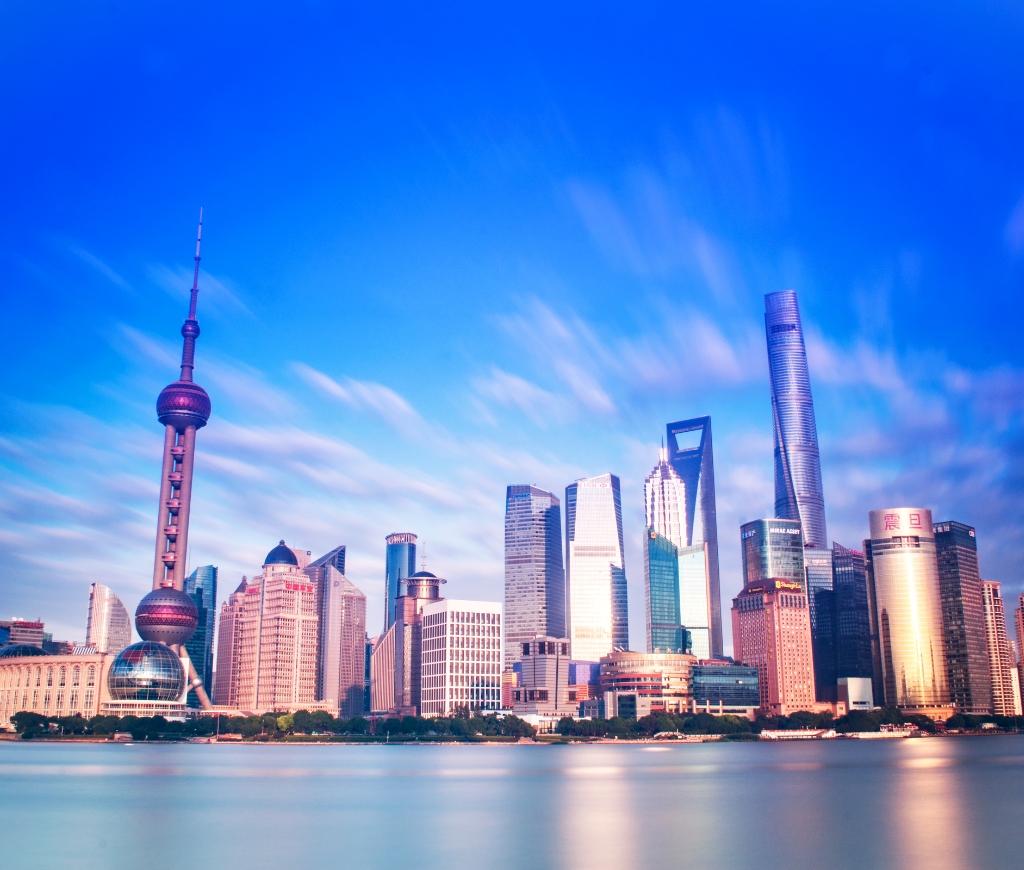
The race for the future of this chaotic megalopolis really took off at the beginning of the nineties and in little more than a decade, its rapid economic development, based on financial and banking services, manufacturing companies and high technology, has attracted substantial investment from many foreign companies. Shanghai is now an international metropolis which is expected to overtake the great western centres. The economic liveliness and growing modernisation are clearly shown by the skyscrapers in the Pudong financial district.
You could imagine yourself here in one of the major American or European financial centres. Jinmao Tower is the highest skyscraper, standing 420 metres tall with 88 floors, whereas the highest building overall is the Television Tower (Oriental Pearl Tower, 467 metres). Today, Shanghai vies above all with Hong Kong, which has, however, the advantage of a more modern and stable legal system and greater experience in the banking and financial sector. On the other hand, Shanghai has closer links with the central government in Beijing.
Nevertheless, the handing back of Hong Kong to China by the English in 1997 has increased Shanghai's opportunities for economic development and in the last few years it has focused a great deal on sport (Formula 1) but also and above all on the last summer Olympics in 2008 as a means of international promotion. Beijing has naturally been the main host city, but other Chinese cities have hosted some Olympic events. Apart from Shanghai, events were held in Hong Kong, Qingdao, Tianjin, Shenyang and Qinhuangdao.
Gangjeong-Jeju Island, Republic of Korea
Fukuoka (Hakata), Japan
Fukuoka is the capital of the prefecture of Fukuoka and is located on the northern coast of the island Kyushu in Japan. It is also the most populous city on the island of Kyushu (2.5 million people according to the 2005 census, including the neighbouring cities of Saga and Kasuga as part of the greater metropolitan area), followed by Kitakyushu.
The city's metropolitan area is the largest to the west of Osaka. Fukuoka is also the birthplace of several successful singers who have found fame in Japan and many other Asian nations. In recent years the city has been expanding along the coast and large areas of the city have been built on reclaimed land, such as the artificial island in the district of Higashi appropriately called Island City. Located 1,100 km from Tokyo, 540 km from Seoul, 870 km from Shanghai and 1,300 km form Taipei, Fukuoka is the most important city for cultural and economic exchange with the rest of Asia. Like most prefectures, Fukuoka has a moderate climate with an average temperature of 16.3°C and average humidity of 70%, 1,811 hours of sunlight and 205 cm precipitation. Roughly 40% of the year is cloudy. Winters are rainy with infrequent snowfall and temperatures rarely drop below 0°C. Spring is mild and sunnier, with cherry blossom appearing in late March or early April. The rainy season (tsuyu) lasts for approximately six weeks through June and July, when humidity is very high and temperatures hover between 25 and 30°C. Summers are hot and humid with temperatures reaching 37°C. Autumn, often considered Fukuoka's best season, is mild and dry, although the typhoon season runs between August and September. Overall in Spring and Autumn the rain is less intense. In May 2007, the city's estimated population was 1,442,836 with a population density of 7,184.07 per km². Its total area is 340.60 km².
With an average age of 38.6 years, Fukuoka is the second youngest city in Japan. The 4.4% growth rate is also the second fastest in the country (based on data from the 2000 census). Although the city of Fukuoka offers all kinds of entertainment, a rich history and excellent local cuisine, it is off the beaten tourist track for Europeans. Nonetheless, it is a leading destination for Japanese visitors and tourists from neighbouring Asian countries. At 234 metres, the FukuokaTower is the tallest tower in Kyushu, the tallest costal tower in Japan and the 13th-tallest structure in the country. Situated in the district of Sawara, it was built in 1989 for the Asian Pacific Expo (Yokatopia). It offers the chance to admire the city's splendid panorama 123 metres from the ground. Sky Dream Fukuoka, situated in the Sawara district, is the largest Ferris wheel in Japan and the fifth-largest in the world, standing 120 metres above the ground. Ohori Park offers plenty of opportunities for leisure and relaxation. Opened in 1929, it features a large artificial lake modelled on Lake Xi Hi in China.
The Uminonakamichi Seaside Park in the Higashi district was an American military base until 1972. Today its 200 hectares make it the largest recreational area in Fukuoka. There is an amusement park with rollercoasters and a Ferris wheel, as well as a small petting zoo, a huge park with exhibition areas, sandy beaches, hotels and a large aquarium with dolphin shows. The Tower of the Port of Hakata, 103 metres tall, offers a panoramic view over Hakata Bay's shopping complex, Bayside Place. Besides being a port with connections to many destinations, it is also home to numerous shops and restaurants, as well as a large aquarium. The Saibu Gas Centre is unusual in that it is a museum about gas. Here you can spend some time learning some interesting facts about the science of gas with the museum's various interactive displays. Fukuoka Castle offers an interesting cultural experience.
All that remains of the castle in Ohori Park are several towers, rebuilt around 1950 - 1960, a period in which many damaged castles were renovated. It was in fact destroyed during the Meiji Restoration. The Genko Historical Museum, a museum dedicated to the Mongolian invasions in Higashi Park, features 13th century Mongolian and Japanese arms and armour, as well as paintings of historical subjects. Fukuoka is known throughout Japan first and foremost for its mentaiko: this dish comes from Korean cuisine and consists of cod roe marinated in salt and chilli pepper. Another Fukuoka speciality is tonkotsu ramen, noodles in broth made from pork bones that have been boiled for hours. The port and the airport are very important. Fukuoka is surpassed only by Tokyo and Osaka for international trade. Between 2000 and 2004 the value of exports for the port of Hakata has actually more than doubled. 50% of exports are rubber goods, bearing in mind that nearby Kurume is home to Bridgestone.
At sea


Shanghai, China
Shanghai is the largest city in the People's Republic of China. At the beginning of 2006 the administrative district had over 18 million inhabitants, the city proper 9,327,199. It is built on the Huangpu river, on the Chang Jiang delta.
In the last few decades, like the rest of the country in fact, Shanghai has seen incredible growth, becoming an economic, financial, commercial and communications centre of enormous importance. The port is one of the busiest in the world, together with those of Shanghai and Hamburg. But Shanghai is also a peerless cultural and university centre.
The city and its hinterland forms one of the four municipalities of China and has provincial status. In the Chinese language Shanghai is abbreviated to Hù and Shen, and literally means "by the sea" or even "in the sea". It is known throughout the world by various colourful nicknames, which highlight a variety of different features, for example "Paris of the East", "Queen of the East" or "Pearl of the Orient". Its origins are uncertain, but by the 11th century, Shanghai was already one of the Chinese Empire's commercial centres.
However, it only really began to grow after 1842 with the Opium War, specifically with the Treaty of Nanking under which the western powers effectively imposed the opening of the city and the port to international trade and introduced the system of concessions, according to which the English, French and Americans especially operated in the commercial and financial sector. Concessions were abolished during the Japanese occupation (1937-1945) and business activity started again at the end of the Second World War. In 1949 Mao's communists took control of the city (and of the whole country, except Taiwan) and Shanghai became one of only two municipalities not to be immediately annexed to the neighbouring provinces.
You can retrace the stages of this history in the Shanghai Museum (founded in 1952). From the fifties the Communist regime forced many foreign companies to transfer their business from Shanghai to Hong Kong and the city became an industrial centre of the communist revolution. During the Cultural Revolution, Shanghai was able to maintain its traditionally high productivity and relative social stability, even if the first liberalisation only occurred in 1991.
The race for the future of this chaotic megalopolis really took off at the beginning of the nineties and in little more than a decade, its rapid economic development, based on financial and banking services, manufacturing companies and high technology, has attracted substantial investment from many foreign companies. Shanghai is now an international metropolis which is expected to overtake the great western centres. The economic liveliness and growing modernisation are clearly shown by the skyscrapers in the Pudong financial district.
You could imagine yourself here in one of the major American or European financial centres. Jinmao Tower is the highest skyscraper, standing 420 metres tall with 88 floors, whereas the highest building overall is the Television Tower (Oriental Pearl Tower, 467 metres). Today, Shanghai vies above all with Hong Kong, which has, however, the advantage of a more modern and stable legal system and greater experience in the banking and financial sector. On the other hand, Shanghai has closer links with the central government in Beijing.
Nevertheless, the handing back of Hong Kong to China by the English in 1997 has increased Shanghai's opportunities for economic development and in the last few years it has focused a great deal on sport (Formula 1) but also and above all on the last summer Olympics in 2008 as a means of international promotion. Beijing has naturally been the main host city, but other Chinese cities have hosted some Olympic events. Apart from Shanghai, events were held in Hong Kong, Qingdao, Tianjin, Shenyang and Qinhuangdao.
At sea
Naha (Okinawa), Japan
Kagoshima, Japan
At sea
Shanghai, China
Shanghai is the largest city in the People's Republic of China. At the beginning of 2006 the administrative district had over 18 million inhabitants, the city proper 9,327,199. It is built on the Huangpu river, on the Chang Jiang delta.
In the last few decades, like the rest of the country in fact, Shanghai has seen incredible growth, becoming an economic, financial, commercial and communications centre of enormous importance. The port is one of the busiest in the world, together with those of Shanghai and Hamburg. But Shanghai is also a peerless cultural and university centre.
The city and its hinterland forms one of the four municipalities of China and has provincial status. In the Chinese language Shanghai is abbreviated to Hù and Shen, and literally means "by the sea" or even "in the sea". It is known throughout the world by various colourful nicknames, which highlight a variety of different features, for example "Paris of the East", "Queen of the East" or "Pearl of the Orient". Its origins are uncertain, but by the 11th century, Shanghai was already one of the Chinese Empire's commercial centres.
However, it only really began to grow after 1842 with the Opium War, specifically with the Treaty of Nanking under which the western powers effectively imposed the opening of the city and the port to international trade and introduced the system of concessions, according to which the English, French and Americans especially operated in the commercial and financial sector. Concessions were abolished during the Japanese occupation (1937-1945) and business activity started again at the end of the Second World War. In 1949 Mao's communists took control of the city (and of the whole country, except Taiwan) and Shanghai became one of only two municipalities not to be immediately annexed to the neighbouring provinces.
You can retrace the stages of this history in the Shanghai Museum (founded in 1952). From the fifties the Communist regime forced many foreign companies to transfer their business from Shanghai to Hong Kong and the city became an industrial centre of the communist revolution. During the Cultural Revolution, Shanghai was able to maintain its traditionally high productivity and relative social stability, even if the first liberalisation only occurred in 1991.
The race for the future of this chaotic megalopolis really took off at the beginning of the nineties and in little more than a decade, its rapid economic development, based on financial and banking services, manufacturing companies and high technology, has attracted substantial investment from many foreign companies. Shanghai is now an international metropolis which is expected to overtake the great western centres. The economic liveliness and growing modernisation are clearly shown by the skyscrapers in the Pudong financial district.
You could imagine yourself here in one of the major American or European financial centres. Jinmao Tower is the highest skyscraper, standing 420 metres tall with 88 floors, whereas the highest building overall is the Television Tower (Oriental Pearl Tower, 467 metres). Today, Shanghai vies above all with Hong Kong, which has, however, the advantage of a more modern and stable legal system and greater experience in the banking and financial sector. On the other hand, Shanghai has closer links with the central government in Beijing.
Nevertheless, the handing back of Hong Kong to China by the English in 1997 has increased Shanghai's opportunities for economic development and in the last few years it has focused a great deal on sport (Formula 1) but also and above all on the last summer Olympics in 2008 as a means of international promotion. Beijing has naturally been the main host city, but other Chinese cities have hosted some Olympic events. Apart from Shanghai, events were held in Hong Kong, Qingdao, Tianjin, Shenyang and Qinhuangdao.
Available cabins for Tue. 21.09. - Thu. 30.09.2027.


MSC BELLISSIMA

Beauty at sea
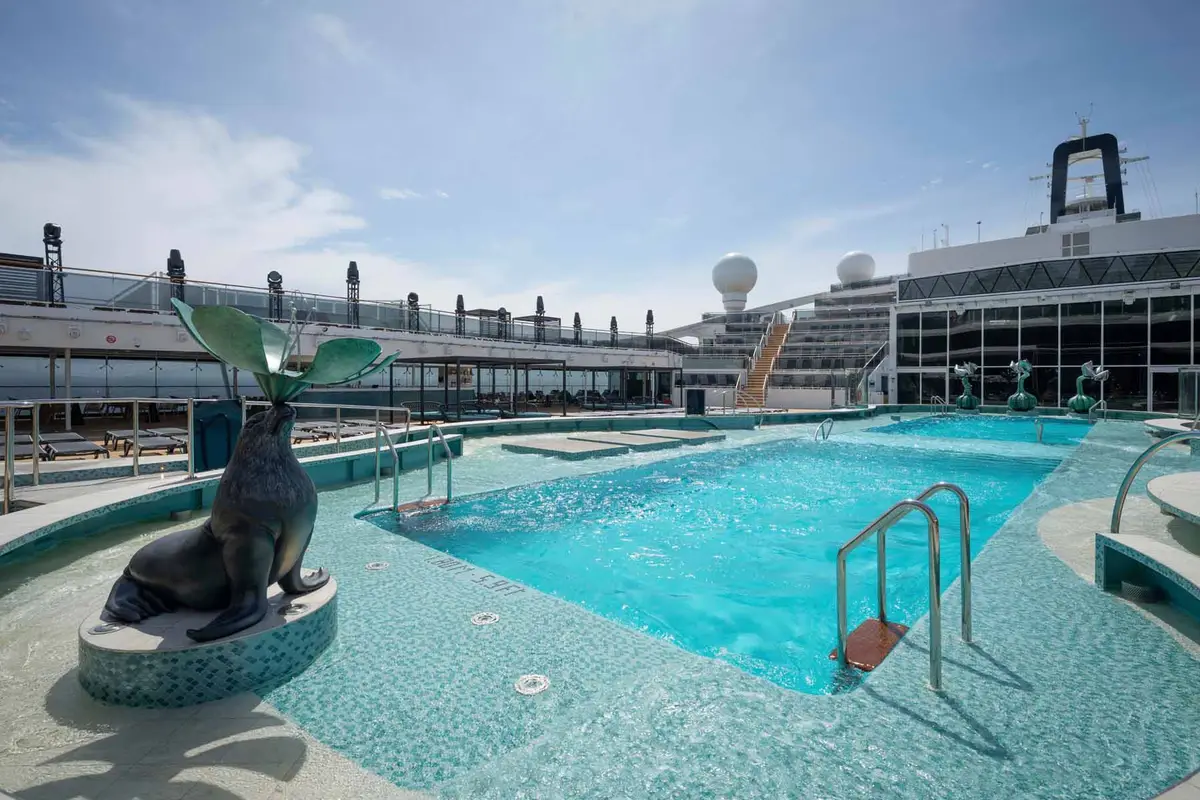
MSC Bellissima offers a stunning array of features to rival those of her sister ship, MSC Meraviglia. Innovative MSC for Me technology connects you to your fellow guests, the crew and the ship herself. Furthermore, Zoe, your in-cabin Bluetooth speaker connects with your mobile device, so you can enjoy your favourite playlists and songs throughout your cruise! In addition, the two-deck indoor promenade features a spectacular 80-metre-long LED dome.