
Costa Serena: SAC - BUE - SAC14A00
1 available date
Itinerary
San Antonio (Santiago) Chile
Playa del Carmen, Mexico
Puerto Chacabuco, Chile
Punta Arenas, Chile
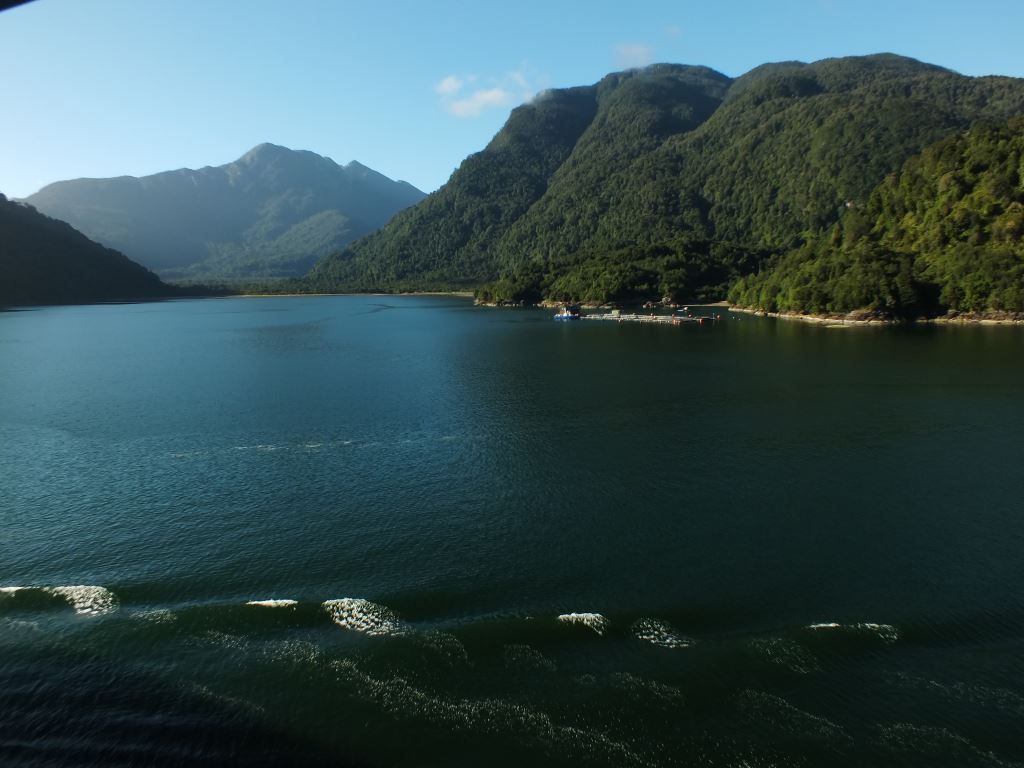
Punta Arenas lies at the entrance to the Strait of Magellan and is the gateway to Antarctica, a land of snowcapped mountains, icebergs and frozen fjords. The Strait is named after Portuguese navigator Ferdinand Magellan, whose expedition in the 16th Century was the first to circumnavigate the world. The Strait separates the southern tip of the South American mainland from the island of Tierra del Fuego.
The capital of the Magellanes region, Punta Arenas is a derivation of a name whose literal meaning is sandy point.
Founded in the 17th Century by J. Byron, the port, which lies on the edge of the Brunswick peninsula, quickly became a substantial centre of culture and commerce, greatly influencing the growth of the whole region. The city centre, at Plaza de Armas, houses the region's governmental offices and features a renowned bronze monument to Magellan. Other attractions in the city include a number of Salesian churches such as the cathedral and Maria Auxiliadora Sanctuary.
The city is dominated by the mountain Cerro de la Cruz, from which there is a spectacular view of Punta Arenas and the Tierra del Fuego. The Salesians long remained in Punta Arenas, spreading Christianity and building churches, schools and a large library.
The first church was entirely made of wood. Unfortunately a fire destroyed it at the end of last century, but it was almost identically reconstructed. The activities of the Salesians are also described in a museum dedicated to them.
Animals are the main attraction of this extraordinary part of the world, a unique natural environment. Colonies of penguins and sea-lions live a short distance away, sometimes displaying the boldness to approach visitors.

Ushuaia, Argentina
Once a small fishing village, Ushuaia is today a welcoming, busy town with a growing population, at present numbering about 50,000 inhabitants. It is the southernmost town in the world, and its proximity to Antarctica has heavily influenced its culture. From Ushuaia along the RN3 highway is Bahia Lapatia in the heart of the Tierra del Fuego ('Land of Fire') national park.
The park is visited by thousands of people every year who come to enjoy its beauty and take part in outdoor pursuits such as trekking, horse-riding and cycling.
The origins of Ushuaia are relatively recent. The South American Missionary Association settled in the area in 1870. Some years later, Argentina chose the remote area to establish an isolated penal colony, from which the inmates usually left only for their final destination, the cemetery. Chile and Argentina have both laid claim to Ushuaia, but the town remains Argentinean, politically and militarily.
Most tourist sites are concentrated along Avenida San Martin, but the main attraction in the town is the Territorial Fin del Mundo Museum ('End of the World Museum').
The museum has hundreds of archaeological and historical exhibits from Tierra del Fuego. It also features evidence of the community of aborigines who originally inhabited the region, but of whom practically all trace has been lost.
Ushuaia, Argentina
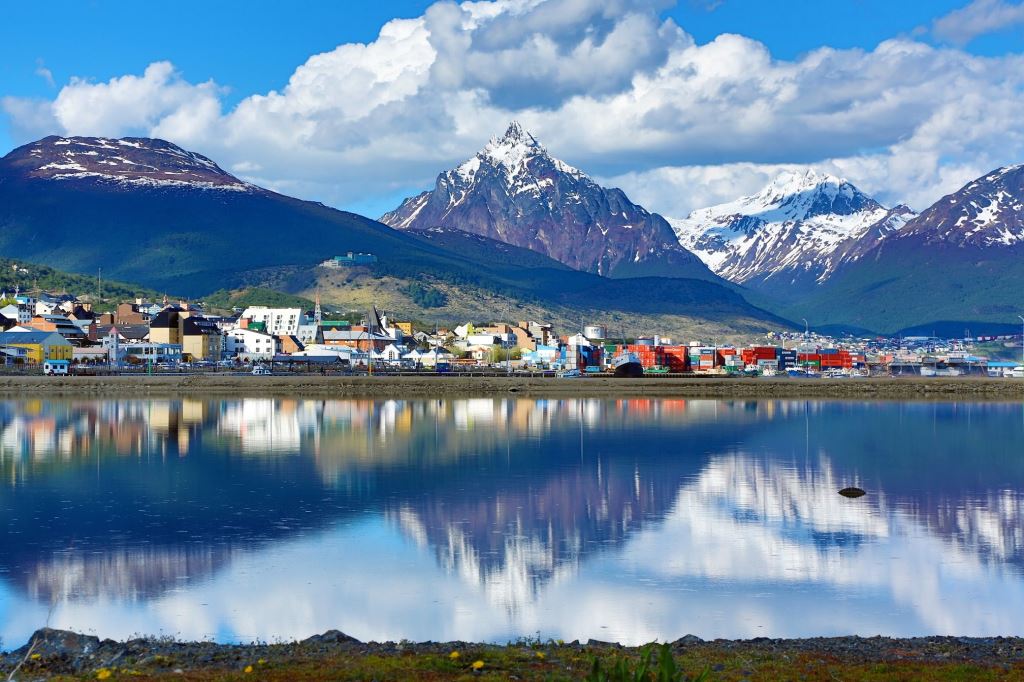
Once a small fishing village, Ushuaia is today a welcoming, busy town with a growing population, at present numbering about 50,000 inhabitants. It is the southernmost town in the world, and its proximity to Antarctica has heavily influenced its culture. From Ushuaia along the RN3 highway is Bahia Lapatia in the heart of the Tierra del Fuego ('Land of Fire') national park.
The park is visited by thousands of people every year who come to enjoy its beauty and take part in outdoor pursuits such as trekking, horse-riding and cycling.
The origins of Ushuaia are relatively recent. The South American Missionary Association settled in the area in 1870. Some years later, Argentina chose the remote area to establish an isolated penal colony, from which the inmates usually left only for their final destination, the cemetery. Chile and Argentina have both laid claim to Ushuaia, but the town remains Argentinean, politically and militarily.
Most tourist sites are concentrated along Avenida San Martin, but the main attraction in the town is the Territorial Fin del Mundo Museum ('End of the World Museum').
The museum has hundreds of archaeological and historical exhibits from Tierra del Fuego. It also features evidence of the community of aborigines who originally inhabited the region, but of whom practically all trace has been lost.
Puerto Madryn, Argentina
Situated at the centre of Argentinean Patagonia on the Guelfo Nuevo, in the province of Chubut, Puerto Madryn is at the heart of one of the wildlife wonders of the world.
Whales, sea-lions, seals, penguins, and millions of birds gather on the surrounding coastline. Such is variety of God's creatures that visit the remote area - which is protected by Unesco - that it is known by the locals as 'el arca', their own version of Noah's Ark.
As a perfect vantage point from which to witness this extraordinary kaleidoscope of nature, Puerto Madryn has become a centre of pilgrimage for nature lovers and natural scientists the world over.
Each year researchers gather at Puerto Madryn to discuss how best to preserve one of the planet's most precious natural environments. Puerto Madryn is one of the major ports in the outlying uncontaminated 3,625 sq km region of Peninsula Valdes, connected to the rest of the continent by an isthmus, a strip of land just 35km wide. Among the best observation points are at Punta Tombo, home of teeming penguin nurseries, Dique Florentino Ameghino and the Rio Chubut valley. Once there, all visitors have to do is feast their eyes on the natural extravaganza laid out before them.
Similarly to other cities on the shores of the Atlantic Ocean, Puerto Madryn also offers various seaside attractions, particularly windsurfing.
Buenos Aires, Argentina
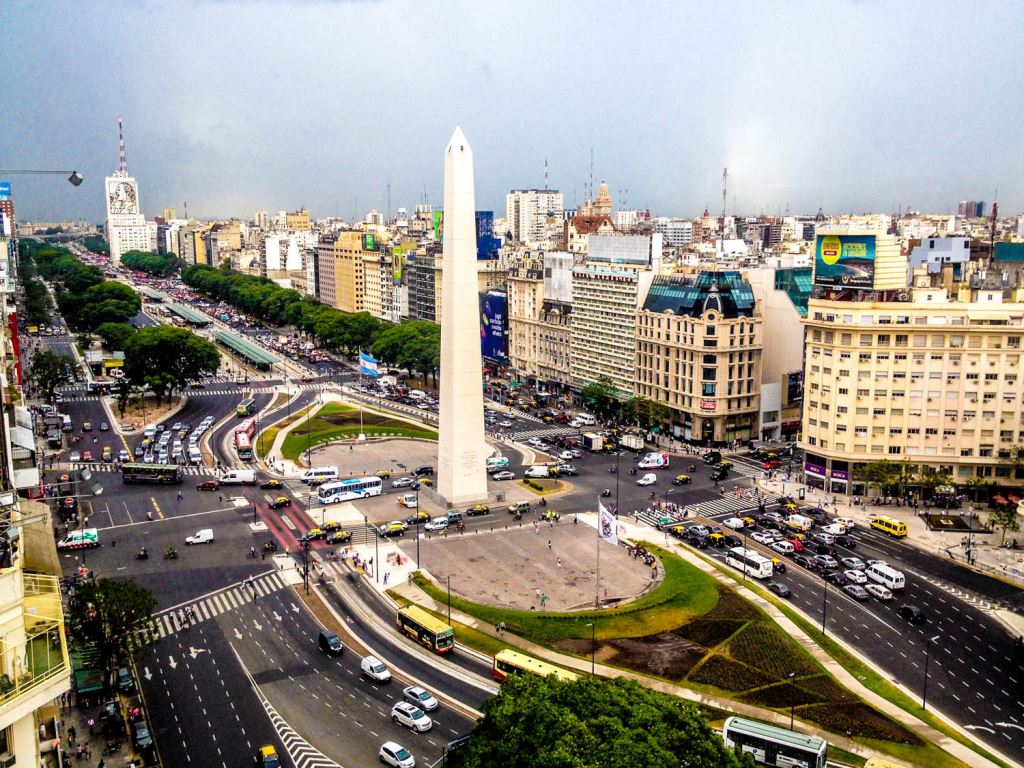
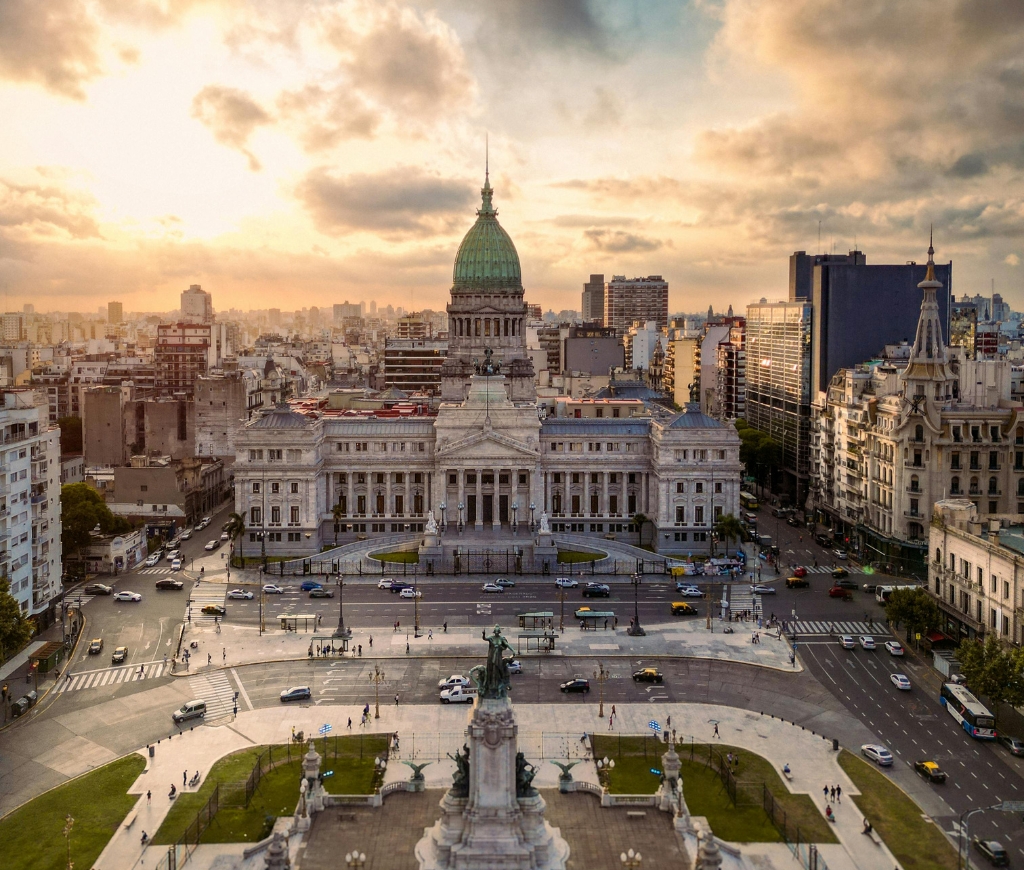
A stunning city of complex culture, tradition and charm, Buenos Aires is an extraordinary melting pot of the various civilisations that have contributed to its development. The years immediately after its colonisation by Spain in the 16th Century - it was founded by Spanish noble Pedro de Mendoza in 1536 - were marked by turbulence and resistance at the hands of the native Indian tribes, the Querandì.
Development of the town was interrupted several times and in 1580 it was rebuilt at the mouth of the Paranà river. But by the time of Argentine independence in 1816 and into the 20th Century, Buenos Aires had become one of the most dynamic cities in South America, attracting thousands of European immigrants.
The Italians, French, English, Germans, Dutch and Belgians all established their own distinctive communities, contributing to what French architect Le Corbusier described in 1922 as a giant urban centre of insatiable energy. The Buenos Aires of today is no less energetic, evident in every metre of the huge conurbation that is home to 12 million people, one third of the total population of Argentina. The setting of Buenos Aires is spectacular, lying on the estuary of the River Plate and surrounded by vast pampas.
The city is blessed with numerous art galleries and museums reflecting its multi-cultural influences. Tree-lined streets and various plazas give the city centre a pleasant, European atmosphere and the downtown area is packed with restaurants, bars and fashionable shops. The nearby barrios are particularly interesting, home of some of the city's wealthiest citizens. One of the most colourful quarters is the Italian suburb of La Boca, lined with wooden houses painted in yellow and blue, the colour of the Boca Juniors soccer team. The residents can be heard speaking in the Ligurian dialect of their Italian ancestors.
Available cabins for Tue. 08.12. - Tue. 22.12.2026.


Costa Serena

The Myth Goes POP.
Deities no longer reside on Mount Olympus: now they live onboard. Costa Serena is back, completely renovated, featuring an elegant, surprising, ironic and magnetic soul.
Every space is a set and you are the protagonist.
Lights, colours and spectacular environments create a refined atmosphere with a POP twist, where you never take yourself too seriously.
Costa Serena doesn't follow myths but reinvents them. An ode to wonder that stays with you. Would you like to experience something different?
Featured activities