

Costa Serena: FUK - OHA - FUK05A0C
1 available date
Itinerary
Fukuoka (Hakata), Japan
Fukuoka is the capital of the prefecture of Fukuoka and is located on the northern coast of the island Kyushu in Japan. It is also the most populous city on the island of Kyushu (2.5 million people according to the 2005 census, including the neighbouring cities of Saga and Kasuga as part of the greater metropolitan area), followed by Kitakyushu.
The city's metropolitan area is the largest to the west of Osaka. Fukuoka is also the birthplace of several successful singers who have found fame in Japan and many other Asian nations. In recent years the city has been expanding along the coast and large areas of the city have been built on reclaimed land, such as the artificial island in the district of Higashi appropriately called Island City. Located 1,100 km from Tokyo, 540 km from Seoul, 870 km from Shanghai and 1,300 km form Taipei, Fukuoka is the most important city for cultural and economic exchange with the rest of Asia. Like most prefectures, Fukuoka has a moderate climate with an average temperature of 16.3°C and average humidity of 70%, 1,811 hours of sunlight and 205 cm precipitation. Roughly 40% of the year is cloudy. Winters are rainy with infrequent snowfall and temperatures rarely drop below 0°C. Spring is mild and sunnier, with cherry blossom appearing in late March or early April. The rainy season (tsuyu) lasts for approximately six weeks through June and July, when humidity is very high and temperatures hover between 25 and 30°C. Summers are hot and humid with temperatures reaching 37°C. Autumn, often considered Fukuoka's best season, is mild and dry, although the typhoon season runs between August and September. Overall in Spring and Autumn the rain is less intense. In May 2007, the city's estimated population was 1,442,836 with a population density of 7,184.07 per km². Its total area is 340.60 km².
With an average age of 38.6 years, Fukuoka is the second youngest city in Japan. The 4.4% growth rate is also the second fastest in the country (based on data from the 2000 census). Although the city of Fukuoka offers all kinds of entertainment, a rich history and excellent local cuisine, it is off the beaten tourist track for Europeans. Nonetheless, it is a leading destination for Japanese visitors and tourists from neighbouring Asian countries. At 234 metres, the FukuokaTower is the tallest tower in Kyushu, the tallest costal tower in Japan and the 13th-tallest structure in the country. Situated in the district of Sawara, it was built in 1989 for the Asian Pacific Expo (Yokatopia). It offers the chance to admire the city's splendid panorama 123 metres from the ground. Sky Dream Fukuoka, situated in the Sawara district, is the largest Ferris wheel in Japan and the fifth-largest in the world, standing 120 metres above the ground. Ohori Park offers plenty of opportunities for leisure and relaxation. Opened in 1929, it features a large artificial lake modelled on Lake Xi Hi in China.
The Uminonakamichi Seaside Park in the Higashi district was an American military base until 1972. Today its 200 hectares make it the largest recreational area in Fukuoka. There is an amusement park with rollercoasters and a Ferris wheel, as well as a small petting zoo, a huge park with exhibition areas, sandy beaches, hotels and a large aquarium with dolphin shows. The Tower of the Port of Hakata, 103 metres tall, offers a panoramic view over Hakata Bay's shopping complex, Bayside Place. Besides being a port with connections to many destinations, it is also home to numerous shops and restaurants, as well as a large aquarium. The Saibu Gas Centre is unusual in that it is a museum about gas. Here you can spend some time learning some interesting facts about the science of gas with the museum's various interactive displays. Fukuoka Castle offers an interesting cultural experience.
All that remains of the castle in Ohori Park are several towers, rebuilt around 1950 - 1960, a period in which many damaged castles were renovated. It was in fact destroyed during the Meiji Restoration. The Genko Historical Museum, a museum dedicated to the Mongolian invasions in Higashi Park, features 13th century Mongolian and Japanese arms and armour, as well as paintings of historical subjects. Fukuoka is known throughout Japan first and foremost for its mentaiko: this dish comes from Korean cuisine and consists of cod roe marinated in salt and chilli pepper. Another Fukuoka speciality is tonkotsu ramen, noodles in broth made from pork bones that have been boiled for hours. The port and the airport are very important. Fukuoka is surpassed only by Tokyo and Osaka for international trade. Between 2000 and 2004 the value of exports for the port of Hakata has actually more than doubled. 50% of exports are rubber goods, bearing in mind that nearby Kurume is home to Bridgestone.
Busan, Korea, Republic of
Busan, a bustling city of approximately 3.6 million residents, is located on the southeastern tip of the Korean peninsula.
The size of Busan is 765.64km² which is 0.8% of the whole land of the Korean Peninsula. The natural environment of Busan is a perfect example of harmony between mountains, rivers and sea. Its geography includes a coastline with superb beaches and scenic cliffs, mountains which provide excellent hiking and extraordinary views, and hot springs scattered throughout the city.
Busan enjoys four distinct seasons and a temperate climate that never gets too hot or too cold.
Busan is the second largest city in Korea. Its deep harbor and gentle tides have allowed it to grow into the largest container handling port in the country and the fifth largest in the world. In the coming years, capacity is set to grow further with the opening of the New Port. The city's natural endowments and rich history have resulted in Busan's increasing reputation as a world class city of tourism and culture, and it is also becoming renowned as an international convention destination.
Busan, a city of beautiful mountains, rivers and the sea, is also a important cultural city. With the Nakdong River bordering the city and superb natural scenery like Haeundae adding nationwide attraction, the city serves as a major nexus of cultural activities around the region. Also, Busan is the first international port city in Korea. Its location enables the city to serve as a main gateway for the Korean Peninsula and the entire Northeast Asian region.
Geographically, Busan has the Straits of Korea to its south; Ulsan to the north; Gimhae to the West. Cities that share almost the same latitude with Busan include Jinhae and Gwangju in Korea, as well as Tokyo, Jeongsen, Algiers and Oklahoma City abroad.
Busan is eight hours ahead of GMT. As for its geopolitical location, the city comes at the Southern tip of a strip that connects Asia, Siberia and Europe. It also serves as a main gateway to the Pacific Ocean.
This location places the city at the center of international sea transportation.
Busan is located at the southeastern most tip of the Korean peninsula and in the mid-latitude temperate zone, which has seasonal winds. It has four seasons: Spring, Summer, Fall and Winter. The annual average temperature is 15°C. The annual average precipitation is 2,397mm. Busan has strong winds compared to other areas in Korea. Spring begins in March and ends in late June. Cherry blossom trees bloom in late March. And the temperature is very comfortable in April, May and June. The rainy season at the end of June and July signals the beginning of the coming of the summer heat. The highest mean temperatures of around 32°C are at the end of July through mid-August. Fall is from early September through late-November.
The weather is nice and cool at this time because of the continental high atmospheric pressure. Winter starts by the end of November and continues until February. But Busan rarely has any snowfalls. The average winter temperature is 3.8°C. Tourists can enjoy Busan throughout all seasons because of the nice weather and beautiful scenery. In summer, the city is crowded with visitors who come to enjoy the beautiful beaches.
From its opening in 1876, the port city of Busan quickly developed into a hub of trade, commerce and industry. This development resulted in a rapid increase in its population, which had already reached 200,000 by 1936. A major leap in Busan's population came with the breakout of the Korean War, which resulted in an endless stream of people into the city. As a result, the population of Busan exceeded 1 million by the end of 1955. Another factor that spurred the population increase was the government policy for economic growth.
People from urban areas kept streaming into the city for jobs. By the end of 1994, there were approximately 4 million people who called Busan their home. Since 1995, the population has slowly begun to decrease. As of December 2006, Busan was home to 3,635,389 people.

Keelung (Taipei), Taiwan (China)
Keelung (sometimes called Jilong) is a major port city in the north-eastern part of Taiwan. It borders Taipei County and forms the Taipei-Keelung metropolitan area together with the City and County of Taipei.
Nicknamed the Rainy Port for its frequent rain and its important maritime role, the city is Taiwan's second largest seaport (after Kaohsiung). Keelung is currently administered as a provincial city of Taiwan Province in the Republic of China. It has been suggested that the name Keelung was derived from the local mountain whose shape resembles a rooster cage. However, it is more probable that the name was derived from the first inhabitants of the region, like the names of many other Taiwanese cities. Indeed, the area's earliest inhabitants were the Ketagalan people, and Ke-lâng was thus probably derived from Ketagalan.
The Ketagalan were a Taiwanese aboriginal tribe, whose first contact with the west was through the Spanish. From 1642 to 1668 Keelung came under Dutch control. The Dutch East India Company attacked the Spanish and, following a brief successful siege, conquered their Fort San Salvador at Santissima Trinidad. They reduced the size of the town and renamed it Fort Noort-Holland. The Dutch possessed three other fortifications in Keelung which included a small school with a Christian preacher. When the Ming Dynasty loyalist Koxinga (Cheng Ch'en-Kung) successfully attacked the Dutch in southern Taiwan, the troops stationed at the Keelung forts fled to a trading post in Japan.
However, they returned in 1663 and reoccupied and defended their former forts. Unfortunately, trade with China through Keelung did not achieve the hoped-for success, and in 1668 the Dutch left voluntarily. In 1863 the Qing Empire reopened Keelung as an international trading port and it played an important role in the economy of the region until 1885. However, from October 1884, following the outbreak of the Sino-French War, the town was occupied by the French under the command of Admiral Amédée Courbet. Keelung grew rapidly after Taiwan's passage to the Japanese in 1895 under the Treaty of Shimonoseki. It obtained the status of town in Keelung District in 1920 and was upgraded to a city of Taipei Prefecture in 1924.

Naha
Naha Port is located on Okinawa prefecture's main island, situated 600 kilometers southwest of Japan in the middle of the East China Sea. The population of the prefecture is 1.3 million.
Okinawa consists of a few dozen small islands in the southern half of the Nansei Shoto, the island chain which stretches over about one thousand kilometers from Kyushu to Taiwan. Okinawa Prefecture is be divided into three major island groups, the Okinawa Islands (Okinawa Shoto) around Okinawa Island (Okinawa Honto), the Miyako Islands (Miyako Retto) around Miyako Island and the Yaeyama Islands (Yaeyama Retto) around Ishigaki Island. Okinawa's climate is subtropical, with temperatures barely falling below 15 degrees in winter.
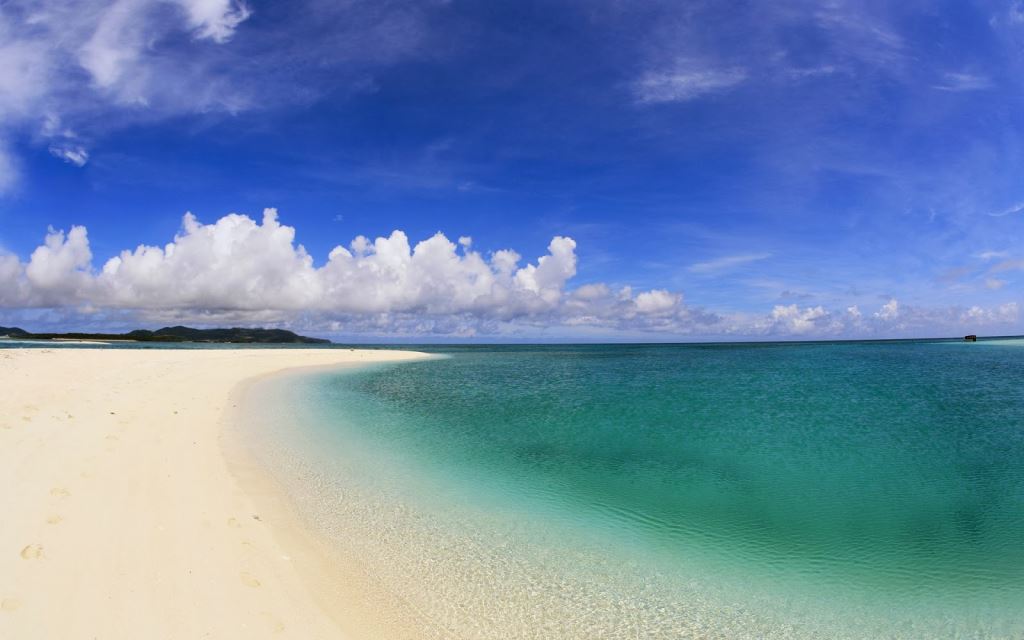
The seas surrounding Okinawa's islands are considered among the world's most beautiful with coral reefs and abundant marine wildlife. Consequently, snorkeling and scuba diving are among Okinawa's top attractions. Due to its location, Naha Port has played an important role in Japanese life ever since the 15th century Ryukyu Kingdom. It is at the heart of the regional economy and local industry as well as a residential centre.
Following the end of World War II, the United States, the prefectural government and the city of Naha each separately developed parts of Naha Port until 1972. Subsequently, Naha City administered the entire port until March 31, 2002, when the NPA was established. The port is located near Shanghai and en-route between the ports of Busan and Kaohsiung, which have both achieved remarkable growth as international container ports.
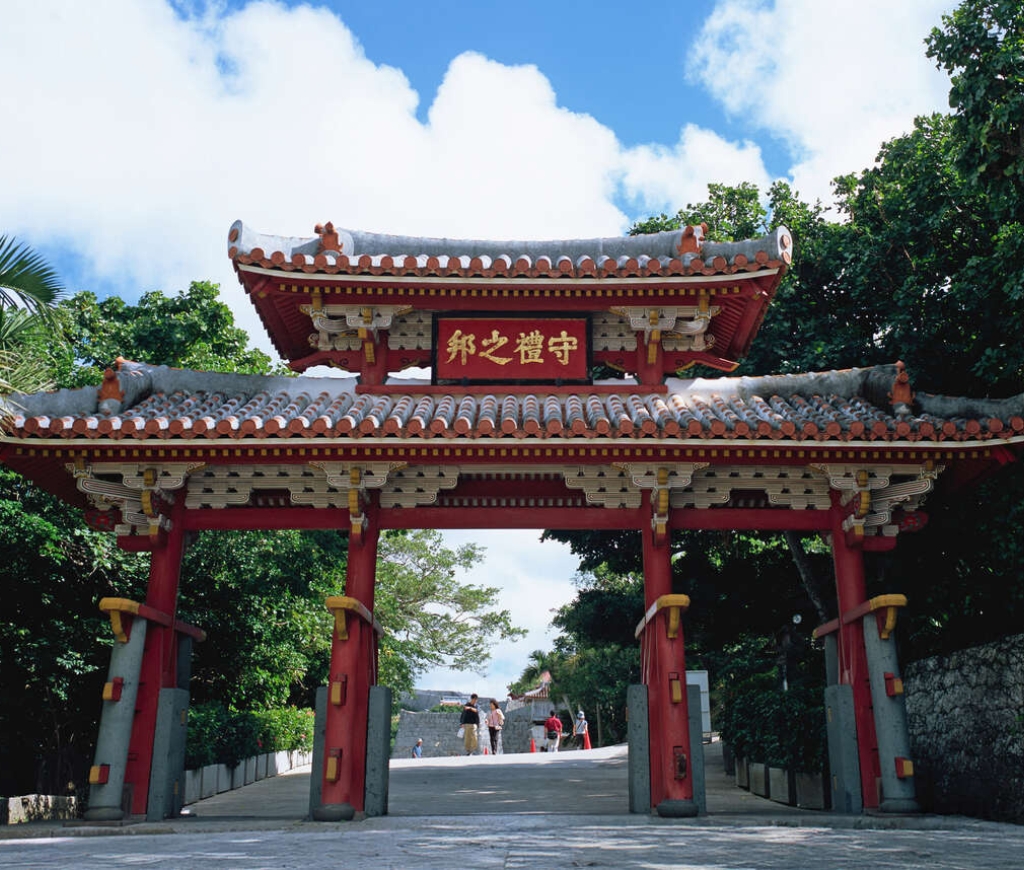
Now a city district of Naha, Shuri was once the capital of the Ryukyu Kingdom. Shuri Castle (Shurijo) served as the administrative center and residence of the Ryukyu kings for several centuries, until Okinawa became a Japanese prefecture in 1879. Wars and fires destroyed Shuri Castle many times over the centuries, most recently in the Battle of Okinawa in 1945. The current buildings are beautiful reconstructions dating from 1992. In Naha you can also visit Shikinaen, which was constructed in the late 17th century as the second residence of Ryukyu royalty. It features beautiful, relatively simple, wooden palace buildings in a typical Okinawan style, red tile roofs and a spacious Japanese style landscape garden. While designed in a style seen elsewhere in Japan, the garden is given a distinct Okinawan flavor by its buildings and subtropical flora. In 2000, Shikinaen was among the sites added to the list of UNESCO World Heritage Sites under the collective title "Gusuku Sites and Related Properties of the Kingdom of Ryukyu".
Naha
Naha Port is located on Okinawa prefecture's main island, situated 600 kilometers southwest of Japan in the middle of the East China Sea. The population of the prefecture is 1.3 million.
Okinawa consists of a few dozen small islands in the southern half of the Nansei Shoto, the island chain which stretches over about one thousand kilometers from Kyushu to Taiwan. Okinawa Prefecture is be divided into three major island groups, the Okinawa Islands (Okinawa Shoto) around Okinawa Island (Okinawa Honto), the Miyako Islands (Miyako Retto) around Miyako Island and the Yaeyama Islands (Yaeyama Retto) around Ishigaki Island. Okinawa's climate is subtropical, with temperatures barely falling below 15 degrees in winter.
The seas surrounding Okinawa's islands are considered among the world's most beautiful with coral reefs and abundant marine wildlife. Consequently, snorkeling and scuba diving are among Okinawa's top attractions. Due to its location, Naha Port has played an important role in Japanese life ever since the 15th century Ryukyu Kingdom. It is at the heart of the regional economy and local industry as well as a residential centre.
Following the end of World War II, the United States, the prefectural government and the city of Naha each separately developed parts of Naha Port until 1972. Subsequently, Naha City administered the entire port until March 31, 2002, when the NPA was established. The port is located near Shanghai and en-route between the ports of Busan and Kaohsiung, which have both achieved remarkable growth as international container ports.
Now a city district of Naha, Shuri was once the capital of the Ryukyu Kingdom. Shuri Castle (Shurijo) served as the administrative center and residence of the Ryukyu kings for several centuries, until Okinawa became a Japanese prefecture in 1879. Wars and fires destroyed Shuri Castle many times over the centuries, most recently in the Battle of Okinawa in 1945. The current buildings are beautiful reconstructions dating from 1992. In Naha you can also visit Shikinaen, which was constructed in the late 17th century as the second residence of Ryukyu royalty. It features beautiful, relatively simple, wooden palace buildings in a typical Okinawan style, red tile roofs and a spacious Japanese style landscape garden. While designed in a style seen elsewhere in Japan, the garden is given a distinct Okinawan flavor by its buildings and subtropical flora. In 2000, Shikinaen was among the sites added to the list of UNESCO World Heritage Sites under the collective title "Gusuku Sites and Related Properties of the Kingdom of Ryukyu".
Available cabins for Thu. 23.07. - Tue. 28.07.2026.


Costa Serena
The Myth Goes POP.
Deities no longer reside on Mount Olympus: now they live onboard. Costa Serena is back, completely renovated, featuring an elegant, surprising, ironic and magnetic soul.
Every space is a set and you are the protagonist.
Lights, colours and spectacular environments create a refined atmosphere with a POP twist, where you never take yourself too seriously.
Costa Serena doesn't follow myths but reinvents them. An ode to wonder that stays with you. Would you like to experience something different?
Featured activities