
Costa Favolosa: SVN - SVN - SVN14A4D
1 available date
Itinerary
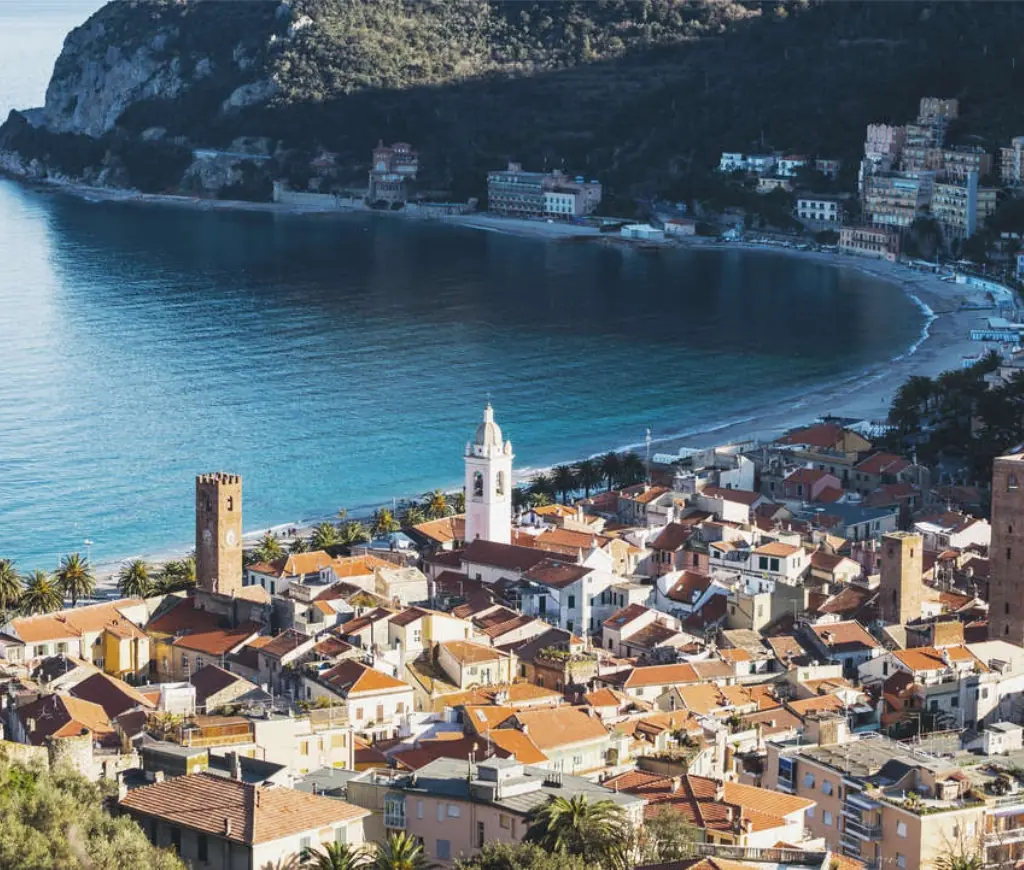
Savona, Italy
Savona, located on the Ligurian coast of Italy, is much more than just a seaport and a starting point for cruises – it is a historical and cultural treasure offering a rich experience for all lovers of art, architecture, and history. The city's numerous landmarks testify to its important role throughout the centuries. Among the most notable historical and cultural attractions is the Cathedral of San Giovanni Battista, built in the 16th century, featuring an elaborately decorated Baroque façade, frescoes, and an altarpiece dedicated to Saint John the Baptist. Nearby is Piazza del Duomo, the main city square, surrounded by important buildings such as the Town Hall (Palazzo del Comune).
A special experience is offered by the monumental Priamar Fortress from the 16th century, which used to defend the city and today provides panoramic views of the sea and hosts cultural events. Savona is also proud of the Renaissance Della Rovere Palace, associated with the powerful family of the same name, as well as the Church of San Francesco, known for its simple yet dignified architecture. History and art enthusiasts should definitely visit the Salvatori Museum, which offers insight into the city’s development through art collections, archaeological finds, and historical artifacts.
Even a short stay in Savona offers the opportunity to explore its rich historical and cultural heritage. The city is a perfect place to walk through history and enjoy the local atmosphere, providing you with an unforgettable experience.

Civitavecchia
Civitavecchia is a charming port city located on the western coast of Italy, along the Tyrrhenian Sea. Often called the "gateway to Rome," it serves as a major hub for cruise ships and ferries, welcoming millions of travelers each year who come to explore Rome and the surrounding region.
Founded in ancient times, Civitavecchia has a rich history dating back to the Roman era. The city was an important naval base and trading port, with many historical sites bearing witness to this maritime heritage. Visitors can explore the impressive Forte Michelangelo, a Renaissance fortress that overlooks the harbor and was built to defend the city. Besides being a port, Civitavecchia also offers a charming old town center with narrow streets, squares, and local markets where you can experience authentic Italian culture. The seaside promenade is perfect for enjoying a nice walk while tasting fresh seafood at traditional restaurants.
Civitavecchia is also a convenient starting point for exploring some of Italy’s most famous destinations. Rome, the Eternal City, is just about an hour away by train, where history, art, and culture await you at every corner. The surrounding area features beautiful landscapes, ancient ruins, and picturesque towns like Tarquinia and Tuscania.
Whether arriving by cruise ship or ferry, Civitavecchia is much more than just a port – it is a vibrant city full of history, culture, and Italian charm, making it an excellent gateway to discovering the treasures of central Italy.


Messina
Located in the northeast of Sicily, Messina is known as the "gateway to the island" because it is the first city to welcome visitors arriving from mainland Italy. The city is rich in history, culture, and breathtaking views. Over the centuries, it has been influenced by the Greeks, Romans, Arabs, Normans, and Spaniards, and today it offers a fascinating blend of ancient heritage and modern life. Despite earthquakes and destruction throughout its history, Messina has preserved many valuable landmarks.
Among the must-see attractions are the Duomo di Messina, featuring the oldest astronomical clock in the world, with mechanical figures that come to life every day at noon, and the Fontana di Orione. Don’t miss the panoramic views of the Strait of Messina from the city’s scenic viewpoints and from the nearby Santuario di Montalto.
The city also offers beautiful beaches, a Mediterranean atmosphere, and a rich gastronomic scene – including fresh seafood, arancini, focaccia Messinese, cannoli, and pignolata glassata (fried dough balls glazed with lemon and chocolate icing).
Messina is the perfect starting point for exploring Sicily, including day trips to Mount Etna, Taormina, and the Aeolian Islands. It's a city that blends the sea, history, and Sicilian hospitality – an ideal destination for those seeking an authentic Sicilian experience.

Piraeus/Athens
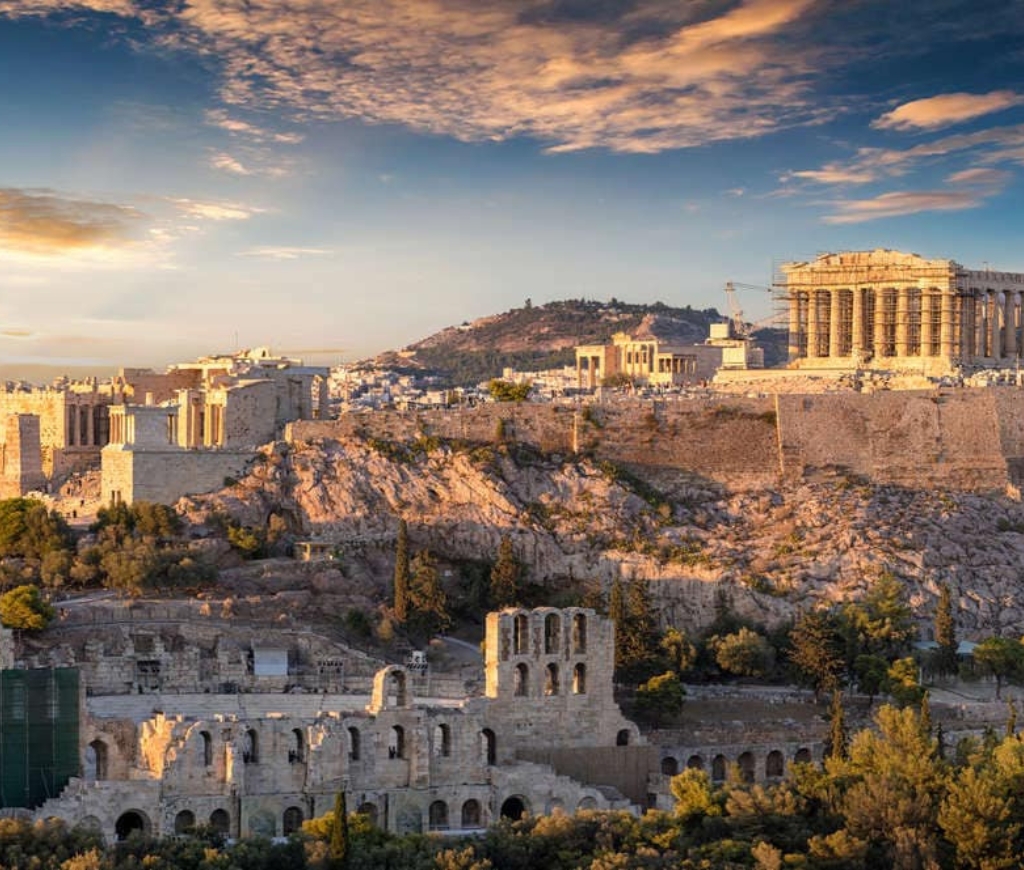
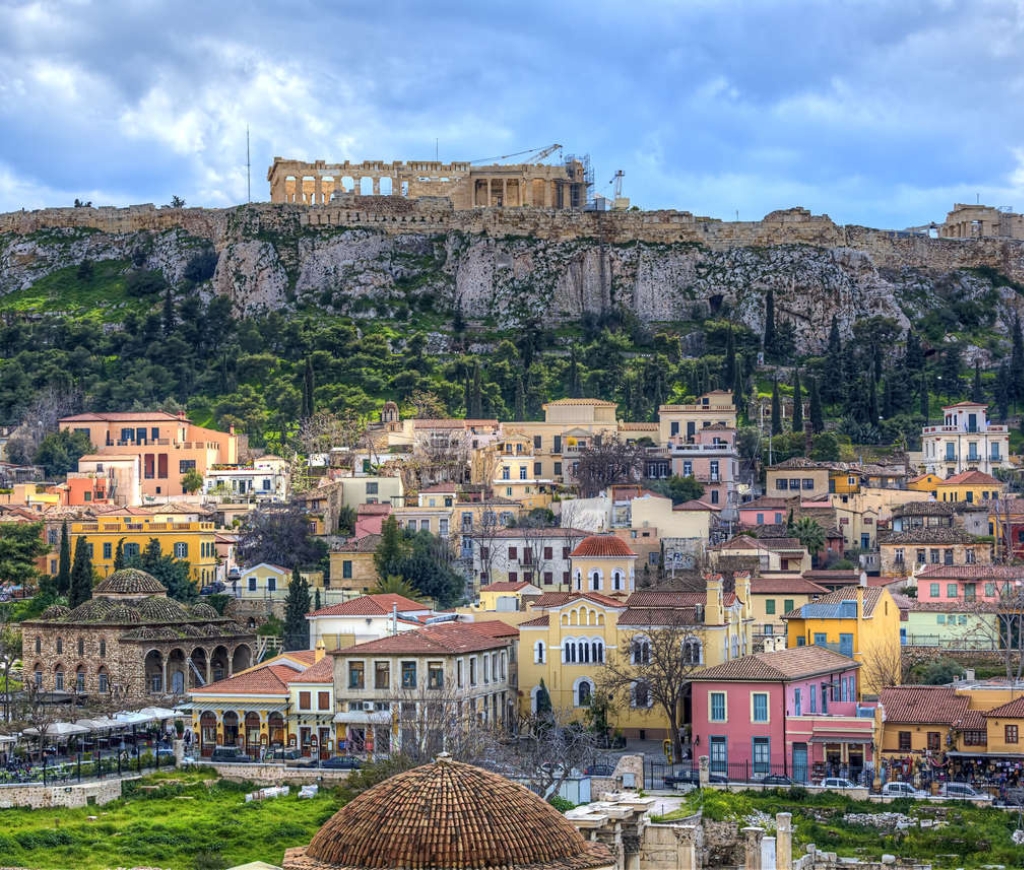
Athens – the Cradle of Democracy, Philosophy, and Ancient Civilization. Located on the shores of the Mediterranean Sea, Athens is one of the most important cities of the ancient world. Named after Athena, the goddess of wisdom, the city has long been a center of democracy, philosophy, and the arts. Athens played a key role in the development of democracy and was home to great philosophers such as Socrates, Plato, and Aristotle.
Athens boasts numerous historical monuments and archaeological sites, the most significant being the Acropolis – a UNESCO World Heritage Site and the pinnacle of ancient Greek architecture and art. The Acropolis includes the Parthenon, Erechtheion, Propylaea, and the Temple of Athena Nike.
Today, Athens is a vibrant city with over 3 million residents, blending its rich history with modern life, a dynamic cultural scene, and exceptional cuisine. Traditional dishes like souvlaki, moussaka, gyros, and spanakopita offer an authentic taste of Greek gastronomy.
Athens remains a destination that captivates visitors with its history, culture, and unique blend of the ancient and contemporary worlds.
Heraklion (Crete), Greece
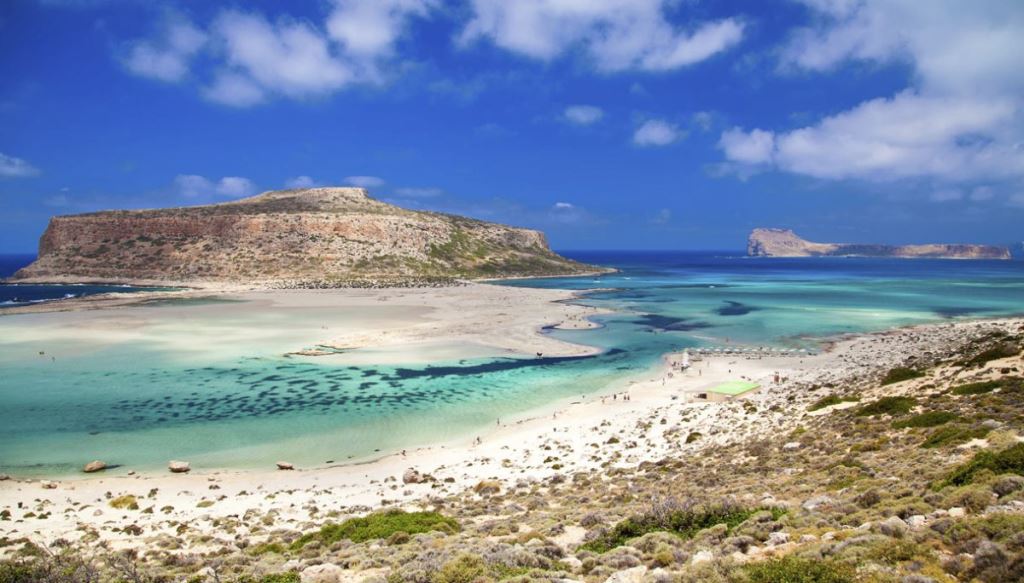
Heraklion is the capital and largest city of Crete, located on the northeastern coast of Greece’s largest island. This dynamic city is a blend of rich history, vibrant culture, and modern urban life, making it an essential destination for anyone wanting to experience the authentic Cretan atmosphere.
Heraklion is best known for its archaeological sites, especially the Palace of Knossos — one of the most significant historical landmarks in Crete, which served as the ceremonial and political center of the Minoan civilization and culture. In addition to its historical attractions, the city offers narrow streets in the old town, colorful markets such as the Morosini Market, traditional tavernas, and museums that tell the story of Crete’s rich past and heritage.
The port of Heraklion is lively and busy, surrounded by restaurants, cafés, and shops, while the seaside promenade provides an ideal setting for relaxing walks with views of the Aegean Sea. The city boasts an excellent culinary scene — from fresh seafood and local specialties to contemporary restaurants offering innovative dishes. Traditional music nights and local customs add a special charm to the experience.
Heraklion is also a great base for exploring the rest of Crete, whether you're interested in beaches, hiking, or visiting picturesque villages. The city successfully combines urban life with traditional charm, offering visitors the opportunity to experience the best of Crete — its history, nature, culture, and hospitality.
Santorini, Greece
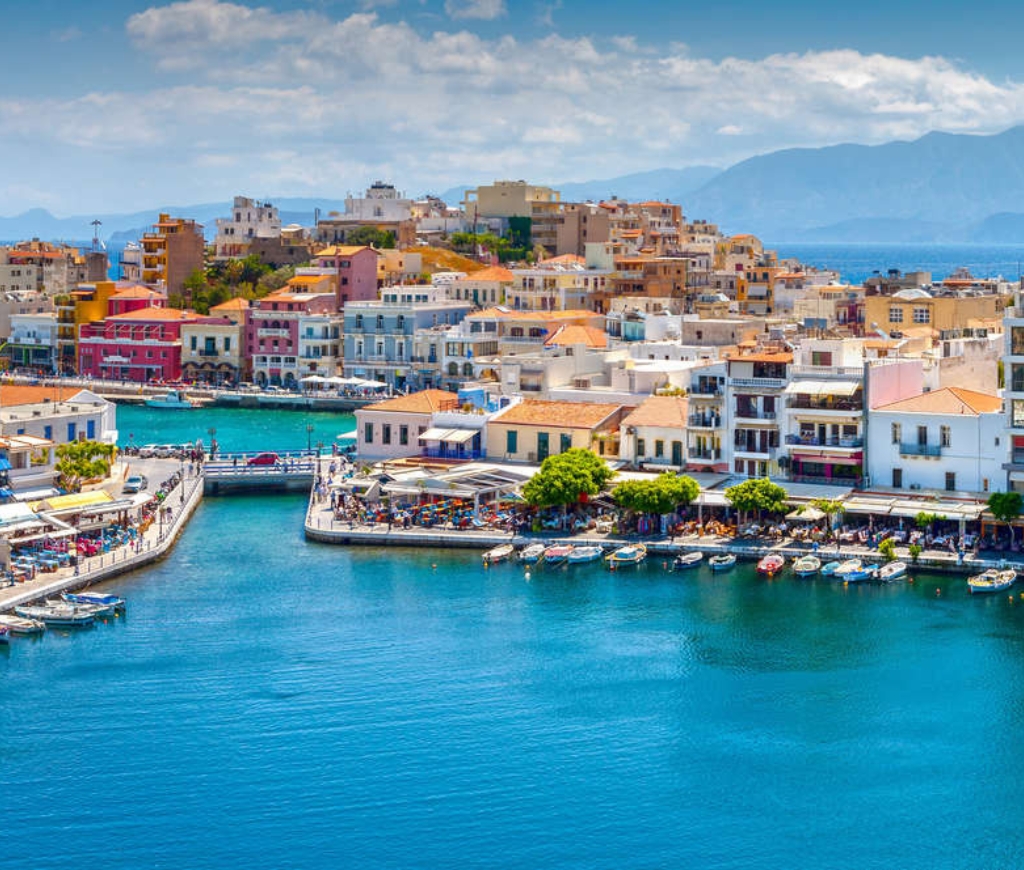
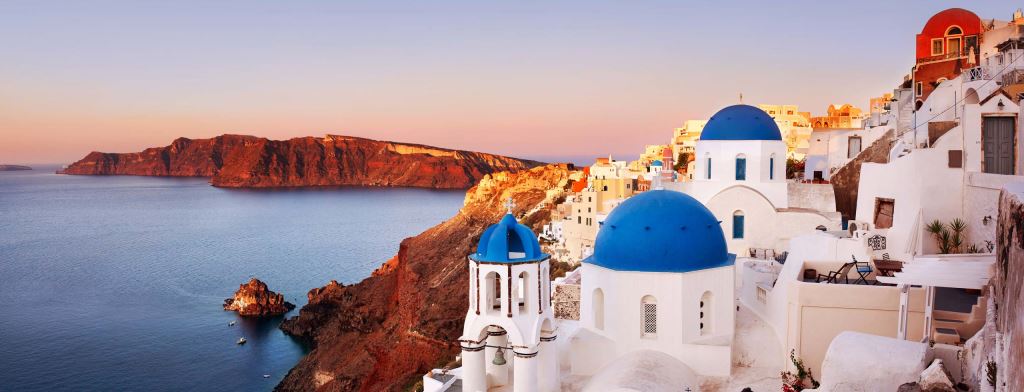
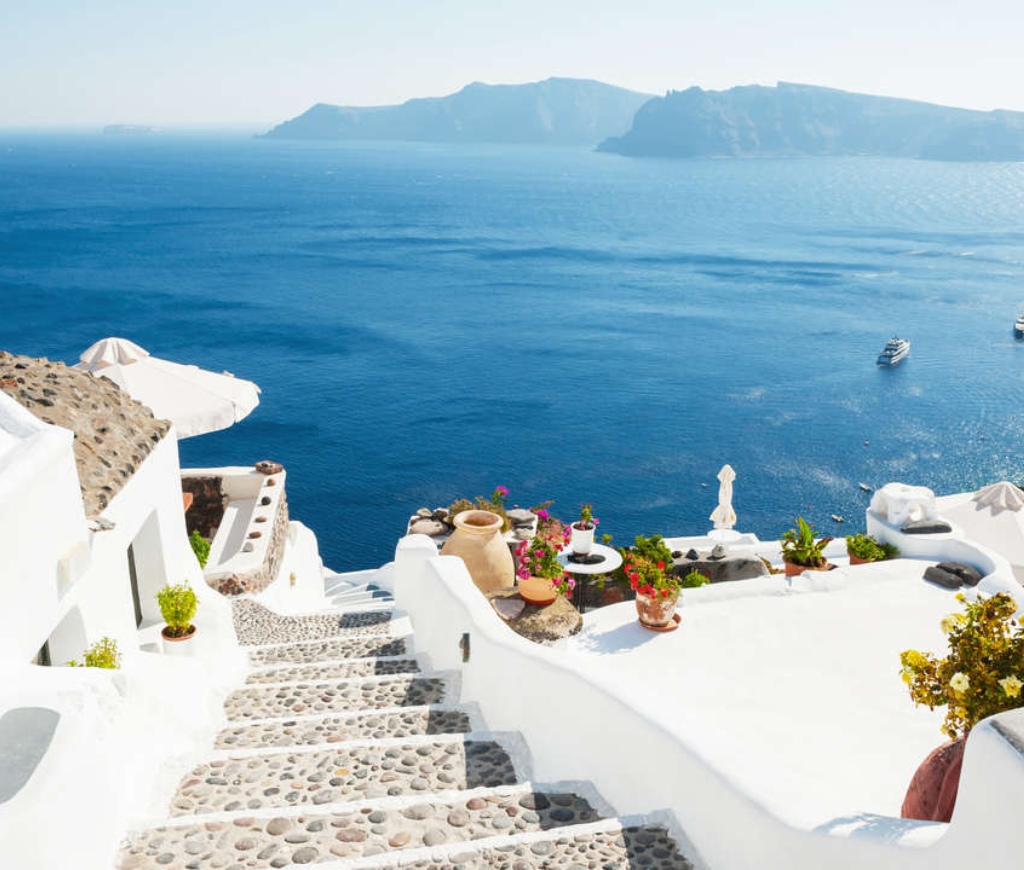
Santorini is one of the most recognizable and romantic Greek islands, located in the southern part of the Aegean Sea, within the Cyclades island group. Known for its spectacular sunsets, white houses with blue domes, and dramatic volcanic landscape, Santorini offers a unique experience that combines natural beauty, rich history, and an elegant atmosphere.
The island’s capital, Fira, takes your breath away with its views over the sea and surrounding islands. Its narrow streets are filled with shops, restaurants, bars, and museums, while nearby Oia, world-famous for its fairy-tale sunsets, enchants visitors with its charm. Traditional villages like Pyrgos, Emporeia, and Megalochori offer a glimpse into the island’s quieter and more authentic side.
Santorini is also an island of wine – thanks to its volcanic soil, local wines, especially Assyrtiko, are considered among the best in Greece. Visitors can tour many wineries and taste local varieties while enjoying views of the sea and vineyards. For history lovers, a visit to the archaeological site of Akrotiri is a must – an ancient Minoan city buried by a volcanic eruption.
The island also features unique beaches such as the Red Beach, Black Beach (Perissa), and White Beach, each showcasing the volcanic origins of Santorini through their color and texture. The island is equally known for its luxury hotels with infinity pools, private terraces, and panoramic views, offering the perfect setting for relaxation.
Whether you're looking for a romantic escape, cultural discovery, or simply a seaside holiday, Santorini delivers an unforgettable experience in one of the most beautiful settings in the Mediterranean.
Katakolon
Katakolon is a small port founded in the first half of the 19th century and linked to the legendary and nearby Olympia. According to the annals, which describe in detail and with some legend, the birth and history of Olympia, the city is a pastoral site chosen by the king of the gods Zeus to promote his culture among the Greeks.
Olympia, together with Delphi, the city dedicated to Apollo, and Athens represents the most important mythological places in traditional Greece. The Olympic Games originated here and, according to the Hellenic tradition described by the Greek poet Pindar, their origin is in honour of Pelope, a legendary character, after whom the Peloponnese was named. In the beginning the Games were composed of few disciplines, deriving from military arts characterised by loyalty and courage and lasted just one day often interrupted by religious ceremonies.
Subsequently the celebration of the Olympic Games, every four years at the summer solstice, lasted for a few weeks and at this time all conflicts had to be suspended to enable the performance of the games. The ceremony was strict. Women, except for Hera priestesses were not allowed, upon punishment of death. All competitors had to be Greek. The winners (at the time there were no sponsors or money compensation) were awarded by public triumph, they were included in a golden register engraved in stone and a life size statue was erected.
After over 1200 years of continued history, the Olympic Games were stopped in 393 AD by Theodosius I and started again in Athens in 1896 upon initiative of the French Baron Pierre de Coubertin. Life in Olympia takes place around the sacred walls of the Sanctuary where all the temples and religious buildings are situated. Olympia was discovered in 1776, but the most important excavations are recent. Zeus' temple for instance was entirely brought to light by German archaeologists who succeeded in reconstructing part of the front and side columns collecting the statues of Greek winners, votive offerings and small temples damaged by a series of earthquakes unfortunately frequent in the past.
The most ancient part of the Sanctuary is dedicated to Hera and it was destroyed and sacked after the prohibition of the pagan cult ordered by Theodosius. The stadium is very impressive, with an audience capacity of up to 45,000. Several votive offerings were found here, and among them Miltiades helmets after Athens victory in Marathon. It is still possible to see the starting and finishing lines of the races in the stadium. All archaeological finds are preserved in the Museum.


La Goulette
Palma de Mallorca (Baleari Is.), Spain
Palma de Mallorca – A City of History, Art, and Pearls. Also known simply as Palma, this capital of the Balearic Islands in Spain combines rich history, art, and modern amenities. The city has a long history dating back to prehistoric times. Over the centuries, Palma came under Roman, Vandal, Byzantine, Muslim, and Christian rule, all of which are reflected in its diverse architecture and cultural heritage.
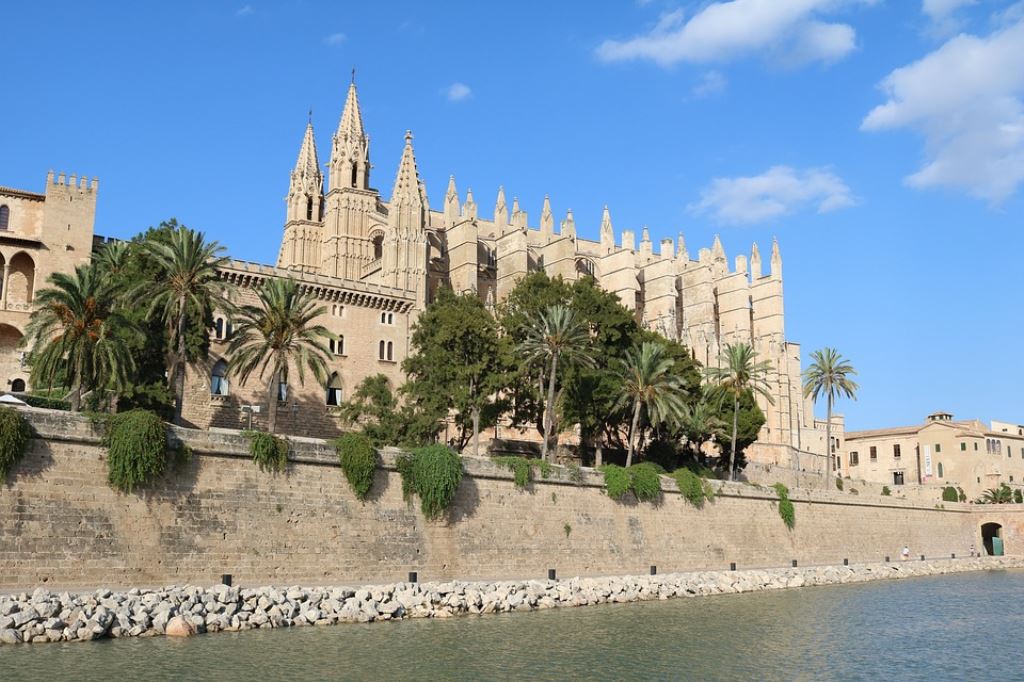
The city is home to numerous cultural and artistic landmarks featuring a mix of Gothic, Renaissance, and modern architecture. Some of the most notable sites include the La Seu Cathedral, the Royal Palace of Almudaina, Castell de Bellver with its panoramic views of the city and harbor, and Pueblo Español, an open-air museum showcasing replicas of Spain’s most famous buildings. Lovers of modern art can enjoy the Es Baluard Museum of Contemporary Art, which exhibits works by both Spanish and international artists.
Playa de Palma, the closest beach to the city center, is easily accessible by bus or bicycle and is rich in tourist amenities – from restaurants and bars to various water sports.
Palma is also known for its Majorica pearls – high-quality artificial pearls that have been produced since the late 19th century in nearby Manacor. The Majorica factory welcomes visitors to see the pearl-making process and purchase handcrafted jewelry.
An interesting local legend tells of the dragon Drac de na Coca, who supposedly lived beneath the city and terrorized the locals until he was defeated by the knight Ramon Llull. This legend lives on today through souvenirs and works of art. A visit to Palma offers a rich experience where history, culture, art, legend, and relaxation on beautiful Mediterranean beaches all come together.

Barcelona, Spain
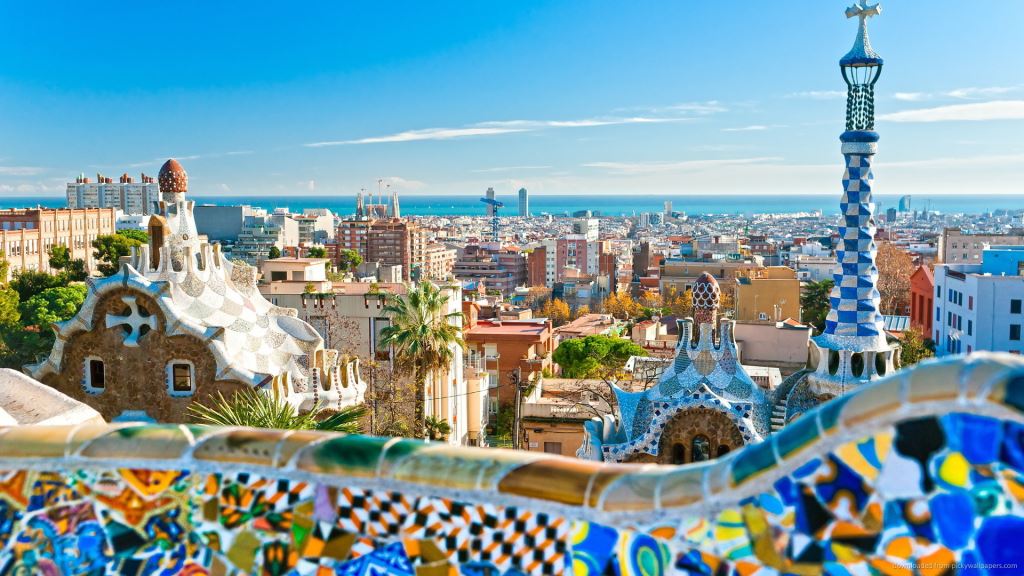
Barcelona, the capital of Catalonia, is a city with a rich and diverse history that dates back to the Roman era. Over the centuries, it was under Roman, Arab, Byzantine, and Christian rule, all of which have left a lasting mark on its architecture and cultural identity. During the Middle Ages, Barcelona became an important commercial and cultural center of Catalonia, and in the 19th century, it experienced significant industrial and urban development.
One of the most notable architects associated with Barcelona was Antoni Gaudí, whose works such as the Sagrada Família, Park Güell, Casa Batlló, and Casa Milà have become iconic symbols of the city. His unique style, which blends elements of Gothic, Modernism, and natural forms, has made Barcelona a uniquely vibrant urban space. Among the city’s most famous attractions are La Rambla, a lively promenade stretching from Plaça de Catalunya to the sea, and the Gothic Quarter (Barri Gòtic), the old part of the city filled with medieval alleys, buildings, and churches, including the Cathedral of Saint Eulalia. The artistic spirit of the city can also be felt in the Picasso Museum and the Joan Miró Foundation, which house works by two of Catalonia’s greatest artists.
Barcelona is also renowned for its famous football club, FC Barcelona, whose stadium Camp Nou attracts thousands of visitors eager to experience the passion and pride that Catalans have for their team.
The city also offers a rich culinary scene – from its famous tapas to traditional dishes such as paella, fideuà, zarzuela, and the dessert crema catalana. A highlight is the Boqueria Market, where visitors can taste local products and delicacies. Today, Barcelona is one of the most visited cities in Europe, offering a perfect blend of history, art, architecture, sport, gastronomy, and Mediterranean spirit.

Marseille (Provence), France
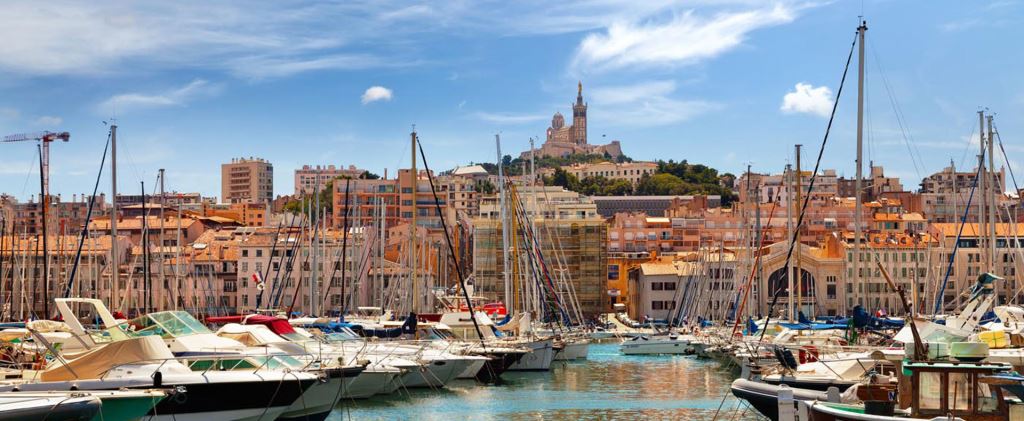
Marseille, the second largest city in France and one of the oldest cities in Europe, boasts a rich history and vibrant atmosphere, situated along the sparkling Mediterranean Sea. Founded by the Greeks over 2,600 years ago, the city has been influenced by many civilizations throughout the centuries, leaving a lasting mark on its architecture and identity.
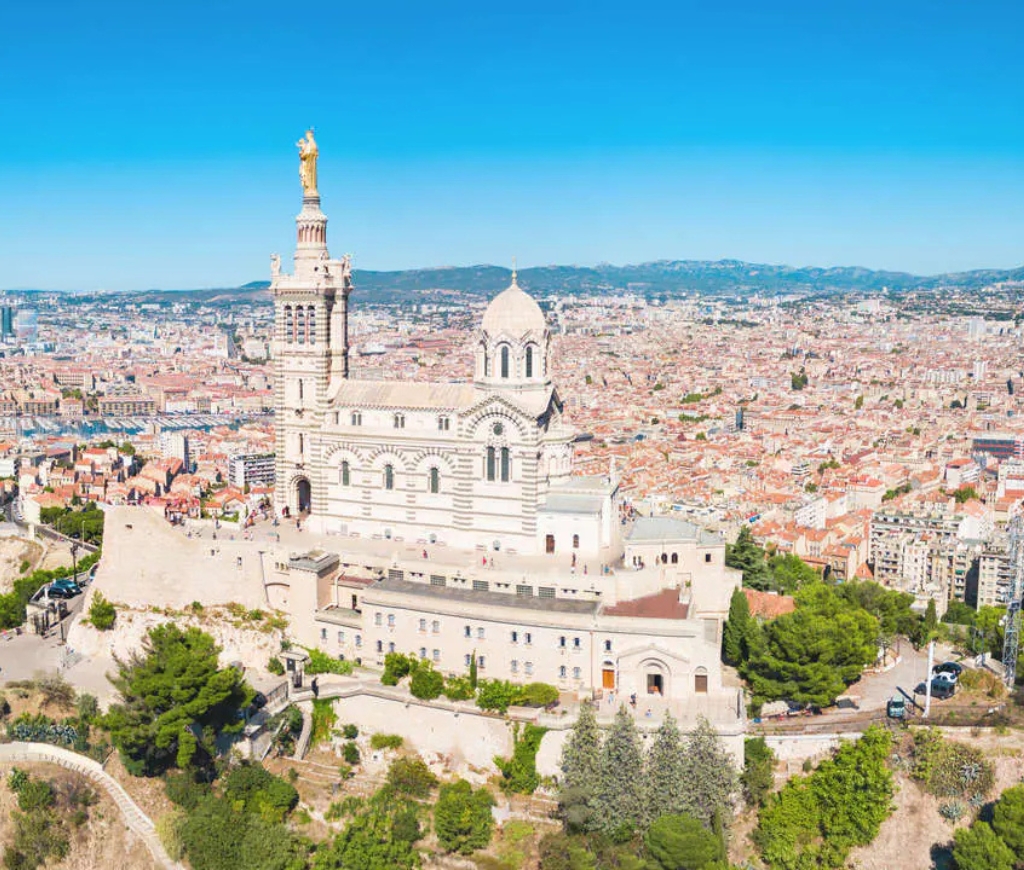
Among its main attractions is the Old Port (Vieux Port) – the heart of city life, recognizable by its boats, cafés, and restaurants. The impressive Notre-Dame de la Garde basilica, perched on a hill, offers panoramic views of the city, the islands, and Château d’If, the famous fortress from The Count of Monte Cristo. Also notable are the historic Le Panier district and MuCEM, a modern museum dedicated to Mediterranean culture.
Marseille’s cuisine includes specialties such as bouillabaisse – a traditional fish soup, and panisse – chickpea cakes. The city is full of authentic restaurants offering local flavors.
Nearby, the Calanques National Park is famous for its spectacular cliffs and clear waters, while charming towns like Aix-en-Provence and the fishing village of Cassis make perfect day trips. Wine lovers can explore the Provencal vineyards and enjoy tastings.
Colorful streets and historic buildings tell stories of the past, while sunsets over the sea create a special, warm atmosphere worth experiencing. Marseille is a place where tradition meets modern energy, ideal for pleasant moments and discovering authentic Mediterranean culture.
Savona, Italy
Savona, located on the Ligurian coast of Italy, is much more than just a seaport and a starting point for cruises – it is a historical and cultural treasure offering a rich experience for all lovers of art, architecture, and history. The city's numerous landmarks testify to its important role throughout the centuries. Among the most notable historical and cultural attractions is the Cathedral of San Giovanni Battista, built in the 16th century, featuring an elaborately decorated Baroque façade, frescoes, and an altarpiece dedicated to Saint John the Baptist. Nearby is Piazza del Duomo, the main city square, surrounded by important buildings such as the Town Hall (Palazzo del Comune).
A special experience is offered by the monumental Priamar Fortress from the 16th century, which used to defend the city and today provides panoramic views of the sea and hosts cultural events. Savona is also proud of the Renaissance Della Rovere Palace, associated with the powerful family of the same name, as well as the Church of San Francesco, known for its simple yet dignified architecture. History and art enthusiasts should definitely visit the Salvatori Museum, which offers insight into the city’s development through art collections, archaeological finds, and historical artifacts.
Even a short stay in Savona offers the opportunity to explore its rich historical and cultural heritage. The city is a perfect place to walk through history and enjoy the local atmosphere, providing you with an unforgettable experience.
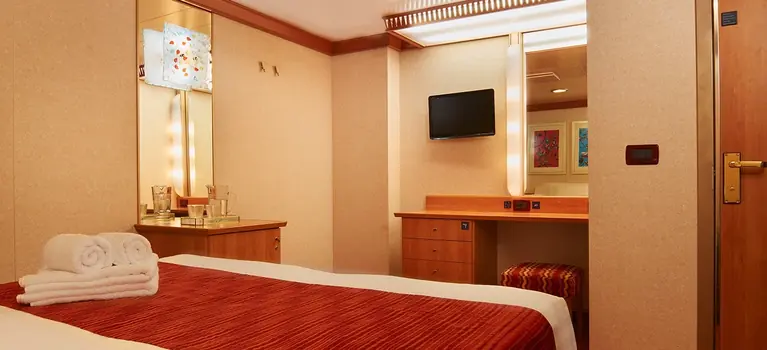
Available cabins for Fri. 15.10. - Fri. 29.10.2027.


Costa Favolosa

Welcome on board Costa Favolosa
On Costa Favolosa you will feel like you are in a fairy tale, on board everything around you will fill you with delight and inspire moments of wonder. This is the charm of Costa Favolosa. It is there every time you wake up in your balcony cabin looking out at the day’s new sea view.
The best way to relax is at the spa or in one of the outdoor hot tubs, followed by a fantastic glass of wine at the wine bar.
It’s already time for dinner, world renowned cuisine or Neapolitan pizza? You’ll be spoiled for choices and you’ll really feel like you’re living in a fairy tale!
Featured activities