
Costa Favolosa: HAM - HAM - HAM14A0H
1 available date
Itinerary
Set sail on an exceptional voyage aboard Costa Favolosa all the way to the edge of the Arctic. From Hanseatic Hamburg, the route continues to Bergen surrounded by seven hills, the Arctic towns of Narvik, Harstad and Hammerfest, the last outpost of civilization before the North Pole, picturesque Leknes in the Lofoten Islands, French Bordeaux famous for its wines, medieval Trondheim, and Haugesund. Italian dolce vita and lavish amenities make this cruise a true experience of Scandinavian wilderness.
Hamburg, Germany
Founded in 808 by Charlemagne, the fortress of Hammaburg was the original nucleus of Hamburg. The city immediately grew thanks to the institution of the archbishop’s see. Following the invasions of the Vikings, the Danes and the Slavs, Hamburg formed an alliance with the German cities of Bremen and Lubeck forming the Hanseatic League, which was to have a strong commercial influence in the North and Baltic Seas. Occupied by the French from 1806-11 during the Napoleonic wars, Hamburg became part of the German Confederation in 1815. The city was devastated by the bombardments of World War II which claimed 40,000 victims, but the post-war reconstruction saw Hamburg regain its historical and commercial importance as well as primary roles in industry and culture. With a population of over 1.7 million it is Germany’s second city after Berlin. In fact Hamburg is not just a city but also a city-state - Freie und Hansestadt Hamburg (the Free and Hanseatic City of Hamburg) – and is one of the 16 Länder that form the Bundesrepublik, the Federal Republic of Germany. Only the capital Berlin and nearby Bremen have been afforded the same status.
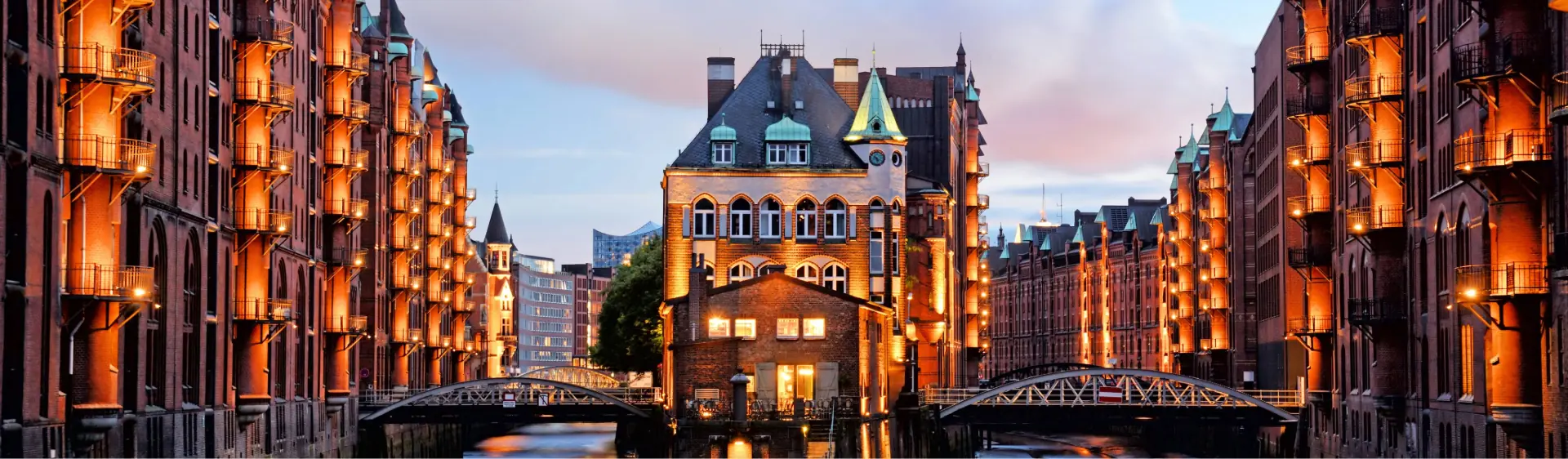
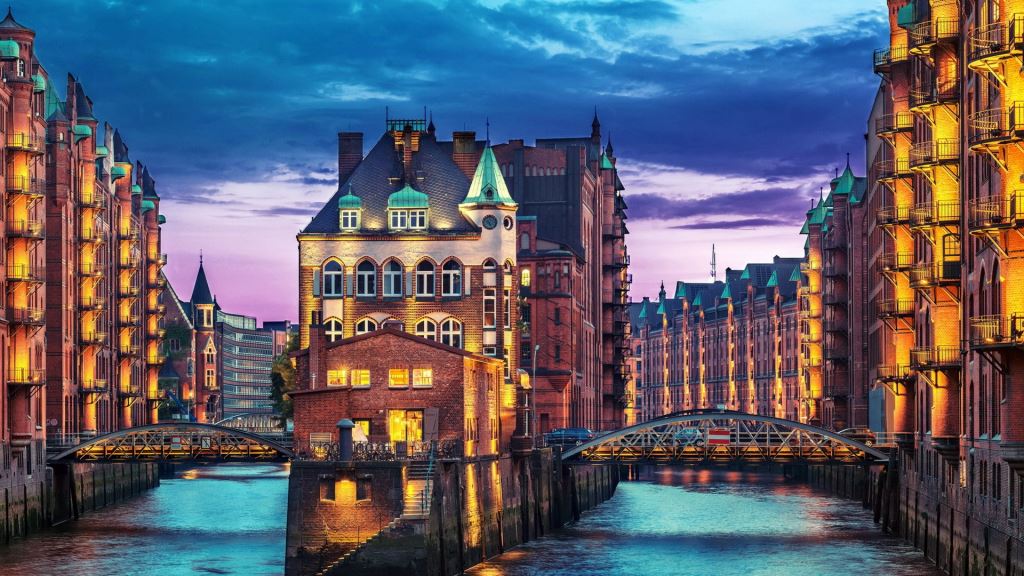
Hamburg stands at the point at which the Alster and Bille flow into the River Elbe, around 110km from the North Sea. It is one of Europe’s busiest and most important ports and is connected to a large proportion of the continent via canals and other waterways. The building of the Kiel Canal in 1895 further increased traffic in the port making water transport between the city and the Baltic region that much easier. The port extends across the entire width of the Elbe, covering an area of around 40km2, and stands principally on the south bank of the river. One of the most characteristic areas of the city is around the Speicherstadt, the free port or warehouse district constructed between 1881 and 1887, where the buildings stand right on the edges of the canals. This district is also home to the majestic Kohlbrandbrücke bridge, the new emblem of Hamburg.
Meanwhile on the north bank of the Elbe, directly opposite the old port, are the modern districts of St. Pauli and Altona, the ideal places for those looking for an evening of entertainment. As well as being the heart of Hamburg’s nightlife, the area is famous for the Reeperbahn red-light district. The banks of the river are connected by bridges and two tunnels: one for pedestrians and cyclists built in 1911 and the other, the Elbtunnel, designed for transport and constructed in 1975. Before flowing into the Elbe the Alster forms two lakes, the Aussenalster and the Binnenalster. From these two basins the water is channelled into the network of waterways that makes Hamburg distinctive.
The Binnenalster, with the famous Alster fountain at its centre, is flanked by the historic town centre, the most elegant area of the city. At the heart of the Alstadt is the town hall (the Rathaus), which, built in 1897, boasts 646 rooms and dominates the square of the same name (Rathausmarkt) and also houses the stock exchange. Not far away you can also visit St. Peter’s Church, construction of which began in the 12th century. Other religious buildings of particular interest are the churches of St. Jacob (13th-15th century), St. Catherine (14th-15th century) and St. Michael, which dates back to the end of the 18th century. Also of note are the best examples of 20th century architecture that characterise a large part of the new city and its cultural buildings: the Musikhalle (1904-1908), the Landungsbrücken (1909), the Chilehaus (1923), the Shell-Haus (1931), and the Amerikahaus (1957). Capital of Germany when it comes to musicals, Hamburg has one of the most lively and enterprising cultural scenes in Europe: the city has 31 theatres, 6 comedy theatres, 10 cabaret theatres and 50 state and private museums.
Most well-known of the museums is the Hamburger Kunsthalle which has been restored many times since its opening in 1869. Here you will find a large collection of paintings by European artists such as Manet, Munch and Rembrandt, as well as works from the German Romantic painters such as Friedrich and Otto Runge. 1997 saw the opening of the Gallery of Contemporary Art Wing, a cube-like structure designed by Mathias Ungers.

Bergen, Norway
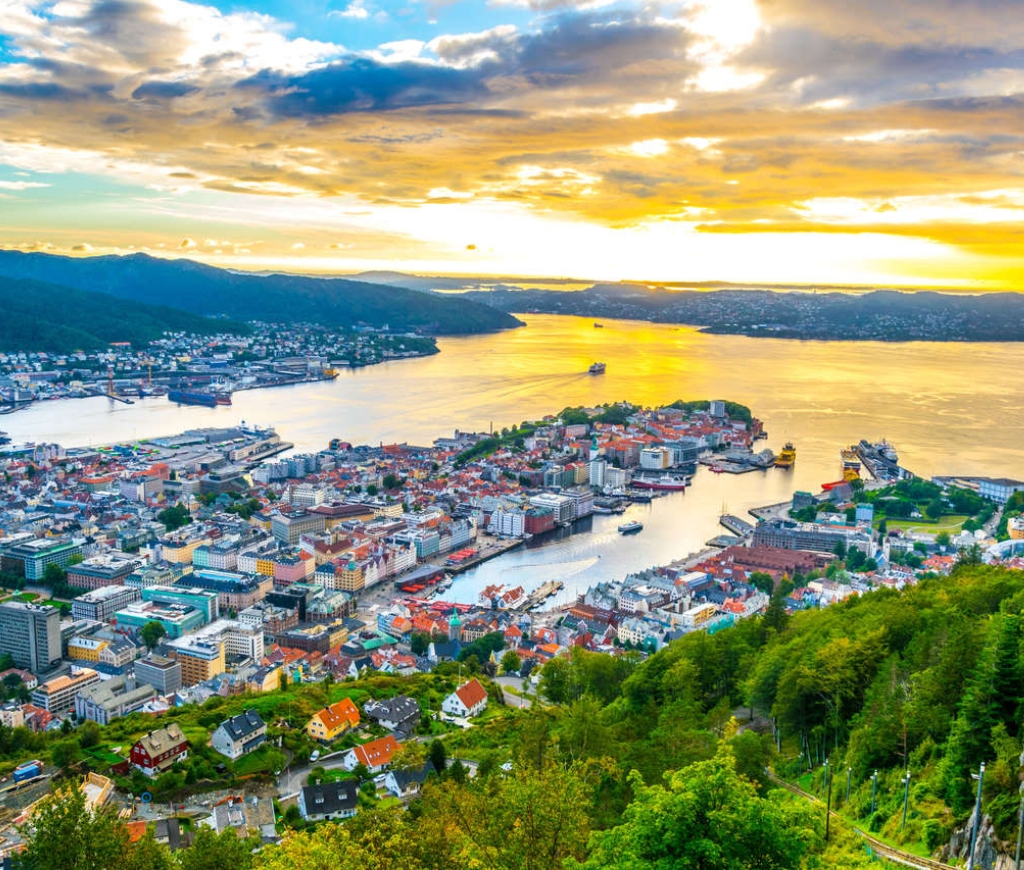
Norway's second largest city with a population of around 200,000, Bergen is a destination of architectural, historical and natural fascination. The city lies facing the sea with a dramatic backdrop of seven hills. Some 50,000 tourists visit Bergen annually, attracted by the beauty of the region and the accessibility of Norway's spectacular fjords. Bergen's port has throughout its history been crucial to the city's prosperity - and even the very survival of its people. In 1702, when a fire swept through the wooden houses of the then village of Bergen, the sea provided an escape route for thousands.
Bergen was founded as Norway's capital in the 11th Century by King Olav Kyrre and its high status remained until the 13th Century when the powerful Lubeck Hanseatic League made the 'Bryggen' quarter into a German ghetto, contained by a barrier and with special localised rules which gave great favour - and power - to the merchant classes. German dominance remained for 400 years, eventually being replaced by the Danes, and then the Swedes, until Norway gained peaceful independence in 1905. Only four houses remain from the days of the Hanseatic League, although the area of the former ghetto is the financial centre of the city.
One of Bergen's most illustrious sons was the composer Edvard Grieg, whose life and work is celebrated in his former home Troldhaugen. The contemporary cultural life of Bergen is also thriving and the city was selected as one of the Cultural Cities of Europe for the year 2000. Architecturally, Bergen has much to offer. Of particular note is the stone-built 12th Century St Mary Church. The Hanseatic Museum in the centre of Bergen near the Fish Market is one of the city's best-preserved wooden buildings. The wooden Fantoft Stave Church is another structure of particular fascination. The original church, which also dates to the 12th Century, was destroyed by fire in 1992 and the present structure is a faithful restoration.
Norway has much to offer souvenir hunters, including high quality hand-made glassware and china. Pewter items are particularly popular and have the distinctive feature of being lead-free. Other Norwegian specialities include jewellery made from the national semi-precious stone thulite, and woollen clothing. Among the culinary specialities of Norway are smoked salmon dishes called lads, and pickled herring.

Norwegian sea
Narvik, Norway
Harstad, Norway
Hammerfest, Norway
Hammerfest is the last outpost of civilisation before reaching the never-ending ice sheets of the North Pole.
Although its name would lead you to think of Finland, it is in fact Norwegian territory. Finnmark is a remarkable area which has become a national park area. One such park is the Øvre Pasvik, located in the largest primitive forest of the Polar Cap, a natural paradise for bears that fish for pike and salmon.
Hammerfest was founded at the beginning of the 18th century when this area became important to fishing companies that make their living off the sea. Before that, Hammerfest was merely a sheltering place during bear hunts.
Beginning in 1795, Hammerfest started out as a small quay, then grew into a port, and now its docks transport thousands of passengers each year. It is one of the busiest ports in Norway for mercantile trade.
Hammerfest has 10,000 inhabitants and is the capital of the province of Kvalsund, covering about 1,800 kilometres. It became an independent administrative authority in 1869 because of its unique geographic location.
The countryside is extremely rugged and wild, but at the same time rich and varied. Local authorities have always been conscious of protecting the environment. Hammerfest proudly claims to be one of the few cities in the world that has an almost zero environmental impact. Everything here is recycled and products are used economically and subject to environmental monitoring.
One of the most respected institutions in the city is the "Ancient Society of Polar Bears," or Isbjørnklubben, hosting a small museum that narrates the history of the city. The museum contains many specimens of animals that live in the polar seas. One may wear the society's emblem only if you have visited Hammerfest and have become a member of the Polar Bear Club.
The cliffs along the coastline and the large expanse of marshland inland offer perfect nesting conditions for thousands of birds. There are many photography safaris, where sea eagles, seagulls, cormorants as well as puffins in their natural habitats, may be seen and photographed from the boat.
The inland area around Finnmark is also quite captivating. The 307 metre high rock that drops in the glacial Arctic Ocean thrusts up from here. It is visited annually by thousands of tourists from around the world eager to see the sun's reflection at midnight. Even if it's foggy or the weather is bad, the North Cape still proves a fascinating attraction.
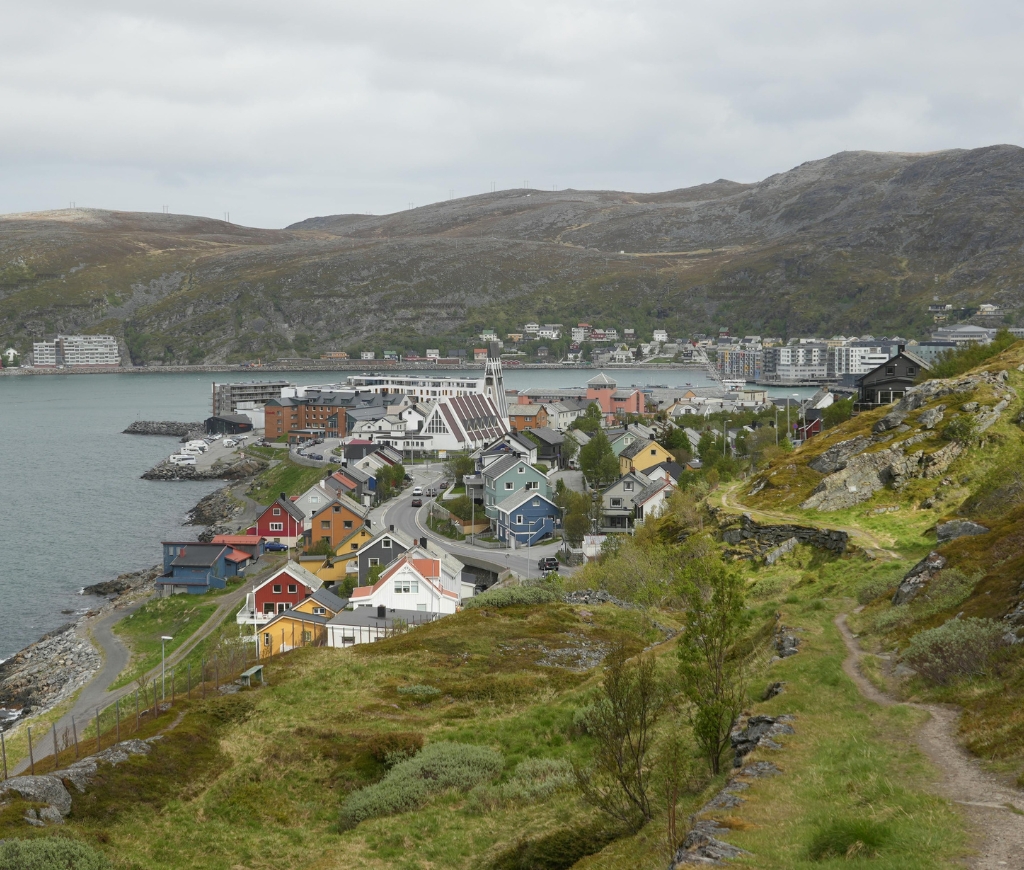
Hammerfest, Norway
Hammerfest is the last outpost of civilisation before reaching the never-ending ice sheets of the North Pole.
Although its name would lead you to think of Finland, it is in fact Norwegian territory. Finnmark is a remarkable area which has become a national park area. One such park is the Øvre Pasvik, located in the largest primitive forest of the Polar Cap, a natural paradise for bears that fish for pike and salmon.
Hammerfest was founded at the beginning of the 18th century when this area became important to fishing companies that make their living off the sea. Before that, Hammerfest was merely a sheltering place during bear hunts.
Beginning in 1795, Hammerfest started out as a small quay, then grew into a port, and now its docks transport thousands of passengers each year. It is one of the busiest ports in Norway for mercantile trade.
Hammerfest has 10,000 inhabitants and is the capital of the province of Kvalsund, covering about 1,800 kilometres. It became an independent administrative authority in 1869 because of its unique geographic location.
The countryside is extremely rugged and wild, but at the same time rich and varied. Local authorities have always been conscious of protecting the environment. Hammerfest proudly claims to be one of the few cities in the world that has an almost zero environmental impact. Everything here is recycled and products are used economically and subject to environmental monitoring.
One of the most respected institutions in the city is the "Ancient Society of Polar Bears," or Isbjørnklubben, hosting a small museum that narrates the history of the city. The museum contains many specimens of animals that live in the polar seas. One may wear the society's emblem only if you have visited Hammerfest and have become a member of the Polar Bear Club.
The cliffs along the coastline and the large expanse of marshland inland offer perfect nesting conditions for thousands of birds. There are many photography safaris, where sea eagles, seagulls, cormorants as well as puffins in their natural habitats, may be seen and photographed from the boat.
The inland area around Finnmark is also quite captivating. The 307 metre high rock that drops in the glacial Arctic Ocean thrusts up from here. It is visited annually by thousands of tourists from around the world eager to see the sun's reflection at midnight. Even if it's foggy or the weather is bad, the North Cape still proves a fascinating attraction.
Leknes, Norway
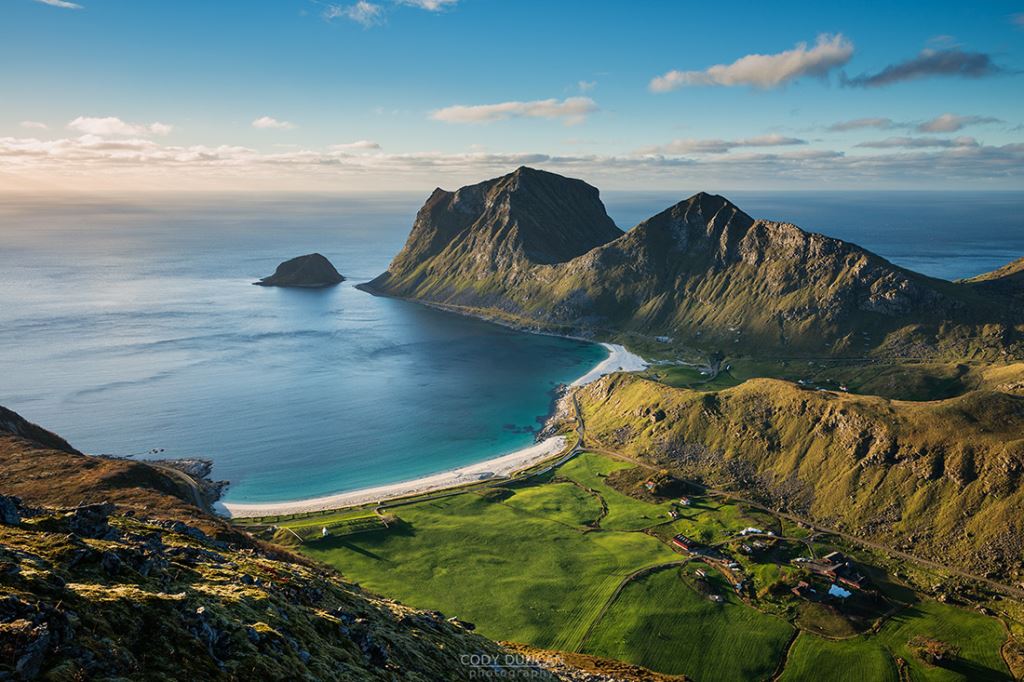
Bordeaux, France
Bordeaux, located in the southwest of France along the banks of the Garonne River, is one of the country’s most elegant cities, known worldwide for its wine, architecture, and rich cultural heritage. The city exudes a sophisticated charm and historical depth, while also pulsing with a modern urban spirit.
The historic center of Bordeaux, listed as a UNESCO World Heritage Site, enchants visitors with its wide boulevards, magnificent 18th-century façades, and elegant squares. Among its most famous landmarks are the Place de la Bourse and its Miroir d’eau – the world’s largest reflecting pool, creating a magical visual experience. Other highlights include the majestic Saint-André Cathedral, the historic Porte Cailhau, and the Grosse Cloche – a medieval bell tower symbolizing the city’s long and storied past.
Bordeaux is a true hub of wine culture. Surrounded by renowned wine regions such as Médoc, Saint-Émilion, and Graves, the city offers countless wine bars, tasting rooms, and La Cité du Vin – a modern museum dedicated to the history and culture of wine, where visitors can immerse themselves in the world of viticulture through interactive exhibits and tastings.
With top-notch gastronomy in Michelin-starred restaurants, charming cafés, and markets full of local delicacies, Bordeaux is a city made for enjoyment – whether you're relaxing with a glass of wine, strolling along the river, exploring art galleries, or attending one of its many cultural festivals.
With its refined beauty, rich heritage, and vibrant lifestyle, Bordeaux is a perfect destination for travelers seeking a blend of French elegance, hedonism, and an authentic experience of southwestern France.
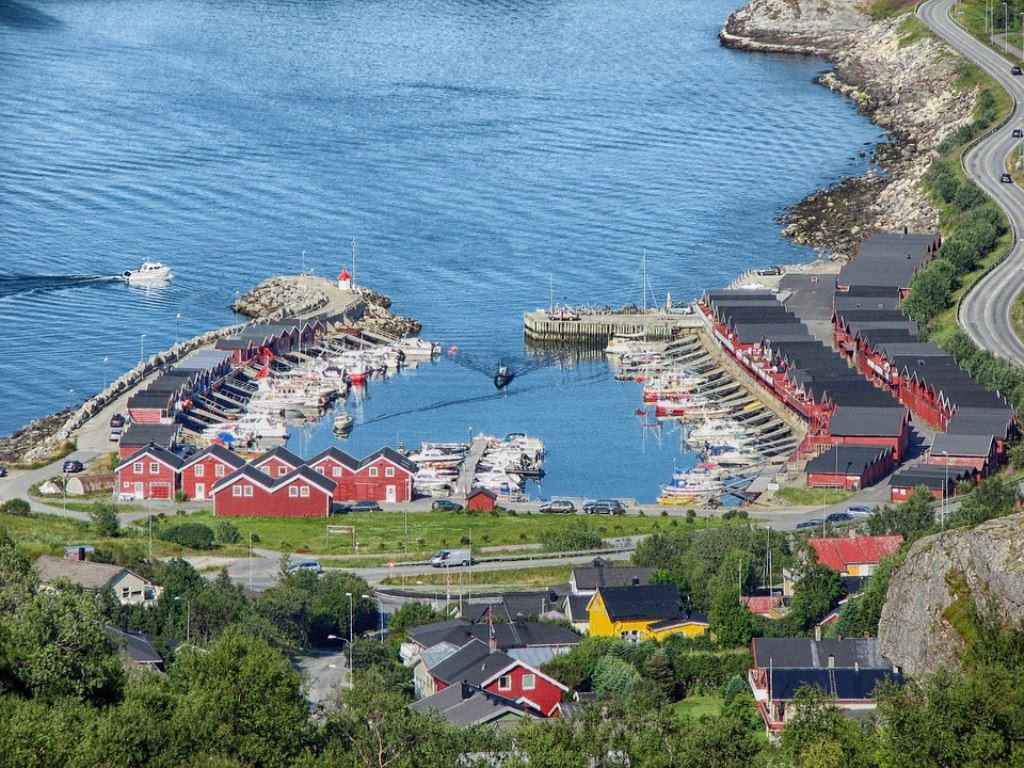
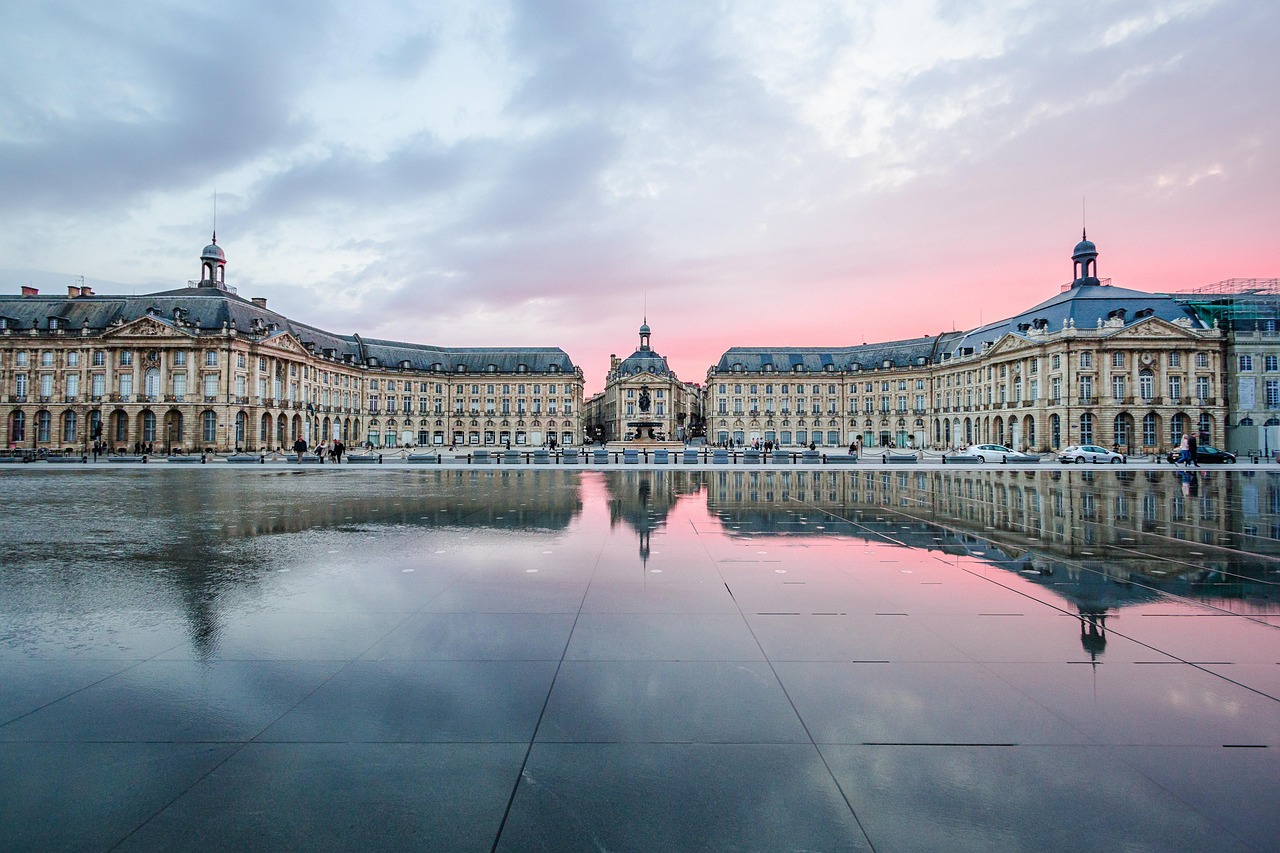
Trondheim, Norway
The city of the 'midnight sun', Trondheim is a renowned mediaeval university city and is situated by the largest fjord in Norway. There are two main areas of the city. One is the triangular central district, rich in cultural and architectural monuments. The other is the western district with the greenery of the Bymarca area, popular with university students and a centre of music, theatre and alternative arts.
The main city square is Torvat, which features a market and a monument to the Viking king, Olaf, who converted his people to Christianity. It is also a focal point for civic meetings. A series of magnificent buildings surround the square, including the majestic 12th Century, stone-built Gothic Cathedral. The Cathedral is considered by art historians to one of the most beautiful churches in Scandinavia and one of the few in northern Europe to compete with those of France and Italy. The entertaining Museum of Applied Arts, the so-called Folk Museum, includes contemporary and extravagant craftworks.
Trondheim's cuisine includes typical Norwegian specialities such as salmon and trout, pork and lamb, as well as the popular smorrebrod sandwich.
Haugesund, Norway

Hamburg, Germany
Founded in 808 by Charlemagne, the fortress of Hammaburg was the original nucleus of Hamburg. The city immediately grew thanks to the institution of the archbishop’s see. Following the invasions of the Vikings, the Danes and the Slavs, Hamburg formed an alliance with the German cities of Bremen and Lubeck forming the Hanseatic League, which was to have a strong commercial influence in the North and Baltic Seas. Occupied by the French from 1806-11 during the Napoleonic wars, Hamburg became part of the German Confederation in 1815. The city was devastated by the bombardments of World War II which claimed 40,000 victims, but the post-war reconstruction saw Hamburg regain its historical and commercial importance as well as primary roles in industry and culture. With a population of over 1.7 million it is Germany’s second city after Berlin. In fact Hamburg is not just a city but also a city-state - Freie und Hansestadt Hamburg (the Free and Hanseatic City of Hamburg) – and is one of the 16 Länder that form the Bundesrepublik, the Federal Republic of Germany. Only the capital Berlin and nearby Bremen have been afforded the same status.
Hamburg stands at the point at which the Alster and Bille flow into the River Elbe, around 110km from the North Sea. It is one of Europe’s busiest and most important ports and is connected to a large proportion of the continent via canals and other waterways. The building of the Kiel Canal in 1895 further increased traffic in the port making water transport between the city and the Baltic region that much easier. The port extends across the entire width of the Elbe, covering an area of around 40km2, and stands principally on the south bank of the river. One of the most characteristic areas of the city is around the Speicherstadt, the free port or warehouse district constructed between 1881 and 1887, where the buildings stand right on the edges of the canals. This district is also home to the majestic Kohlbrandbrücke bridge, the new emblem of Hamburg.
Meanwhile on the north bank of the Elbe, directly opposite the old port, are the modern districts of St. Pauli and Altona, the ideal places for those looking for an evening of entertainment. As well as being the heart of Hamburg’s nightlife, the area is famous for the Reeperbahn red-light district. The banks of the river are connected by bridges and two tunnels: one for pedestrians and cyclists built in 1911 and the other, the Elbtunnel, designed for transport and constructed in 1975. Before flowing into the Elbe the Alster forms two lakes, the Aussenalster and the Binnenalster. From these two basins the water is channelled into the network of waterways that makes Hamburg distinctive.
The Binnenalster, with the famous Alster fountain at its centre, is flanked by the historic town centre, the most elegant area of the city. At the heart of the Alstadt is the town hall (the Rathaus), which, built in 1897, boasts 646 rooms and dominates the square of the same name (Rathausmarkt) and also houses the stock exchange. Not far away you can also visit St. Peter’s Church, construction of which began in the 12th century. Other religious buildings of particular interest are the churches of St. Jacob (13th-15th century), St. Catherine (14th-15th century) and St. Michael, which dates back to the end of the 18th century. Also of note are the best examples of 20th century architecture that characterise a large part of the new city and its cultural buildings: the Musikhalle (1904-1908), the Landungsbrücken (1909), the Chilehaus (1923), the Shell-Haus (1931), and the Amerikahaus (1957). Capital of Germany when it comes to musicals, Hamburg has one of the most lively and enterprising cultural scenes in Europe: the city has 31 theatres, 6 comedy theatres, 10 cabaret theatres and 50 state and private museums.
Most well-known of the museums is the Hamburger Kunsthalle which has been restored many times since its opening in 1869. Here you will find a large collection of paintings by European artists such as Manet, Munch and Rembrandt, as well as works from the German Romantic painters such as Friedrich and Otto Runge. 1997 saw the opening of the Gallery of Contemporary Art Wing, a cube-like structure designed by Mathias Ungers.
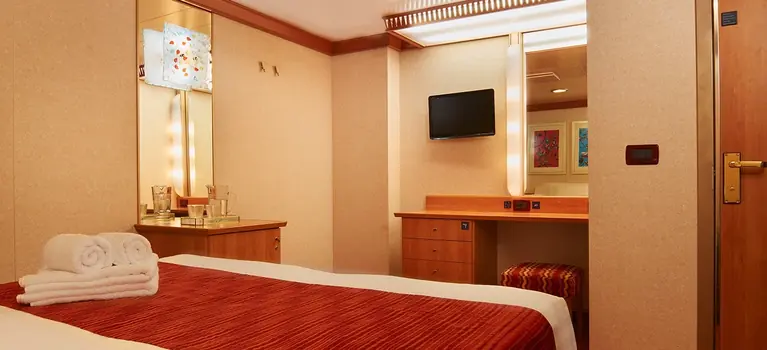
Available cabins for Mon. 05.10. - Mon. 19.10.2026.


Costa Favolosa

Welcome on board Costa Favolosa
On Costa Favolosa you will feel like you are in a fairy tale, on board everything around you will fill you with delight and inspire moments of wonder. This is the charm of Costa Favolosa. It is there every time you wake up in your balcony cabin looking out at the day’s new sea view.
The best way to relax is at the spa or in one of the outdoor hot tubs, followed by a fantastic glass of wine at the wine bar.
It’s already time for dinner, world renowned cuisine or Neapolitan pizza? You’ll be spoiled for choices and you’ll really feel like you’re living in a fairy tale!
Featured activities