

Costa Favolosa: HAM - HAM - HAM12A0S
1 available date
Itinerary
Hamburg, Germany
Founded in 808 by Charlemagne, the fortress of Hammaburg was the original nucleus of Hamburg. The city immediately grew thanks to the institution of the archbishop’s see. Following the invasions of the Vikings, the Danes and the Slavs, Hamburg formed an alliance with the German cities of Bremen and Lubeck forming the Hanseatic League, which was to have a strong commercial influence in the North and Baltic Seas. Occupied by the French from 1806-11 during the Napoleonic wars, Hamburg became part of the German Confederation in 1815. The city was devastated by the bombardments of World War II which claimed 40,000 victims, but the post-war reconstruction saw Hamburg regain its historical and commercial importance as well as primary roles in industry and culture. With a population of over 1.7 million it is Germany’s second city after Berlin. In fact Hamburg is not just a city but also a city-state - Freie und Hansestadt Hamburg (the Free and Hanseatic City of Hamburg) – and is one of the 16 Länder that form the Bundesrepublik, the Federal Republic of Germany. Only the capital Berlin and nearby Bremen have been afforded the same status.
Hamburg stands at the point at which the Alster and Bille flow into the River Elbe, around 110km from the North Sea. It is one of Europe’s busiest and most important ports and is connected to a large proportion of the continent via canals and other waterways. The building of the Kiel Canal in 1895 further increased traffic in the port making water transport between the city and the Baltic region that much easier. The port extends across the entire width of the Elbe, covering an area of around 40km2, and stands principally on the south bank of the river. One of the most characteristic areas of the city is around the Speicherstadt, the free port or warehouse district constructed between 1881 and 1887, where the buildings stand right on the edges of the canals. This district is also home to the majestic Kohlbrandbrücke bridge, the new emblem of Hamburg.
Meanwhile on the north bank of the Elbe, directly opposite the old port, are the modern districts of St. Pauli and Altona, the ideal places for those looking for an evening of entertainment. As well as being the heart of Hamburg’s nightlife, the area is famous for the Reeperbahn red-light district. The banks of the river are connected by bridges and two tunnels: one for pedestrians and cyclists built in 1911 and the other, the Elbtunnel, designed for transport and constructed in 1975. Before flowing into the Elbe the Alster forms two lakes, the Aussenalster and the Binnenalster. From these two basins the water is channelled into the network of waterways that makes Hamburg distinctive.
The Binnenalster, with the famous Alster fountain at its centre, is flanked by the historic town centre, the most elegant area of the city. At the heart of the Alstadt is the town hall (the Rathaus), which, built in 1897, boasts 646 rooms and dominates the square of the same name (Rathausmarkt) and also houses the stock exchange. Not far away you can also visit St. Peter’s Church, construction of which began in the 12th century. Other religious buildings of particular interest are the churches of St. Jacob (13th-15th century), St. Catherine (14th-15th century) and St. Michael, which dates back to the end of the 18th century. Also of note are the best examples of 20th century architecture that characterise a large part of the new city and its cultural buildings: the Musikhalle (1904-1908), the Landungsbrücken (1909), the Chilehaus (1923), the Shell-Haus (1931), and the Amerikahaus (1957). Capital of Germany when it comes to musicals, Hamburg has one of the most lively and enterprising cultural scenes in Europe: the city has 31 theatres, 6 comedy theatres, 10 cabaret theatres and 50 state and private museums.
Most well-known of the museums is the Hamburger Kunsthalle which has been restored many times since its opening in 1869. Here you will find a large collection of paintings by European artists such as Manet, Munch and Rembrandt, as well as works from the German Romantic painters such as Friedrich and Otto Runge. 1997 saw the opening of the Gallery of Contemporary Art Wing, a cube-like structure designed by Mathias Ungers.
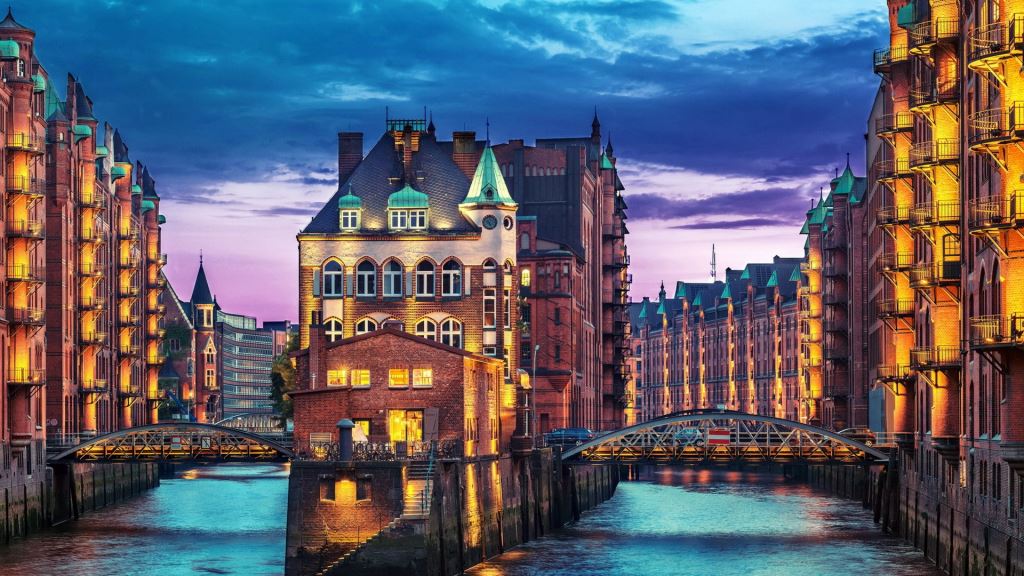

Seydisfjordur, Iceland
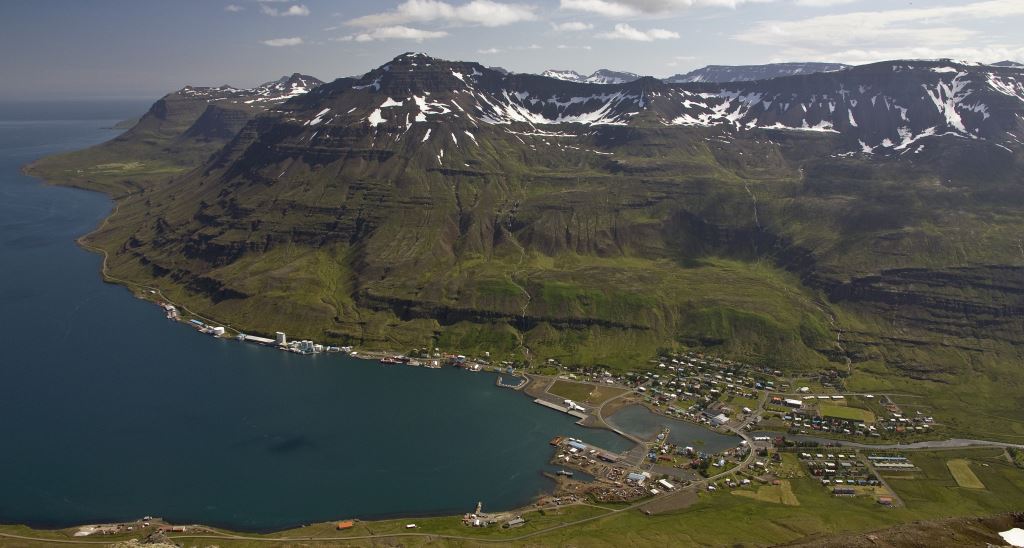
Akureyri
Iceland is an untamed natural paradise full of emotional experiences, which are mirrored by its people. Akureyri is steeped in tradition, and in many ways is an ideal town in which to explore the social, natural and geographic background of Iceland.
The port's opening to the sea provides Akureyri with a natural defence. The slow sea approach to the city gives the impression that the natural defences are intensifying the closer you get to the port. Akureyri stands opposite the Eyjafjörður Channels, one of the deepest in all of Iceland.
The majority of its population is involved in traditional agricultural and fishing activities, as well as small scale industries that are free from pollution. The climate is somewhat severe, but it is also relatively mild when compared with other cities that are located along the same latitude. The city benefits most of all from the protection of the Eyjafjörður channel, one of the few areas in Iceland that never gets blocked with ice.
Akureyri was founded over 600 years ago by a handful of fishermen who managed to develop a small trading centre. Today Akureyri plays a key role in the island's logistics, both from the point of view of mercantile trade and passenger movement.
The pride of Akureyri is its cathedral situated in the town's centre. Cultural life is diverse thanks to the University, the Modern Art Museum and the Summer Art and Theatre Festival attracting artists, writers and painters.
The University of Akureyri is well known for its biology research activities safeguarding the animal and plant life in the region. This has contributed to Akureyri being a town free of pollution and with some of the purest water reservoirs in the world, not to mention a marine environment considered one of the least contaminated by man.
Isafjordur, Iceland
There are many reasons why Iceland is such a unique country in Europe: it's a relatively large country (around 100,000 km²), but inhabited by only 275,000 people, with a population density unlike any other in the continent; about half the population lives in and around the capital, while the rest of the country is almost uninhabited. What makes the history of Iceland so unique within Europe is the complete lack of any kind of military tradition: the Icelanders have never actively taken part in any war and do not have an army.
Isafjord is the most important town on the extreme northwest coast, capital of the Western Fjords and the only real town in the whole region. It has been an important commercial centre since 1569, since when it has gradually expanded. It is situated in the oldest geological area of the country in a spectacular location.
Its fjord has two valleys, Tungudalur and Engidalur, and is surrounded by tall, steep mountains. Mount Eyrarfjall (724m) rises almost vertically from the group of bright-coloured houses built around Eyri, the sandy stretch of land at the mouth of the fjord. Eyri is the oldest part of the city and boasts one of the best natural landing areas on the island. The oldest buildings in Isafjord are at the very end of the sandy stretch: four wooden buildings from the 18th century, recently restored. The oldest of them all, called Tjöruhús, was built between 1733 and 1742 and houses the city's Folk Museum; the adjacent building, Krambud, was built in 1761 and was originally a shop. Turnhús, built in 1744, used to be a fish salting factory and is now the Maritime Museum of the Western Fjords, one of the best museums in Iceland. Although it might look slightly rustic, it has a wealth of exhibits on the history of the country: old photographs, nautical tools, evidence of the seafaring life of the local population. Across from the port, in a building that looks like a warehouse, is the Sjómannastofan, the restaurant of the sailors' hostel.
In town you can go shopping for traditional lopapeysa, heavy woolly jumpers, which are either white and blue or violet and brown. Prices are average to high, depending on the quality. Alongside these jumpers you can also find scarves, stocking, hats and woolly gloves. Truly unique are the natural products made of Icelandic moss, known locally as fjallagrös: this moss is high in fibre, iron and calcium and is used in moisturising lotions, vitamin supplements and throat lozenges; minced moss is used in teas and in cakes.
You can sample the local cuisine in some of the small restaurants in the centre of town. Some traditional Icelandic dishes, which rely heavily on the ancient fishing tradition, are bloomör, a sheep's blood sausage wrapped in kidney fat and sewn into the diaphragm or stomach; instead of blood, sheep's liver is sometimes used to make lifrapylsa. There are also less 'original' dishes: harofiskur, for example, is dolphin that has been gutted and dried in the open air until it dehydrates; the fish is then sliced into strips and eaten with butter. There are other fish too: blekja (salmon trout), steinbìtur (catfish), lúoa (halibut), sild (herring), skata (skate), porskur (cod), silungur (trout) and lax (salmon). Icelanders also eat grilled lundi (puffin), a beautiful little bird that looks like a cross between a penguin and a toucan. You can sometimes find whale steaks and seal meat too. Another speciality is skyr, a cross between yoghurt and ricotta cheese. Even local feta is good, and butter and milk are excellent. Coffee is a national institution. The traditional Icelandic drink is brennivín, a kind of spirit made of potatoes and flavoured with caraway. Malt extract is also popular.

Grundafjord

Reykjavik
According to legend, the name Reykjavikwas given to the city by the first coloniser of the island who called the island upon which he landed "the ice island". Ingòlfur, who arrived here from Norway, could not believe that so much steam could prevail at such temperatures.
Reykjavik actually means "bay of steam" because of the presence of huge quantities of hot geothermal water beneath the ground.
It did not take long for the Vikings to learn how to exploit this clean form of energy that has no negative environmental impact. They used it for cooking, bathing and physical treatments, a forerunner to thermal baths. Reykjavik is heated entirely by this clean form of energy, earning it the title of most ecologically advanced city in the world. Many of the industries that could become a source of pollution exploit this natural resource in order to reduce their environmental impact.
The cultural life of Reykjavik is particularly rich. There are dozens of museums and galleries, theatres, restaurants and pubs, where mixing with the locals can be an interesting experience. For many years the city has accommodated an increasing number of young people from all over the world who come here to study.
The Laugavegur, the main street of Reykjavik, is where the shops, restaurants, cafés, art galleries and museums are situated. Each museum has large reading rooms with bars, where one can read the newspaper or a good book free of charge.
Skolavodistigur is a very beautiful street that leads to the top of the Thingholt neighbourhood, home to the Hallgrimskirke, a cathedral that is visible from all over the city. The administrative centre of the city is situated near Laekjargata. The town hall and all of the city's most important administrative buildings look out over this artificial lake.
The Pearl definitely deserves to be admired. It is a modern panoramic point of the city whose structure is surmounted by a dome that lights up at night due to the underlying geothermal activity that is transformed into a powerful and environmentally friendly source of electricity. The museums are also worth a visit, including the open-air history museum (Arbaer) dedicated to the traditions and life of Reykjavik when it was a village, and the museum dedicated to Asmunudur Sveinarsson.
Even those who suffer from the cold will be enchanted by the open-air hot pools, a must see in Reykjavik. The largest of these is the Laugardalslaug. The city has recently strengthened its two-way bond with culture and nature, the central themes of the recent international exhibition staged at Reykjavik2000 with the patronage of all the country's most famous artists and personalities.
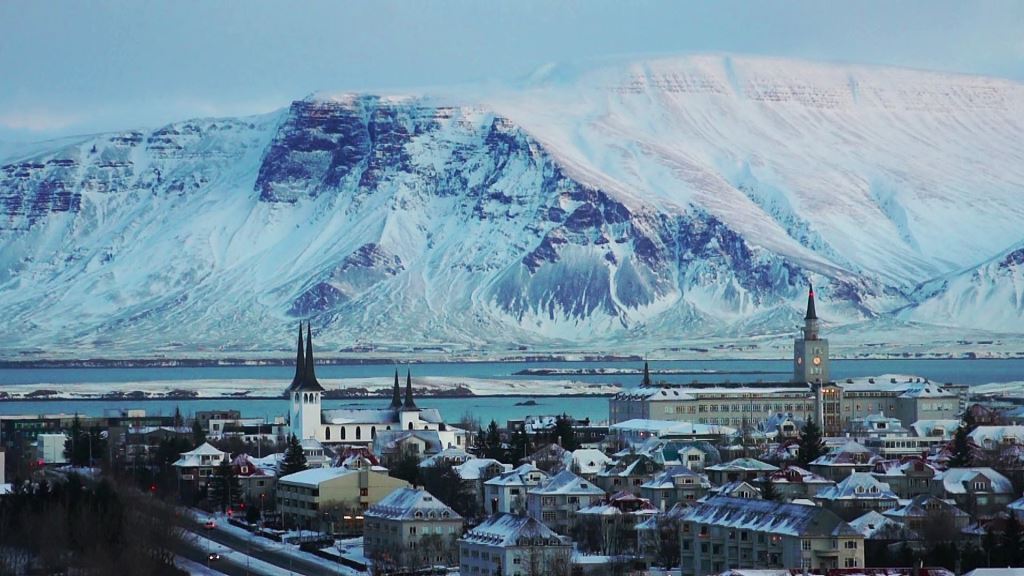
Reykjavik
According to legend, the name Reykjavikwas given to the city by the first coloniser of the island who called the island upon which he landed "the ice island". Ingòlfur, who arrived here from Norway, could not believe that so much steam could prevail at such temperatures.
Reykjavik actually means "bay of steam" because of the presence of huge quantities of hot geothermal water beneath the ground.
It did not take long for the Vikings to learn how to exploit this clean form of energy that has no negative environmental impact. They used it for cooking, bathing and physical treatments, a forerunner to thermal baths. Reykjavik is heated entirely by this clean form of energy, earning it the title of most ecologically advanced city in the world. Many of the industries that could become a source of pollution exploit this natural resource in order to reduce their environmental impact.
The cultural life of Reykjavik is particularly rich. There are dozens of museums and galleries, theatres, restaurants and pubs, where mixing with the locals can be an interesting experience. For many years the city has accommodated an increasing number of young people from all over the world who come here to study.
The Laugavegur, the main street of Reykjavik, is where the shops, restaurants, cafés, art galleries and museums are situated. Each museum has large reading rooms with bars, where one can read the newspaper or a good book free of charge.
Skolavodistigur is a very beautiful street that leads to the top of the Thingholt neighbourhood, home to the Hallgrimskirke, a cathedral that is visible from all over the city. The administrative centre of the city is situated near Laekjargata. The town hall and all of the city's most important administrative buildings look out over this artificial lake.
The Pearl definitely deserves to be admired. It is a modern panoramic point of the city whose structure is surmounted by a dome that lights up at night due to the underlying geothermal activity that is transformed into a powerful and environmentally friendly source of electricity. The museums are also worth a visit, including the open-air history museum (Arbaer) dedicated to the traditions and life of Reykjavik when it was a village, and the museum dedicated to Asmunudur Sveinarsson.
Even those who suffer from the cold will be enchanted by the open-air hot pools, a must see in Reykjavik. The largest of these is the Laugardalslaug. The city has recently strengthened its two-way bond with culture and nature, the central themes of the recent international exhibition staged at Reykjavik2000 with the patronage of all the country's most famous artists and personalities.
Kirkwall (Orkney Is.),United Kingdom
Hamburg, Germany
Founded in 808 by Charlemagne, the fortress of Hammaburg was the original nucleus of Hamburg. The city immediately grew thanks to the institution of the archbishop’s see. Following the invasions of the Vikings, the Danes and the Slavs, Hamburg formed an alliance with the German cities of Bremen and Lubeck forming the Hanseatic League, which was to have a strong commercial influence in the North and Baltic Seas. Occupied by the French from 1806-11 during the Napoleonic wars, Hamburg became part of the German Confederation in 1815. The city was devastated by the bombardments of World War II which claimed 40,000 victims, but the post-war reconstruction saw Hamburg regain its historical and commercial importance as well as primary roles in industry and culture. With a population of over 1.7 million it is Germany’s second city after Berlin. In fact Hamburg is not just a city but also a city-state - Freie und Hansestadt Hamburg (the Free and Hanseatic City of Hamburg) – and is one of the 16 Länder that form the Bundesrepublik, the Federal Republic of Germany. Only the capital Berlin and nearby Bremen have been afforded the same status.
Hamburg stands at the point at which the Alster and Bille flow into the River Elbe, around 110km from the North Sea. It is one of Europe’s busiest and most important ports and is connected to a large proportion of the continent via canals and other waterways. The building of the Kiel Canal in 1895 further increased traffic in the port making water transport between the city and the Baltic region that much easier. The port extends across the entire width of the Elbe, covering an area of around 40km2, and stands principally on the south bank of the river. One of the most characteristic areas of the city is around the Speicherstadt, the free port or warehouse district constructed between 1881 and 1887, where the buildings stand right on the edges of the canals. This district is also home to the majestic Kohlbrandbrücke bridge, the new emblem of Hamburg.
Meanwhile on the north bank of the Elbe, directly opposite the old port, are the modern districts of St. Pauli and Altona, the ideal places for those looking for an evening of entertainment. As well as being the heart of Hamburg’s nightlife, the area is famous for the Reeperbahn red-light district. The banks of the river are connected by bridges and two tunnels: one for pedestrians and cyclists built in 1911 and the other, the Elbtunnel, designed for transport and constructed in 1975. Before flowing into the Elbe the Alster forms two lakes, the Aussenalster and the Binnenalster. From these two basins the water is channelled into the network of waterways that makes Hamburg distinctive.
The Binnenalster, with the famous Alster fountain at its centre, is flanked by the historic town centre, the most elegant area of the city. At the heart of the Alstadt is the town hall (the Rathaus), which, built in 1897, boasts 646 rooms and dominates the square of the same name (Rathausmarkt) and also houses the stock exchange. Not far away you can also visit St. Peter’s Church, construction of which began in the 12th century. Other religious buildings of particular interest are the churches of St. Jacob (13th-15th century), St. Catherine (14th-15th century) and St. Michael, which dates back to the end of the 18th century. Also of note are the best examples of 20th century architecture that characterise a large part of the new city and its cultural buildings: the Musikhalle (1904-1908), the Landungsbrücken (1909), the Chilehaus (1923), the Shell-Haus (1931), and the Amerikahaus (1957). Capital of Germany when it comes to musicals, Hamburg has one of the most lively and enterprising cultural scenes in Europe: the city has 31 theatres, 6 comedy theatres, 10 cabaret theatres and 50 state and private museums.
Most well-known of the museums is the Hamburger Kunsthalle which has been restored many times since its opening in 1869. Here you will find a large collection of paintings by European artists such as Manet, Munch and Rembrandt, as well as works from the German Romantic painters such as Friedrich and Otto Runge. 1997 saw the opening of the Gallery of Contemporary Art Wing, a cube-like structure designed by Mathias Ungers.
Available cabins for Wed. 30.06. - Mon. 12.07.2027.
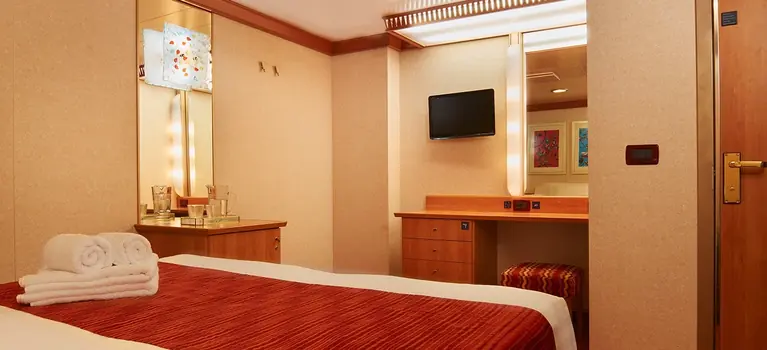


Costa Favolosa

Welcome on board Costa Favolosa
On Costa Favolosa you will feel like you are in a fairy tale, on board everything around you will fill you with delight and inspire moments of wonder. This is the charm of Costa Favolosa. It is there every time you wake up in your balcony cabin looking out at the day’s new sea view.
The best way to relax is at the spa or in one of the outdoor hot tubs, followed by a fantastic glass of wine at the wine bar.
It’s already time for dinner, world renowned cuisine or Neapolitan pizza? You’ll be spoiled for choices and you’ll really feel like you’re living in a fairy tale!
Featured activities