
Costa Favolosa: HAM - HAM - HAM11A04
1 available date
Itinerary
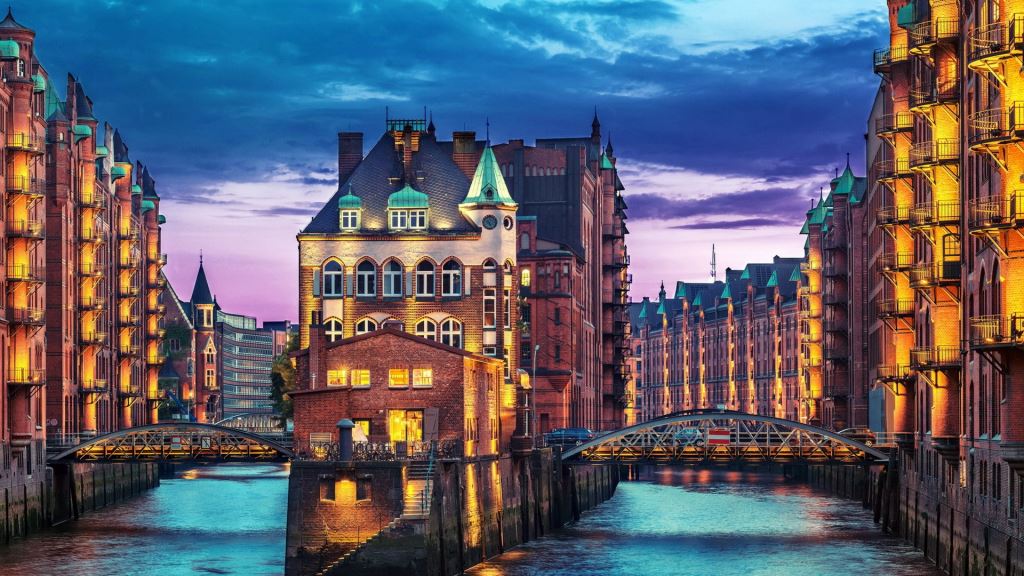
Hamburg, Germany
Founded in 808 by Charlemagne, the fortress of Hammaburg was the original nucleus of Hamburg. The city immediately grew thanks to the institution of the archbishop’s see. Following the invasions of the Vikings, the Danes and the Slavs, Hamburg formed an alliance with the German cities of Bremen and Lubeck forming the Hanseatic League, which was to have a strong commercial influence in the North and Baltic Seas. Occupied by the French from 1806-11 during the Napoleonic wars, Hamburg became part of the German Confederation in 1815. The city was devastated by the bombardments of World War II which claimed 40,000 victims, but the post-war reconstruction saw Hamburg regain its historical and commercial importance as well as primary roles in industry and culture. With a population of over 1.7 million it is Germany’s second city after Berlin. In fact Hamburg is not just a city but also a city-state - Freie und Hansestadt Hamburg (the Free and Hanseatic City of Hamburg) – and is one of the 16 Länder that form the Bundesrepublik, the Federal Republic of Germany. Only the capital Berlin and nearby Bremen have been afforded the same status.
Hamburg stands at the point at which the Alster and Bille flow into the River Elbe, around 110km from the North Sea. It is one of Europe’s busiest and most important ports and is connected to a large proportion of the continent via canals and other waterways. The building of the Kiel Canal in 1895 further increased traffic in the port making water transport between the city and the Baltic region that much easier. The port extends across the entire width of the Elbe, covering an area of around 40km2, and stands principally on the south bank of the river. One of the most characteristic areas of the city is around the Speicherstadt, the free port or warehouse district constructed between 1881 and 1887, where the buildings stand right on the edges of the canals. This district is also home to the majestic Kohlbrandbrücke bridge, the new emblem of Hamburg.
Meanwhile on the north bank of the Elbe, directly opposite the old port, are the modern districts of St. Pauli and Altona, the ideal places for those looking for an evening of entertainment. As well as being the heart of Hamburg’s nightlife, the area is famous for the Reeperbahn red-light district. The banks of the river are connected by bridges and two tunnels: one for pedestrians and cyclists built in 1911 and the other, the Elbtunnel, designed for transport and constructed in 1975. Before flowing into the Elbe the Alster forms two lakes, the Aussenalster and the Binnenalster. From these two basins the water is channelled into the network of waterways that makes Hamburg distinctive.
The Binnenalster, with the famous Alster fountain at its centre, is flanked by the historic town centre, the most elegant area of the city. At the heart of the Alstadt is the town hall (the Rathaus), which, built in 1897, boasts 646 rooms and dominates the square of the same name (Rathausmarkt) and also houses the stock exchange. Not far away you can also visit St. Peter’s Church, construction of which began in the 12th century. Other religious buildings of particular interest are the churches of St. Jacob (13th-15th century), St. Catherine (14th-15th century) and St. Michael, which dates back to the end of the 18th century. Also of note are the best examples of 20th century architecture that characterise a large part of the new city and its cultural buildings: the Musikhalle (1904-1908), the Landungsbrücken (1909), the Chilehaus (1923), the Shell-Haus (1931), and the Amerikahaus (1957). Capital of Germany when it comes to musicals, Hamburg has one of the most lively and enterprising cultural scenes in Europe: the city has 31 theatres, 6 comedy theatres, 10 cabaret theatres and 50 state and private museums.
Most well-known of the museums is the Hamburger Kunsthalle which has been restored many times since its opening in 1869. Here you will find a large collection of paintings by European artists such as Manet, Munch and Rembrandt, as well as works from the German Romantic painters such as Friedrich and Otto Runge. 1997 saw the opening of the Gallery of Contemporary Art Wing, a cube-like structure designed by Mathias Ungers.

Isle of Portland, United Kingdom

Falmouth, United Kingdom
Every town in Cornwall has more legends than actual tales to tell. King Arthur, the Knights of the Round Table, in some way or another, influenced this protracted arm of the country that dives into the English Channel somewhere between the Atlantic, France and England.
The first records of the existence of Falmouth date back to 1600. The tales, on the other hand, go back as far as the ancient temples. Mythical and legendary warriors who perhaps never existed certainly would have passed through Falmouth and stayed there or even taken to the sea from its port for some extraordinary adventure.
Sir Walter Raleigh said at the dawn of the 1600s that "a village like this with a couple of ramshackle houses, is worthy of more attention, given its strategic position, and it would be an ideal port for defense and if necessary from which to launch an attack." And so Falmouth, in the space of a few years, witnessed rapid expansion both in terms of the growth of the town and its activities. For the next 300 years, and until today, Falmouth earned its name as a successful port for both trade and its strategic and military importance, and as such has become one of the major English naval ports.
The most extraordinary period in Falmouth's history was the 18th century, when over 350 ocean ships moored at its docks. During this period merchandise was unloaded numbering in the millions of tons. This huge amount of trade made it a flourishing, rich and one of the most feared cities in English royal history. The importance of Falmouth was revealed by the considerable number of problems it faced each time England went to war, as it was one of the first target ports for enemies. The destruction of Falmouth was capable of jeopardizing the entire economy of the country. Among its most noteworthy monuments is the Church of King Charles the Martyr, built in 1662, and near Pendennis Point, the imposing Pendennis Castle, that was begun in 1539 by decree of Henry VIII to defend England from French attacks.
Today, with a tormented history rich with intrigue, Falmouth enjoys an important role in tourism and commerce in the heart of Cornwall.
Cork, Ireland
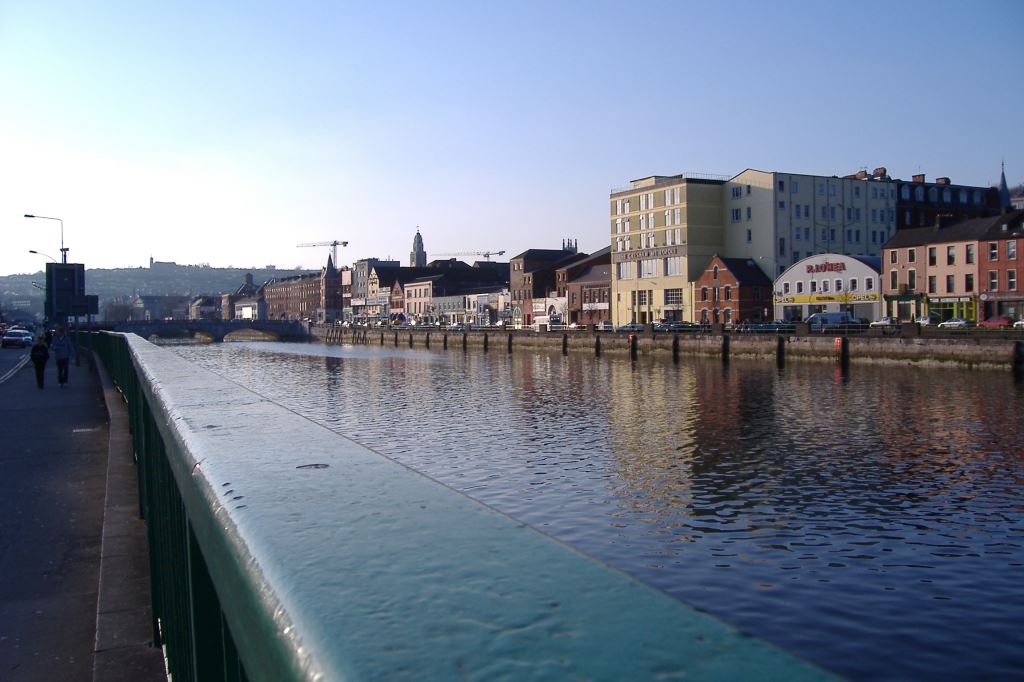
Here is a city that fully expresses the essence of Ireland, its spirit, its history, its soul. Cork is built on very marshy land. In fact, the city's name is an anglicised version of its Gaelic name, Corcaigh, which means "marsh". Cork is the country's second most populous city and the importance of its commercial and industrial activity is second only that of the capital, Dublin, with which it has always had a strongly competitive and somewhat tense relationship.
The people of Cork make no bones about the fact that they are not particularly fond of the capital, even if, they say, it is only a question of bell towers. And, in Ireland, bell towers are taken very seriously.
Cork is a beautiful city with a centuries-old university tradition and flourishing cultural activity, as is shown by the various cultural events taking place year-round. Its 133,000 inhabitants are employed in various commercial and industrial activities, ranging from food production and distribution, to mechanical, electrical, petrochemical and chemical and tanning industries, to clothing manufacture. The city was founded in the VI-VII centuries, when St. Finbarr built an isolated monastery in the middle of the marshes, on the site of what is today St. Finbarr's Cathedral. The monastery soon became an important centre and attracted the attention of the Vikings, who first invaded and sacked it and then, around the X century, settled in the area. The Viking domination lasted for quite some time and left its mark both on the structure of the city and on the inhabitants' genetic heritage.
In the XII century, the Vikings were replaced by the Anglo-Normans. Henry II set up a garrison in the city and gave Cork its first constitutional charter, a document that has remained key to the city's centuries-long sense of independence.
Since that time, Cork has always been Ireland's "rebel city" and has taken part in all of the major Irish revolts. In 1495, it backed the adventurer, Warbeck, the supposed son of Edward IV; in 1649, partisan to the Catholic Confederation, it fell into Cromwell's hands; in 1690, faithful to James II, it was taken by John Churchill, the future Duke of Marlborough; in the XIX century, it was a hot bed of Fenian insurrection; in 1920, the then mayor, Thomas MacCurtain, was assassinated by the police, and his successor, Terence MacSwiney, died of a hunger strike in an English prison; the entire city was set aflame by the Black & Tans, the notorious contingent of veterans recruited by the British police; in 1922, after the withdrawal of the English troops, Cork was occupied by republicans hostile to the treaty, and was then re-conquered by the troops of the Free State of Ireland. In short, the city has had a tumultuous history and, partly because of its very nature, and partly out of political and economic convenience, has always chosen to stand on its own. From an architectural point of view, its golden age was in the XIX century, thanks particularly to the contribution made by the Pain brothers, who were students of the London architect John Nash and who are especially remembered for the Holy Trinity Church (on Father Matthew Quay) and for the Court House (on Washington Street). The intense aroma of the beer produced by the Beamish Brewery, which makes what is considered to be the best stout in all of Cork, still hovers over these baroque Victorian buildings of pink stone and limestone.
On a visit to Cork in 1849, Queen Victoria inaugurated the University, which was subsequently named after her (Queen's College), and bestowed a knighthood on its architect Thomas Deane. During the ceremony, a statue of the Queen (now buried somewhere on the College grounds) was unveiled. Benjamin Woodward was a student of Deane's, and became his most accomplished and original successor. Other particularly noteworthy buildings include the Honan Chapel, built in 1915 by James E. Macmullan, and featuring beautiful stained glass windows. Among these, the eleven windows portraying Irish saints, created by Sarah Purser and Harry Clarke, in art nouveau style and with very lively colours, are particularly impressive.
University College counts many outstanding professors among its past faculty, including the famous mathematician George Boole (1815-1864), whose theories were fundamental to the invention of the computer. The Cork Public Museum and Fitzgerald Park, the city's largest park, are also definitely worth a visit.
Dun Laoghaire-Dublin, Ireland
LIVERPOOL
Greenock (Glasgow), United Kingdom
Southampton (London),United Kingdom
Cruises from Southampton are part of a rich maritime heritage. Some of the most famous ships have set sail from this port, which, before the rise of commercial air travel, was the main gateway to the world. Hollywood stars like Bette Davis and Elizabeth Taylor passed through here to board cruises from Southampton, and it is also known as the port from which the Titanic departed in 1912.
In the picturesque Old Town, walking along cobbled streets reveals 12th-century churches, Tudor-style houses, and one of the best-preserved medieval city walls in the UK, featuring the historic Bargate entrance. The city also offers lively marina-side bars, modern shopping districts, and a cultural quarter where the Mayflower Theatre stages popular West End musicals, while the SeaCity Museum documents Southampton’s rich maritime past.
Some of England’s most famous landmarks are just a short drive away: the Neolithic wonder Stonehenge, the picturesque spa city of Bath, or iconic London attractions like Buckingham Palace, Tate Modern, and Tower Bridge.
Discover 5,000 years of history and much more on a cruise from Southampton.

Hamburg, Germany
Founded in 808 by Charlemagne, the fortress of Hammaburg was the original nucleus of Hamburg. The city immediately grew thanks to the institution of the archbishop’s see. Following the invasions of the Vikings, the Danes and the Slavs, Hamburg formed an alliance with the German cities of Bremen and Lubeck forming the Hanseatic League, which was to have a strong commercial influence in the North and Baltic Seas. Occupied by the French from 1806-11 during the Napoleonic wars, Hamburg became part of the German Confederation in 1815. The city was devastated by the bombardments of World War II which claimed 40,000 victims, but the post-war reconstruction saw Hamburg regain its historical and commercial importance as well as primary roles in industry and culture. With a population of over 1.7 million it is Germany’s second city after Berlin. In fact Hamburg is not just a city but also a city-state - Freie und Hansestadt Hamburg (the Free and Hanseatic City of Hamburg) – and is one of the 16 Länder that form the Bundesrepublik, the Federal Republic of Germany. Only the capital Berlin and nearby Bremen have been afforded the same status.
Hamburg stands at the point at which the Alster and Bille flow into the River Elbe, around 110km from the North Sea. It is one of Europe’s busiest and most important ports and is connected to a large proportion of the continent via canals and other waterways. The building of the Kiel Canal in 1895 further increased traffic in the port making water transport between the city and the Baltic region that much easier. The port extends across the entire width of the Elbe, covering an area of around 40km2, and stands principally on the south bank of the river. One of the most characteristic areas of the city is around the Speicherstadt, the free port or warehouse district constructed between 1881 and 1887, where the buildings stand right on the edges of the canals. This district is also home to the majestic Kohlbrandbrücke bridge, the new emblem of Hamburg.
Meanwhile on the north bank of the Elbe, directly opposite the old port, are the modern districts of St. Pauli and Altona, the ideal places for those looking for an evening of entertainment. As well as being the heart of Hamburg’s nightlife, the area is famous for the Reeperbahn red-light district. The banks of the river are connected by bridges and two tunnels: one for pedestrians and cyclists built in 1911 and the other, the Elbtunnel, designed for transport and constructed in 1975. Before flowing into the Elbe the Alster forms two lakes, the Aussenalster and the Binnenalster. From these two basins the water is channelled into the network of waterways that makes Hamburg distinctive.
The Binnenalster, with the famous Alster fountain at its centre, is flanked by the historic town centre, the most elegant area of the city. At the heart of the Alstadt is the town hall (the Rathaus), which, built in 1897, boasts 646 rooms and dominates the square of the same name (Rathausmarkt) and also houses the stock exchange. Not far away you can also visit St. Peter’s Church, construction of which began in the 12th century. Other religious buildings of particular interest are the churches of St. Jacob (13th-15th century), St. Catherine (14th-15th century) and St. Michael, which dates back to the end of the 18th century. Also of note are the best examples of 20th century architecture that characterise a large part of the new city and its cultural buildings: the Musikhalle (1904-1908), the Landungsbrücken (1909), the Chilehaus (1923), the Shell-Haus (1931), and the Amerikahaus (1957). Capital of Germany when it comes to musicals, Hamburg has one of the most lively and enterprising cultural scenes in Europe: the city has 31 theatres, 6 comedy theatres, 10 cabaret theatres and 50 state and private museums.
Most well-known of the museums is the Hamburger Kunsthalle which has been restored many times since its opening in 1869. Here you will find a large collection of paintings by European artists such as Manet, Munch and Rembrandt, as well as works from the German Romantic painters such as Friedrich and Otto Runge. 1997 saw the opening of the Gallery of Contemporary Art Wing, a cube-like structure designed by Mathias Ungers.
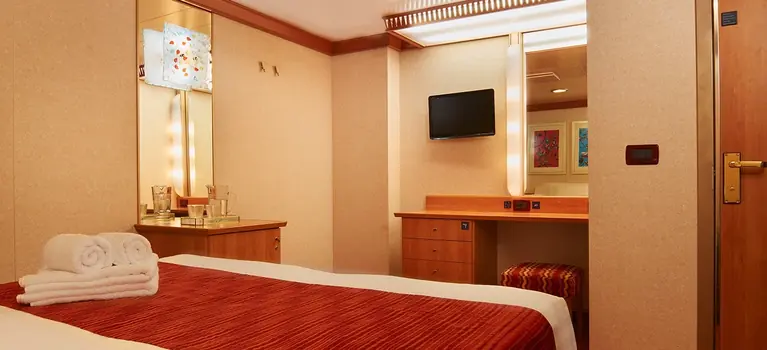
Available cabins for Wed. 25.08. - Sun. 05.09.2027.


Costa Favolosa

Welcome on board Costa Favolosa
On Costa Favolosa you will feel like you are in a fairy tale, on board everything around you will fill you with delight and inspire moments of wonder. This is the charm of Costa Favolosa. It is there every time you wake up in your balcony cabin looking out at the day’s new sea view.
The best way to relax is at the spa or in one of the outdoor hot tubs, followed by a fantastic glass of wine at the wine bar.
It’s already time for dinner, world renowned cuisine or Neapolitan pizza? You’ll be spoiled for choices and you’ll really feel like you’re living in a fairy tale!
Featured activities