
Costa Favolosa: HAM - FDF - HAM17A04
1 available date
Itinerary
Hamburg, Germany
Founded in 808 by Charlemagne, the fortress of Hammaburg was the original nucleus of Hamburg. The city immediately grew thanks to the institution of the archbishop’s see. Following the invasions of the Vikings, the Danes and the Slavs, Hamburg formed an alliance with the German cities of Bremen and Lubeck forming the Hanseatic League, which was to have a strong commercial influence in the North and Baltic Seas. Occupied by the French from 1806-11 during the Napoleonic wars, Hamburg became part of the German Confederation in 1815. The city was devastated by the bombardments of World War II which claimed 40,000 victims, but the post-war reconstruction saw Hamburg regain its historical and commercial importance as well as primary roles in industry and culture. With a population of over 1.7 million it is Germany’s second city after Berlin. In fact Hamburg is not just a city but also a city-state - Freie und Hansestadt Hamburg (the Free and Hanseatic City of Hamburg) – and is one of the 16 Länder that form the Bundesrepublik, the Federal Republic of Germany. Only the capital Berlin and nearby Bremen have been afforded the same status.
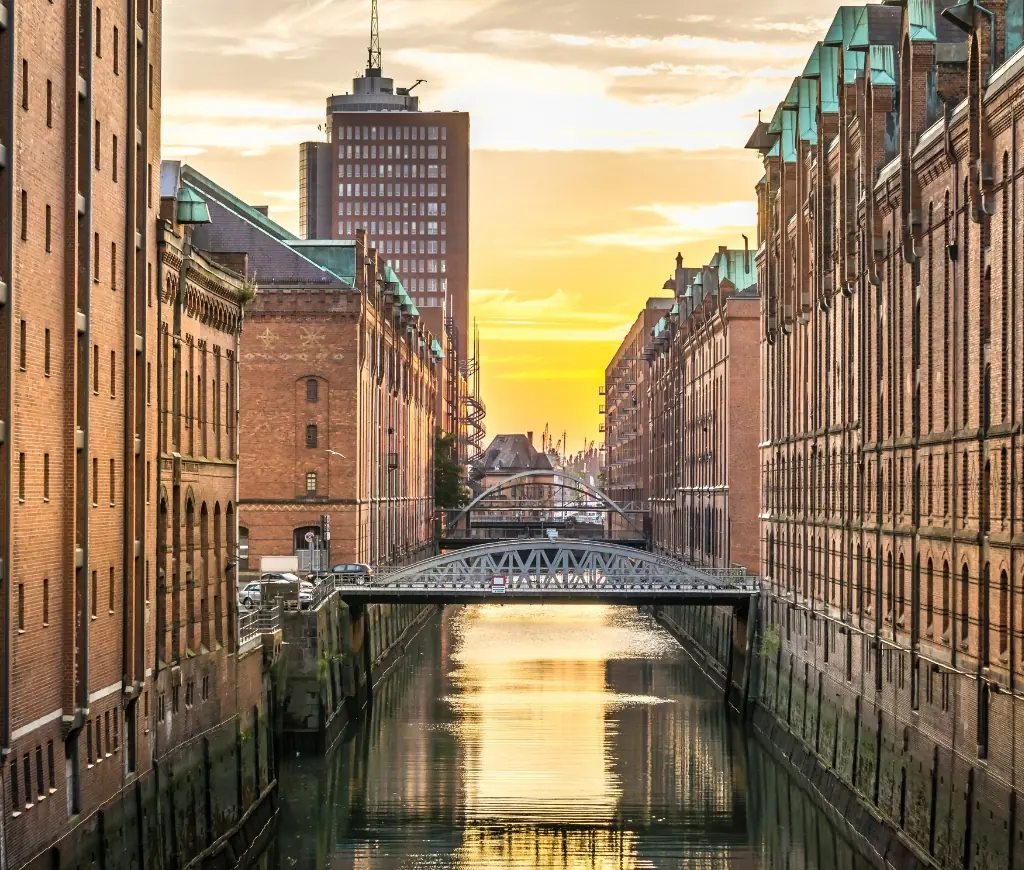
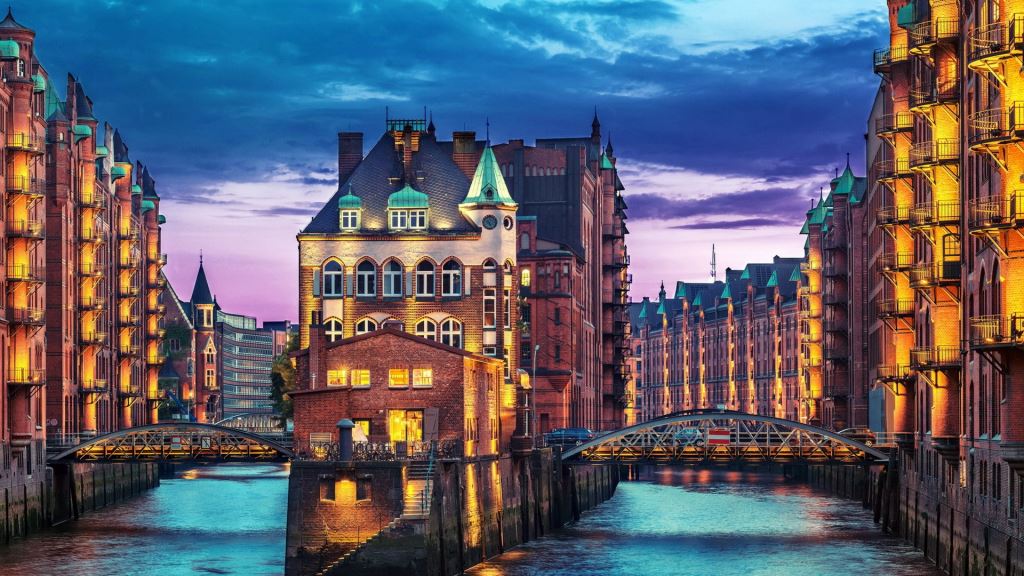
Hamburg stands at the point at which the Alster and Bille flow into the River Elbe, around 110km from the North Sea. It is one of Europe’s busiest and most important ports and is connected to a large proportion of the continent via canals and other waterways. The building of the Kiel Canal in 1895 further increased traffic in the port making water transport between the city and the Baltic region that much easier. The port extends across the entire width of the Elbe, covering an area of around 40km2, and stands principally on the south bank of the river. One of the most characteristic areas of the city is around the Speicherstadt, the free port or warehouse district constructed between 1881 and 1887, where the buildings stand right on the edges of the canals. This district is also home to the majestic Kohlbrandbrücke bridge, the new emblem of Hamburg.
Meanwhile on the north bank of the Elbe, directly opposite the old port, are the modern districts of St. Pauli and Altona, the ideal places for those looking for an evening of entertainment. As well as being the heart of Hamburg’s nightlife, the area is famous for the Reeperbahn red-light district. The banks of the river are connected by bridges and two tunnels: one for pedestrians and cyclists built in 1911 and the other, the Elbtunnel, designed for transport and constructed in 1975. Before flowing into the Elbe the Alster forms two lakes, the Aussenalster and the Binnenalster. From these two basins the water is channelled into the network of waterways that makes Hamburg distinctive.
The Binnenalster, with the famous Alster fountain at its centre, is flanked by the historic town centre, the most elegant area of the city. At the heart of the Alstadt is the town hall (the Rathaus), which, built in 1897, boasts 646 rooms and dominates the square of the same name (Rathausmarkt) and also houses the stock exchange. Not far away you can also visit St. Peter’s Church, construction of which began in the 12th century. Other religious buildings of particular interest are the churches of St. Jacob (13th-15th century), St. Catherine (14th-15th century) and St. Michael, which dates back to the end of the 18th century. Also of note are the best examples of 20th century architecture that characterise a large part of the new city and its cultural buildings: the Musikhalle (1904-1908), the Landungsbrücken (1909), the Chilehaus (1923), the Shell-Haus (1931), and the Amerikahaus (1957). Capital of Germany when it comes to musicals, Hamburg has one of the most lively and enterprising cultural scenes in Europe: the city has 31 theatres, 6 comedy theatres, 10 cabaret theatres and 50 state and private museums.
Most well-known of the museums is the Hamburger Kunsthalle which has been restored many times since its opening in 1869. Here you will find a large collection of paintings by European artists such as Manet, Munch and Rembrandt, as well as works from the German Romantic painters such as Friedrich and Otto Runge. 1997 saw the opening of the Gallery of Contemporary Art Wing, a cube-like structure designed by Mathias Ungers.

IJmuiden, Netherlands
Dover
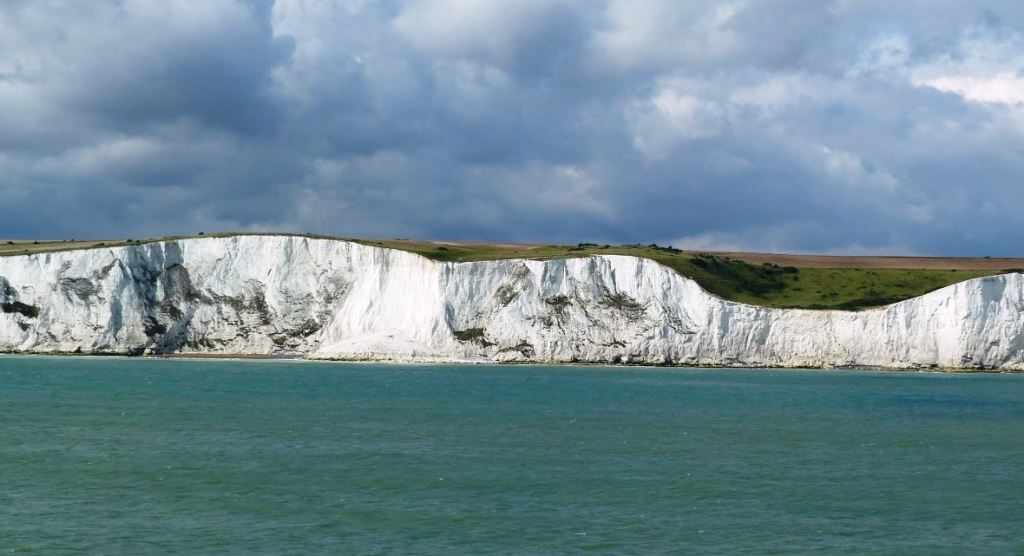
The steep white cliffs of Dover have for centuries symbolised a barrier protecting England from foreign invasion. The town of Dover faces the English Channel, the stretch of sea between the British Isles and continental Europe, opposite the French port of Calais. The strategic importance of Dover to the defence of England has been evident throughout history. Down the centuries, Dover has taken on many roles, including garrison, arsenal, prison and military school.
The first foreigner to transgress its coastline was Julius Caesar in 500 BC, commencing 400 years of Roman domination, leaving many artistic and architectural treasures in its wake, including the fortress of Richborough. After the Romans came the Normans, before, eventually, English dominance reigned supreme. But the concern for security still persists - some 20 years ago a nuclear bunker was built at Dover Castle.
The towns around Dover also have a rich history. The town of Deal features a castle whose secret rooms were used by King Henry VIII to imprison several enemies, many of whom 'disappeared'.
Another site of historical interest in the region is Walmer Castle, home to Lord Walmer, guardian of five ports on the south coast of England. Examples of the ancient battles between the church and English monarchy include Canterbury Cathedral, the Heritage Museum and St Augustine Abbey.
Historical attractions are complemented by picturesque countryside and facilities such as top-class golf courses, making the region popular with both British and international visitors.
Le Havre (Paris), France
The local gastronomy is rich in fresh seafood and traditional Norman specialties such as cheeses, cider, and calvados.
Easily accessible from Paris, Le Havre is the perfect escape from the bustle of the capital and a chance to discover a unique mix of modern urban architecture and authentic French coastal charm.


Lisbon (Cascais), Portugal
Lisbon, the capital and largest city of Portugal, is situated at the mouth of the Tagus River along the Atlantic coast. This historic and dynamic city is known for its unique blend of traditional charm, modern culture, and impressive architecture, making it one of Europe’s most attractive metropolitan destinations.
The city boasts a rich history dating back to Roman times, with vibrant neighborhoods like Alfama, Bairro Alto, and Belém exuding an authentic Mediterranean spirit. Narrow streets, picturesque squares, vintage trams, and the aromas of traditional cuisine create a special atmosphere that captivates visitors. Lisbon is also famous for its historic landmarks, including the imposing Belém Tower, the Jerónimos Monastery, and São Jorge Castle, which offers magnificent panoramic views of the city and the river.
A special highlight of Lisbon is fado – traditional Portuguese music filled with emotion and melancholy, often performed in small, intimate venues in the old quarters of the city. This unique musical form is deeply connected to the spirit of Lisbon and is a must-experience for anyone seeking authentic Portuguese culture. The gastronomy scene is especially notable, ranging from traditional pastéis de nata to top-tier restaurants blending Portuguese and international flavors.
The promenade along the Tagus River and lively squares such as Praça do Comércio are ideal spots for leisurely walks, coffee breaks, or evening outings. The city also offers numerous green spaces, parks, and viewpoints perfect for relaxation and enjoying the views.
Lisbon is a perfect destination for those wanting to experience a blend of history, culture, art, and modern urban life, with a warm Mediterranean atmosphere and welcoming local people.


Cadiz (Seville), Spain
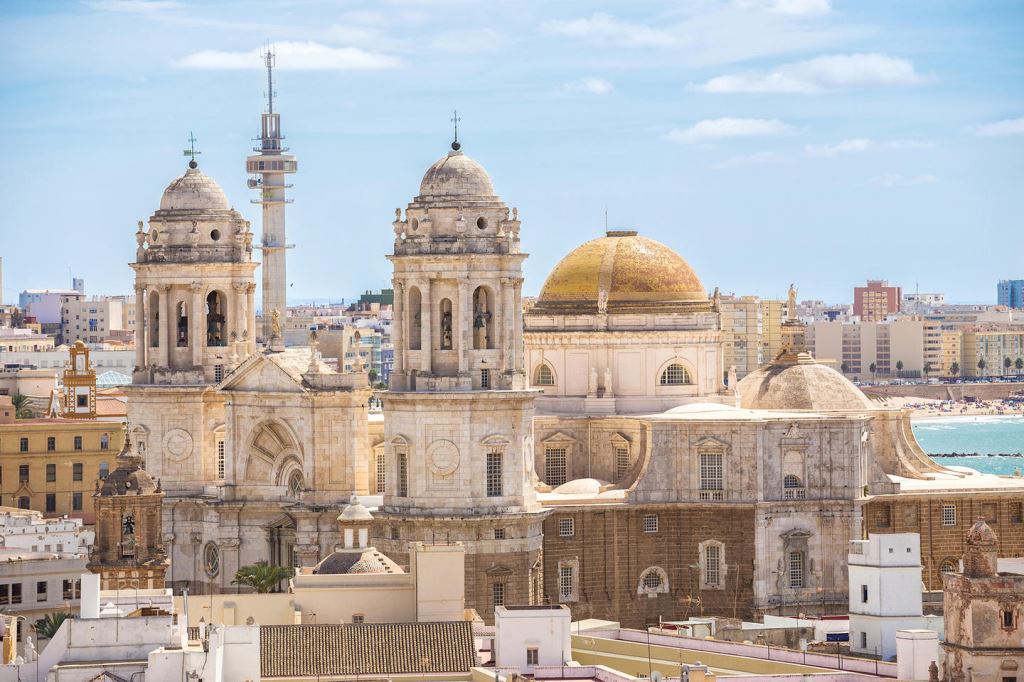
Cadiz is one of the oldest continuously inhabited cities in Europe, founded over 3,000 years ago by the Phoenicians as the trading port of Gadir. Throughout history, it was conquered by the Romans, Visigoths, and Moors, and during the Spanish Golden Age, it became an important port for trade with the New World. Today, the city offers a rich history and cultural landmarks.
Notable sights include the cathedral with its distinctive golden dome, the Torre Tavira tower with panoramic views and the Camera Obscura optical device, the Roman theater dating back to the 1st century BC, the Plaza de las Flores square, and the historic La Viña district known for its restaurants and authentic atmosphere. Cadiz also boasts beautiful beaches such as La Caleta and La Victoria Beach, which offer various activities and amenities.
The local cuisine is based on fresh seafood, with famous dishes like fried fish called ‘pescaíto frito’ and shrimp fritters known as ‘tortillitas de camarones’. The Mercado Central de Abastos market provides an opportunity to taste local delicacies.
The city is also known for the flamenco singer El Chano, whose music has become a symbol of authentic flamenco and an important part of the cultural heritage.

Las Palmas de G.Canaria (Canary Is.), Spain
Las Palmas de Gran Canaria, the largest city in the Canary Islands, is located on the northeastern coast of the island of Gran Canaria. This vibrant city combines a rich history, a cosmopolitan atmosphere, and a relaxed Mediterranean-Atlantic lifestyle. The historic heart of the city, Vegueta, is the perfect place to explore colonial architecture and cultural heritage. Its cobbled streets are home to important museums, churches, and buildings from the 15th and 16th centuries, including the House of Christopher Columbus. In contrast, the modern parts of the city offer a wide range of shops, restaurants, galleries, and the dynamic rhythm of urban life.
One of the city’s main attractions is Las Canteras Beach, over three kilometres long and located right in the city centre. Thanks to a natural reef that softens the waves, it's ideal for swimming, snorkelling, and seaside walks. The city hosts numerous cultural events throughout the year, including the well-known carnival, famous for its costumes, parades, and music. The cultural scene is enriched with theatres, concert halls, and museums.
The local cuisine features traditional Canarian flavours – fresh fish dishes, local vegetables, papas arrugadas with mojo sauce – along with influences from Latin America and Africa, reflecting the city’s historical ties to trade and the sea.
Thanks to its mild year-round climate and excellent transport connections, Las Palmas de Gran Canaria is an ideal destination for those looking to combine culture, the sea, nature, and urban life all in one place.


Fort de France, Martinique
ChatGPT je rekao:
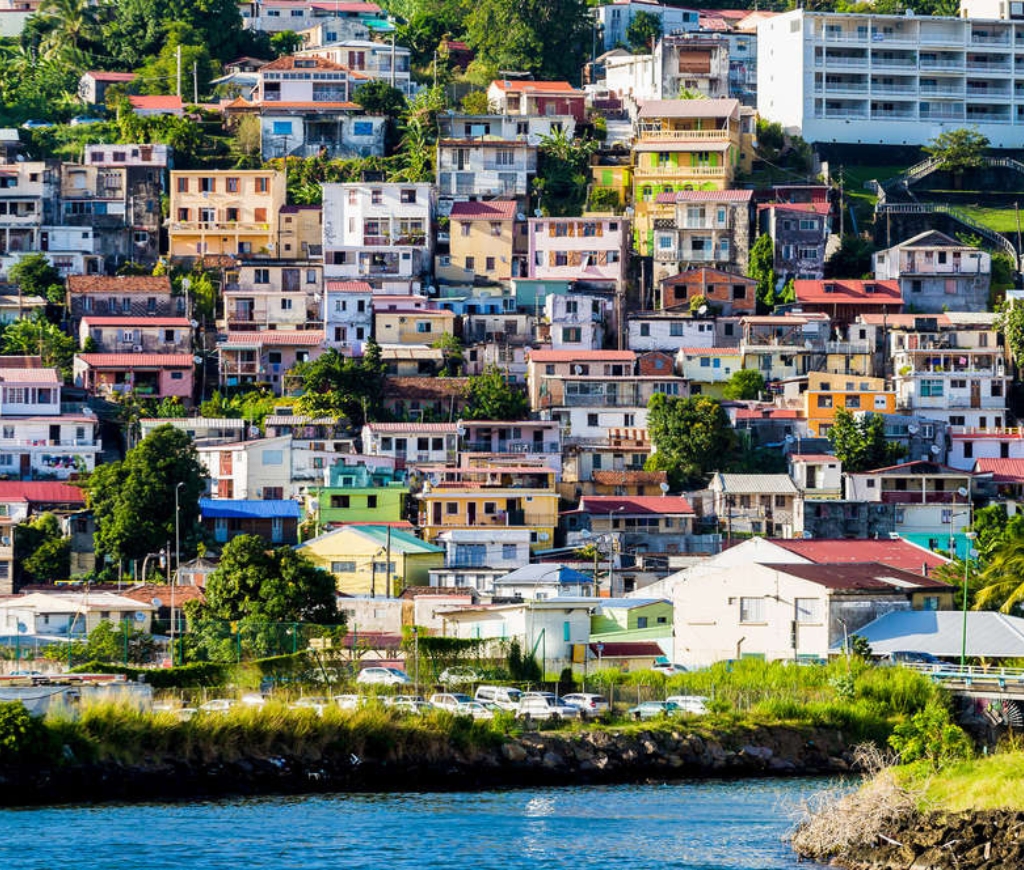
Fort-de-France, the capital of the Caribbean island of Martinique, is the perfect destination for those who want to experience authentic Caribbean charm combined with modern urban life.
Fort-de-France has a rich history, and today it is a lively hub that reflects French colonial elegance mixed with African and Caribbean influences. Here, you feel as if you are walking through history – narrow streets, colorful shops, local cafes, and museums make Fort-de-France a true cultural gem.
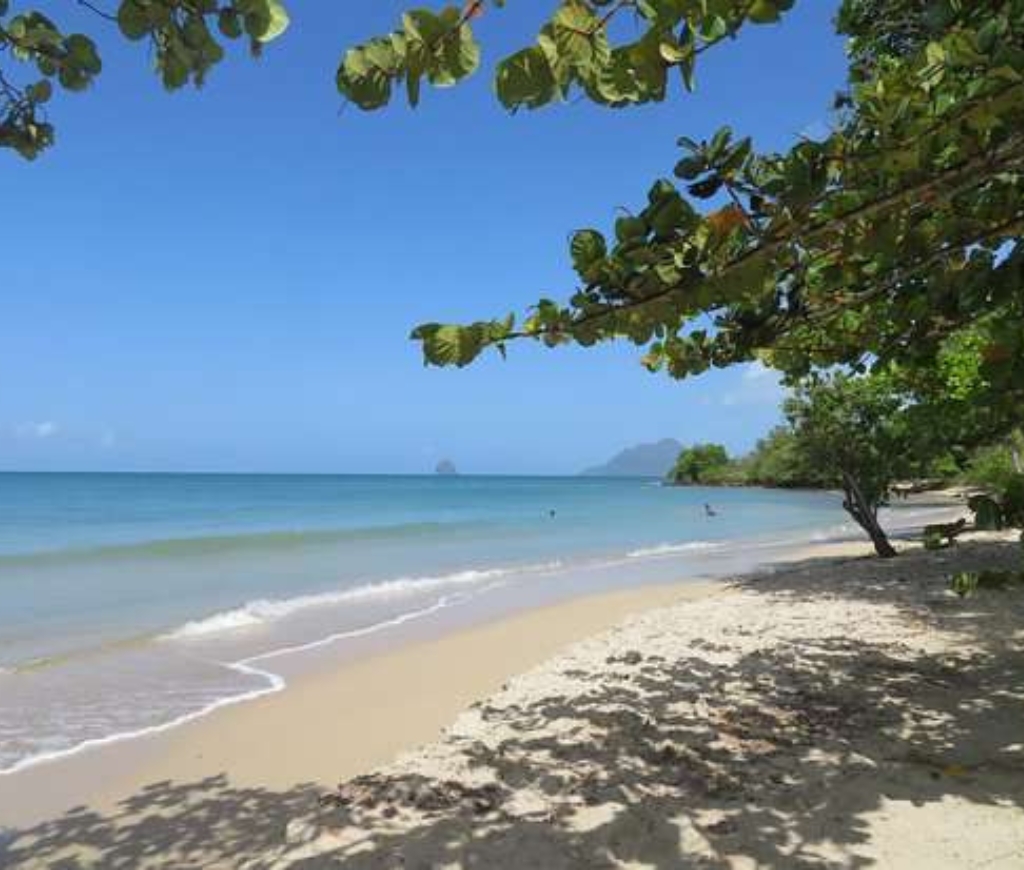
Must-see attractions include Fort Saint-Louis – a historic 17th-century fortress that offers an incredible view of the entire bay, Cathedrale Saint-Louis de Fort-de-France, and the Jardin de Balata, a botanical garden that is an ideal place to escape the hustle and bustle of the city. Surrounded by natural beauty, the city is also a perfect starting point for exploring the stunning Caribbean beaches, such as those in areas like Anse Mitan and La Baie des Flamands.
Fort-de-France is also a gastronomic paradise. The city offers a wealth of flavors – from fresh seafood to various local specialties like colombo (Caribbean curry) and accras (fried fish balls).
Water sports: Fort-de-France and its surroundings provide excellent conditions for sailing, snorkeling, and diving. Martinique is of volcanic origin, and Mount Pelée is a popular destination for hikers and nature lovers.
Nestled along the coastline under the tropical sky, Fort-de-France offers an unforgettable experience that blends history, culture, and natural beauty, all set in a charming, romantic atmosphere.
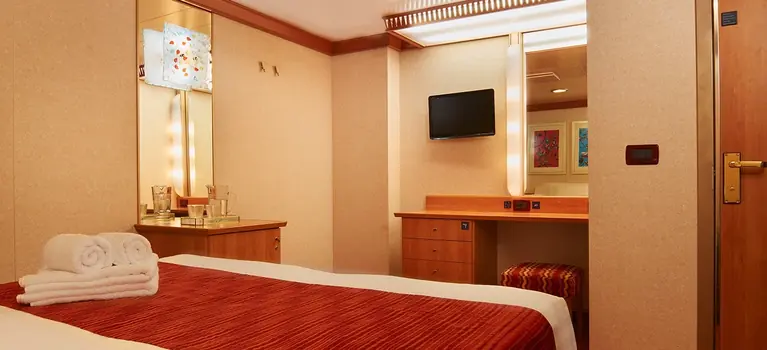
Available cabins for Sun. 08.11. - Wed. 25.11.2026.


Costa Favolosa

Welcome on board Costa Favolosa
On Costa Favolosa you will feel like you are in a fairy tale, on board everything around you will fill you with delight and inspire moments of wonder. This is the charm of Costa Favolosa. It is there every time you wake up in your balcony cabin looking out at the day’s new sea view.
The best way to relax is at the spa or in one of the outdoor hot tubs, followed by a fantastic glass of wine at the wine bar.
It’s already time for dinner, world renowned cuisine or Neapolitan pizza? You’ll be spoiled for choices and you’ll really feel like you’re living in a fairy tale!
Featured activities