
Costa Fascinosa: LRM - LRM - LRM14A49
1 available date
Itinerary
La Romana, Dominican Republic
Although they are relatively new destinations for tourists from Europe and the United States alike, the Dominican Republic and La Romana, a city on the island's beautiful eastern coast, have been attracting visitors for many centuries.
Their vocation is the legacy of what anthropologists have identified as the island's earliest settlers. The Taino Indians are thought by historians to have been a friendly, peace-loving race who farmed the land and lived quietly and simply in harmony both with nature and their fellow men.
Extensive historical evidence of the Taino people has been painstakingly collected and can now be seen in the country's two main museums in Santo Domingo and Puerto Plata. Historians who have studied the island's social and cultural development believe that the Dominican Republic had a highly complex structure. So much so, in fact, that Santo Domingo and La Romana (which was once much smaller than it is today) were once considered the only two cities on the entire continent.
Fact or fiction, legend or history... what is certain is that Taino farmers had their own manuals for farming and fishing, and led highly active lives with plenty of religious activities as well as work. Evidence of this has been passed down through inscriptions and various artefacts, most of them made from the ceramics at which the ancient people of the Dominican Republic excelled.
The first hint of revolution arrived of course with Christopher Columbus's first voyage. The explorer landed in the bay on 5th December 1492. He founded a small village, setting in motion a process of colonisation which soon led the island and its various activities to grow beyond measure.
La Romana emerged as a city of traders and seafarers. Its port became a flourishing cultural hub thanks to its close linguistic ties to the nearby coasts: art and music did the rest. Santo Domingo and La Romana have always been a focal point for trade, wellbeing and entertainment, although they have only been recognised as such universally in the past few decades.
La Romana is not only a thriving, bustling port: it is a beautiful city which boasts all the positive aspects of sea trade. La Romana lies towards the eastern area of the island: with the town of Punta Cana it is the key focus of culture and tourism along the entire coastline. La Romana is also known for its vicinity to San Pedro de Macorìs. Americans are more than familiar with this small village which nestles among sugar cane plantations: it has been feeding the US professional baseball league with natural-born talent for many years.
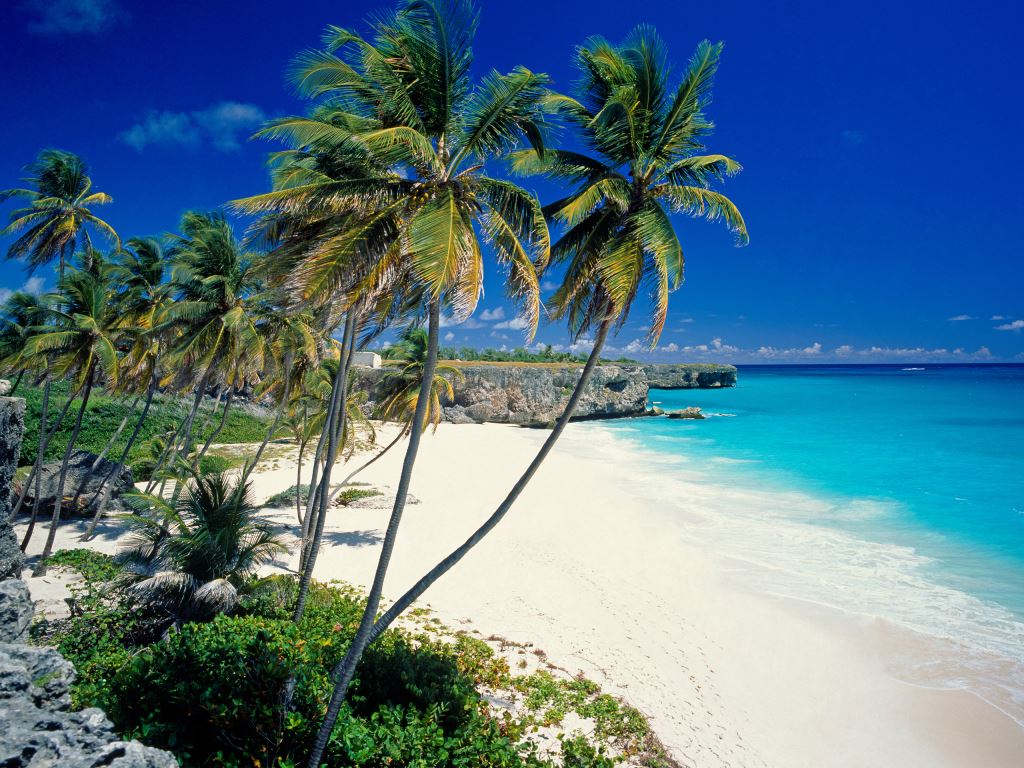
Near to La Romana lie some of the most stunning beaches on the American continent, including Bayahibe and Dominicus. A short hop from La Romana and the coast, the Saona and Catalina islands have also become enormously popular tourist destinations in recent years. These paradise islands are the ideal location for lovers of the sea at its most unspoilt. Here the beaches stretch for kilometres, and swathes of white sand are lapped by the turquoise waters. It is the perfect setting for a number of beautiful nature reserves, foremost of which is the Parque Nacional del Este, or Eastern National Park. The Park is considered an international heritage site and covers an area of over 420 square kilometres.
Saona Island and the village of Bayahibe lie within the park. In this setting, La Romana is shaking off its image as a port and emerging as the capital of a booming tourist trade. Every year thousands of tourists flock to its beaches, seeking their own corner of paradise where they can forget the stresses and strains of daily life, at least for a few days.
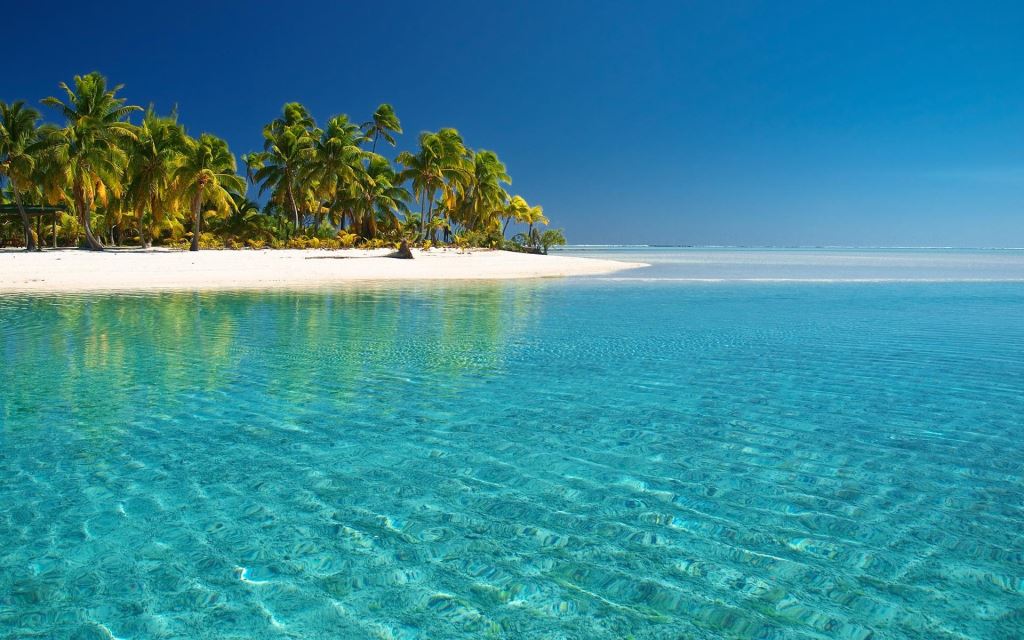
Catalina Island
Catalina Island is Costa's exclusive island idyll off the coast of the Dominican Republic and offers an unparalleled beach experience. Add in an excursion to the Dominican Republic and visitors can look forward to a bonanza of culture and relaxation.
The Dominican Republic lies on the eastern side of Hispaniola Island, with Haiti on the opposite side, in the centre of the Greater Antilles. The Dominican territory is characterised by mountain peaks and sprawling plains. The central Cordillera area features the highest peak in the Caribbean, Pico Duarte, which soars to 3157 metres. The mountain is considered to be the geographical centre of the Antilles, amid beautiful green valleys. To the east is a large peninsula featuring the 1,000 metre peaks of East Cordillera. There are 1600km of coastline, featuring numerous coral reefs. The climate is tropical, with temperatures averaging about 25C and the humidity tempered by Atlantic winds, which bring significant, though not excessive, rainfall.
The island was discovered by Columbus in 1492, after being shipwrecked. Like most of the Caribbean, it has European and African influences, resulting in a distinctive mix of cultures. When Columbus landed, there were approximately 100,000 native 'indios', who were almost wiped out by Spanish colonists who found the island was blessed with fertile soil and deposits of gold. Large numbers of African slaves were imported to work the plantations. In 1844, when the island became independent, 90 per cent of the population were of African descent or mixed race. In the years since, the demographic make-up of the island changed considerably with black emigration to Haiti and an influx of white farmers, a policy promoted by the Creole elite.
Situated on the coast, not far from Catalina Island, is the tourist resort of Casa de Campo, designed by celebrated architect Oscar della Renta. The resort features top hotels and highly regarded golf courses. Altos de Chavon is found here, modelled on a 15th Century Mediterranean-style village. The work of Italian Roberto Coppa, the village features houses in golden-coloured stone and a river running through jungle landscape. The village was a location for several scenes in the Francis-Ford Coppola film "Apocalypse Now". Altos is also the home of an artists' colony and a selection of exhibitions can usually be found. Other attractions include an amphitheatre and archaeological museum which houses over 2,000 finds from the native Taiano indians.
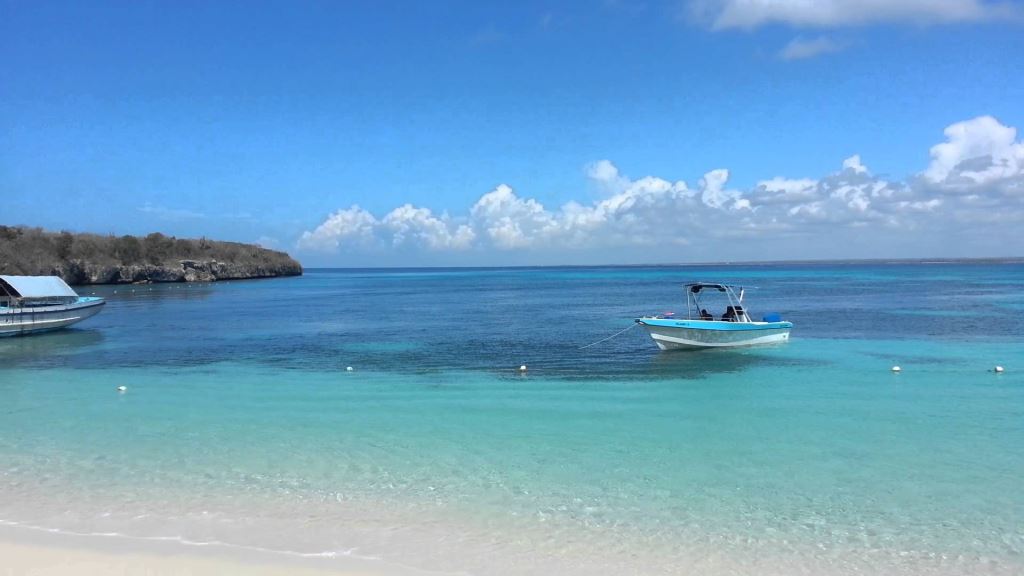
Catalina Bay
Cabo Rojo, Dominican Republic
Puerto Plata, Dominican Republic
Grand Turks
The beautiful Turks and Caicos Islands are situated 575 miles (or 75 minutes) southeast of Miami. Take the time to explore Cockburn town's wonderful selection of historical buildings including many Burmudian and Colonial style buildings and ruins. That's just the beginning of all the things to see and do in Grand Turk. Turks and Caicos Islands has the third largest coral reef system and the best tropical beaches in the world, making it a premier beach, diving and snorkelling destinationIt's deep offshore waters serve as major transit points for Humpback Whales, spotted Eagle rays, Manta Rays and Turtles. Like to fish? Tuna, Wahoo and Blue Marlin inhabit these same rich waters. If you're a diver, or simply interested in diving, Grand Turk is the place for you. With many dive operators and schools it can cater from novice snorkels to experienced divers.
There is a small traditional fishing industry that continues throughout the Turks and Caicos islands on South Caicos in particular. The island of Providenciales is our main tourist island, you will find International style hotel accommodations, each one has its own unique set up and surroundings with most of them being located on the beach as well as world class spas and cuisine.
Residents on the islands are between 20,000 and 25,000 are known for their friendly spirit, which helps ensure this is a destination that helps people de-stress, feel comfortable and truly relax. Come see for yourself. We know your experience on this beautiful island will be nothing short of Grand!

Archipelago Turks and Caicos
Grand Turks
The beautiful Turks and Caicos Islands are situated 575 miles (or 75 minutes) southeast of Miami. Take the time to explore Cockburn town's wonderful selection of historical buildings including many Burmudian and Colonial style buildings and ruins. That's just the beginning of all the things to see and do in Grand Turk. Turks and Caicos Islands has the third largest coral reef system and the best tropical beaches in the world, making it a premier beach, diving and snorkelling destinationIt's deep offshore waters serve as major transit points for Humpback Whales, spotted Eagle rays, Manta Rays and Turtles. Like to fish? Tuna, Wahoo and Blue Marlin inhabit these same rich waters. If you're a diver, or simply interested in diving, Grand Turk is the place for you. With many dive operators and schools it can cater from novice snorkels to experienced divers.
There is a small traditional fishing industry that continues throughout the Turks and Caicos islands on South Caicos in particular. The island of Providenciales is our main tourist island, you will find International style hotel accommodations, each one has its own unique set up and surroundings with most of them being located on the beach as well as world class spas and cuisine.
Residents on the islands are between 20,000 and 25,000 are known for their friendly spirit, which helps ensure this is a destination that helps people de-stress, feel comfortable and truly relax. Come see for yourself. We know your experience on this beautiful island will be nothing short of Grand!
Arroyo Barril (Samana)
La Romana, Dominican Republic
Although they are relatively new destinations for tourists from Europe and the United States alike, the Dominican Republic and La Romana, a city on the island's beautiful eastern coast, have been attracting visitors for many centuries.
Their vocation is the legacy of what anthropologists have identified as the island's earliest settlers. The Taino Indians are thought by historians to have been a friendly, peace-loving race who farmed the land and lived quietly and simply in harmony both with nature and their fellow men.
Extensive historical evidence of the Taino people has been painstakingly collected and can now be seen in the country's two main museums in Santo Domingo and Puerto Plata. Historians who have studied the island's social and cultural development believe that the Dominican Republic had a highly complex structure. So much so, in fact, that Santo Domingo and La Romana (which was once much smaller than it is today) were once considered the only two cities on the entire continent.
Fact or fiction, legend or history... what is certain is that Taino farmers had their own manuals for farming and fishing, and led highly active lives with plenty of religious activities as well as work. Evidence of this has been passed down through inscriptions and various artefacts, most of them made from the ceramics at which the ancient people of the Dominican Republic excelled.
The first hint of revolution arrived of course with Christopher Columbus's first voyage. The explorer landed in the bay on 5th December 1492. He founded a small village, setting in motion a process of colonisation which soon led the island and its various activities to grow beyond measure.
La Romana emerged as a city of traders and seafarers. Its port became a flourishing cultural hub thanks to its close linguistic ties to the nearby coasts: art and music did the rest. Santo Domingo and La Romana have always been a focal point for trade, wellbeing and entertainment, although they have only been recognised as such universally in the past few decades.
La Romana is not only a thriving, bustling port: it is a beautiful city which boasts all the positive aspects of sea trade. La Romana lies towards the eastern area of the island: with the town of Punta Cana it is the key focus of culture and tourism along the entire coastline. La Romana is also known for its vicinity to San Pedro de Macorìs. Americans are more than familiar with this small village which nestles among sugar cane plantations: it has been feeding the US professional baseball league with natural-born talent for many years.
Near to La Romana lie some of the most stunning beaches on the American continent, including Bayahibe and Dominicus. A short hop from La Romana and the coast, the Saona and Catalina islands have also become enormously popular tourist destinations in recent years. These paradise islands are the ideal location for lovers of the sea at its most unspoilt. Here the beaches stretch for kilometres, and swathes of white sand are lapped by the turquoise waters. It is the perfect setting for a number of beautiful nature reserves, foremost of which is the Parque Nacional del Este, or Eastern National Park. The Park is considered an international heritage site and covers an area of over 420 square kilometres.
Saona Island and the village of Bayahibe lie within the park. In this setting, La Romana is shaking off its image as a port and emerging as the capital of a booming tourist trade. Every year thousands of tourists flock to its beaches, seeking their own corner of paradise where they can forget the stresses and strains of daily life, at least for a few days.
Caribbean Sea Darkest Spot
Castries, Saint Lucia
The first inhabitants of St Lucia were Arawak Indians, probably taking refuge from the aggressive attentions of the Caribs in 200AD. Evidence of their presence can be found on the coast and inland. Christopher Columbus supposedly landed on the island in 1502, although his visit has been disputed by historians. How the island came to be named St Lucia is somewhat of a riddle.
The sailor Juan De La Cosa, who had travelled with Columbus in 1502, told how he returned to the island in 1504. He discovered that although he had previously named the island El Falcon, it had mysteriously been renamed St Lucia.
The history of the island during the following hundred years is scarce, until 1605, when an English ship carrying a group of aristocrats landed after being blown off course. Their attempt at colonisation failed disastrously and most were killed by the island's native Indians. Another English attempt in 1639, led by Sir Thomas Warner, met the same fate. Then, in 1651, it was the turn of the French to try and take possession. Thus the see-saw position continued for the next 150 years as the French and British battled for dominance.
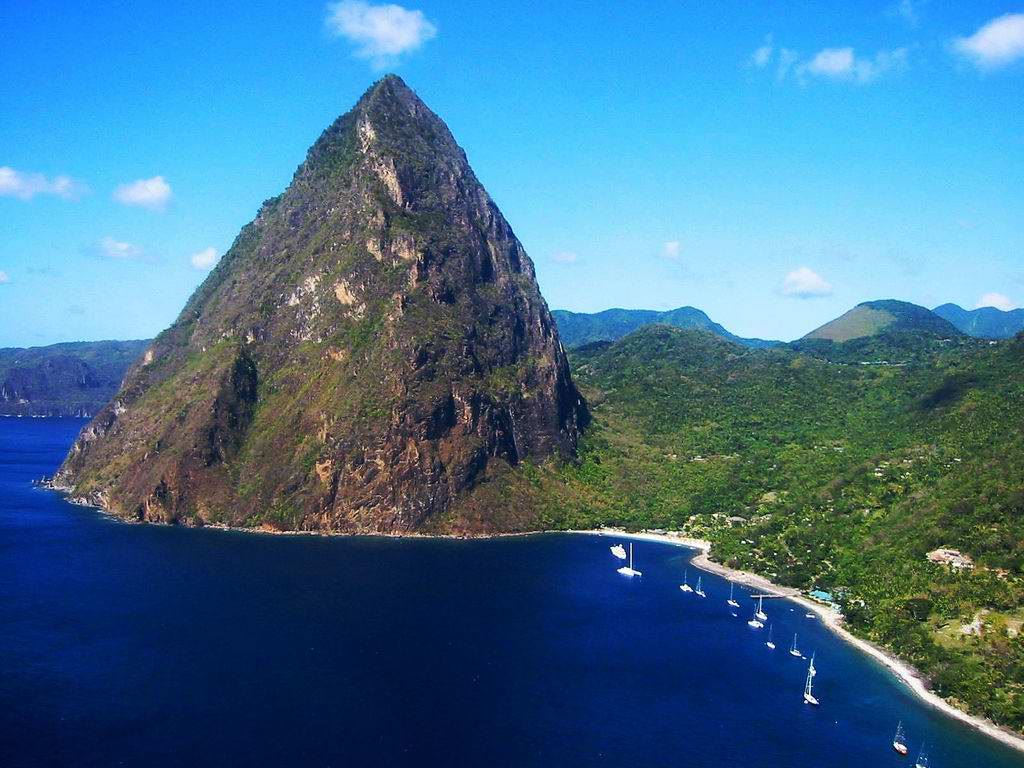
The British were finally victorious in 1814. Villages such as Soufrière began a period of considerable development, becoming fairly prosperous towns, while slavery ensured that the plantations brought the colonists substantial riches. After the abolition of slavery on the island in 1834, conflict between the French and British persisted, along with devastating typhoons and fires, particularly affecting Soufrière and Castries. From 1863, the British began to develop coaling stations on the island, with Castries becoming one of the main stations in the Caribbean, further enhanced by the opening of the Panama Canal in 1914. Demands for independence gradually gained favour, and came to fruition in 1979. The local culture of the island is creole and the population speak both English and a French-sounding patois. The tropical landscape is dominated by the twin volcanic peaks of the Pitons and the coastline is blessed with some glorious beaches.
In recent years the island has produced two Nobel Prize Winners; Arthur Lewis in 1979 for Economics and Derek Walcot in 1992 for Literature.
Bridgetown, Barbados
Barbados offers UK visitors an enticing mixture of the exotic and the familiar. The tropical landscape, coral reefs, white sand beaches and some 3,000 hours of sunshine a year, along with a vibrant nightlife, mouth-watering Bajan cuisine and strong cultural links to England - particularly an obsession with cricket - add up to a delightful and thrilling destination.
The island capital of Bridgetown, situated on the south-western Carlisle Bay (named after the Count of Carlisle who founded Bridgetown in 1630), is a bustling town that encapsulates the verve of Barbadan life. More than a third of the island's 300,000 inhabitants, 'bajans', live in Bridgetown. One of the most pleasant tourist spots in the city is the Careenage inlet waterway, which is lined with recreational boats and dissects the centre of the town.
The English colonial influence in Bridgetown is widely evident, from the street obelisks to the Anglican Cathedral. Broad Street and Trafalgar Square represent the heart of the town, peppered with numerous historical monuments such as a War Memorial and statue of Lord Nelson in addition to the Parliament. The Parliament building has been rebuilt several times, notably after being struck by fire in 1860. Of distinctive interest is the historically important Bridgetown Synagogue on Swan Street - formerly called Jewish Street - originally built in 1654 and restored in the 19th Century. The Barbados Museum and Barbados Garrison will provide history buffs with ample fascination.
When a sightseeing break beckons the numerous foodstalls and rum shops along Bridgetown's streets should provide some suitable refreshment. The town is also a convenient starting point to explore some of the rest of the 33km by 15km island of Barbados. There is an extensive public and private bus service that covers most of the island. The 'mini-moke' is very popular, together with bicycles and scooters.
Pointe-a-Pitre, Guadeloupe
The beautiful island of Guadeloupe is part of the French Antilles and is geologically two islands joined together, Grande Terre and Basse Terre. Point a Pitre is on Grande Terre and is Guadeloupe's largest commercial centre. When Christopher Columbus landed on the southern coast of Basse Terre in 1493 he baptised the beach Santa Maria, and the island Santa Maria de Guadeloupe de Estremadura, subsequently changed to Guadeloupe.
First Spanish settlers, and then French, developed sugar cane production on the islands, which also became centres of the slave trade. Eventually, with the initial help of French revolutionary Victor Hugues and later Victor Schoelcher, the slaves of Guadeloupe were freed. The island is still French territory, administered by a governor appointed by the Paris Ministry of the Interior. The two halves of Guadeloupe are quite different in character.
Grande Terre has a gentler landscape, but is the more lively side, with Pointe a Pitre market, narrow alleyways, picturesque villages and large sugar cane plantations. Basse Terre is more lush and mountainous. It also has one of the Caribbean's few national parks, complete with rivers, rainforest and the dominating presence of the 1,467-metre high Soufrière volcano. The hot springs of Soufrière Park are masterpieces of nature. Both sides of the island have some excellent beaches.
The lifestyle of Guadeloupe is simple and relaxed. A substantial number of the island's villagers still barter for their goods and services rather than use money. And although tourism has flourished, the local economy is still largely based on agriculture. Island attractions include a museum dedicated to local poet, St. John Perse, awarded the Nobel Prize for Literature in 1960, the Schoelcher Museum, dedicated to the slavery abolitionist, and the beach resort of Gosier, one of the most bustling tourist centres in the Lesser Antilles.

Guadeloupe Bay
Guadeloupe Bay
Basseterre, St Kitts & Nevis
St Kitts and its sister island Nevis comprise a tiny nation with a unique history. St Kitts - on which Basseterre is the main town - is the popular derivation of St Christopher, the name given to the island by Christopher Columbus in 1493. Its inhabitants are called "Kittitians". Nevis gets its name from the Spanish word for snow in description of a curtain of white clouds that at one time supposedly always covered the top of the mountain that dominates the island. In 1623, the two islands became a British colony.
The islands maintain a close link to their English heritage, although throughout their modern history the English dominance has been regularly challenged, particularly by the French and Spanish eager to control the islands' considerable sugar cane crop. Nevis in particular attracted much commercial interest - and rivalry - as well as considerable piracy. Many of the islands' 45,000 inhabitants can trace their ancestors to the African slave trade of the 17th Century.
The symbol of contemporary culture on the islands is a carnival, which starts of Christmas Eve and embraces the entire population - and visitors - in a joyous celebration. The St. Kitts Music Festival is also very popular, attracting musicians from all over the Caribbean. The islands, which are part of the British Commonwealth, became independent on September 19, 1983, and have since continued to attract thousands of visitors from around the world.

Tortola
Road Harbour is the port of Road Town, the capital town on the island of Tortola (Turtle Dove) and the British Virgin Islands. Tortola is blessed with glorious secluded beaches, crystal clear waters and lush mountain scenery. The first inhabitants were Arawak and Siboney Indians, to be followed by Spanish, Dutch and English colonists. As in the rest of the Virgin Islands, Tortola was once blighted by pirates and privateers, including Sir Francis Drake, who gave his name to the channel that separates the two main groups of islands. The islands remain a Crown Colony of Britain, with a governor officially appointed by the Queen. Since the 1960s, however, the islands have attracted massive investment by Americans, one of the first being Rockerfeller, to develop tourism. The island's landscape is dominated by Sage Mountain, the highest peak in the Virgin Islands.
The upper section of the mountain is covered in beautiful rainforest. Most of the 17,000 inhabitants of the British Virgin Islands live on Tortola. The commercial and cultural centre of the island is Road Town and its busy port. In the centre of Road Town is the four-acre J.R.O'Neill Botanical Gardens which features 62 species of palm tree, multitudes of tropical flowers, birds and parrots. Popular attractions on the island include picturesque Cane Garden Bay, a frequent venue for street festivals and beach parties. It is also the home of celebrated local musician Quito Rymer, who regularly performs at his restaurant, Quito's Bar & Grill. Another highlight is Mount Healthy Windmill , which preserves one of the first plantations in the archipelago. Bicycle rides and jeep exploration are popular activities on Tortola, as is trekking.
La Romana, Dominican Republic
Although they are relatively new destinations for tourists from Europe and the United States alike, the Dominican Republic and La Romana, a city on the island's beautiful eastern coast, have been attracting visitors for many centuries.
Their vocation is the legacy of what anthropologists have identified as the island's earliest settlers. The Taino Indians are thought by historians to have been a friendly, peace-loving race who farmed the land and lived quietly and simply in harmony both with nature and their fellow men.
Extensive historical evidence of the Taino people has been painstakingly collected and can now be seen in the country's two main museums in Santo Domingo and Puerto Plata. Historians who have studied the island's social and cultural development believe that the Dominican Republic had a highly complex structure. So much so, in fact, that Santo Domingo and La Romana (which was once much smaller than it is today) were once considered the only two cities on the entire continent.
Fact or fiction, legend or history... what is certain is that Taino farmers had their own manuals for farming and fishing, and led highly active lives with plenty of religious activities as well as work. Evidence of this has been passed down through inscriptions and various artefacts, most of them made from the ceramics at which the ancient people of the Dominican Republic excelled.
The first hint of revolution arrived of course with Christopher Columbus's first voyage. The explorer landed in the bay on 5th December 1492. He founded a small village, setting in motion a process of colonisation which soon led the island and its various activities to grow beyond measure.
La Romana emerged as a city of traders and seafarers. Its port became a flourishing cultural hub thanks to its close linguistic ties to the nearby coasts: art and music did the rest. Santo Domingo and La Romana have always been a focal point for trade, wellbeing and entertainment, although they have only been recognised as such universally in the past few decades.
La Romana is not only a thriving, bustling port: it is a beautiful city which boasts all the positive aspects of sea trade. La Romana lies towards the eastern area of the island: with the town of Punta Cana it is the key focus of culture and tourism along the entire coastline. La Romana is also known for its vicinity to San Pedro de Macorìs. Americans are more than familiar with this small village which nestles among sugar cane plantations: it has been feeding the US professional baseball league with natural-born talent for many years.
Near to La Romana lie some of the most stunning beaches on the American continent, including Bayahibe and Dominicus. A short hop from La Romana and the coast, the Saona and Catalina islands have also become enormously popular tourist destinations in recent years. These paradise islands are the ideal location for lovers of the sea at its most unspoilt. Here the beaches stretch for kilometres, and swathes of white sand are lapped by the turquoise waters. It is the perfect setting for a number of beautiful nature reserves, foremost of which is the Parque Nacional del Este, or Eastern National Park. The Park is considered an international heritage site and covers an area of over 420 square kilometres.
Saona Island and the village of Bayahibe lie within the park. In this setting, La Romana is shaking off its image as a port and emerging as the capital of a booming tourist trade. Every year thousands of tourists flock to its beaches, seeking their own corner of paradise where they can forget the stresses and strains of daily life, at least for a few days.
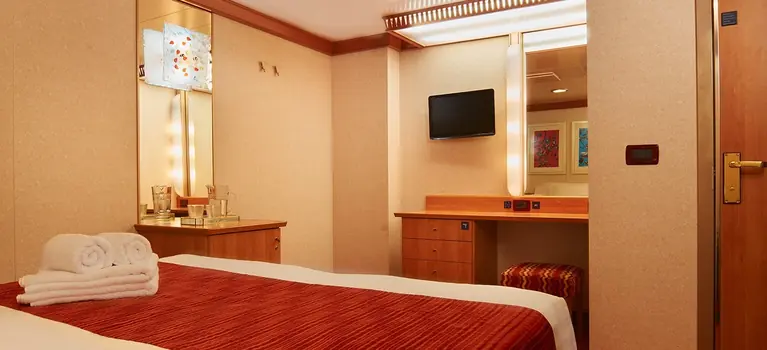
Available cabins for Sun. 27.12. - Sun. 10.01.2027.


Costa Fascinosa

Welcome on board Costa Fascinosa
A tribute to theatre and cinema classics, each deck is inspired by characters, stories, and memorable works, such as Aida, Tosca and Dr Zhivago. This is where you can enjoy all kinds of entertainment, from evening shows to relaxation at the spa or by the pool.
And for the kids? There is an Aqua Park just for them and a fairy-tale castle where they can imagine all the greatest adventures.
And there’s even more: musicals, casino, game rooms and lounge bars to play the leading role of your holiday, as though you were living in a film.
Featured activities