

Costa Diadema: KEL - SVN - KEL12A0G
1 available date
Itinerary
Kiel, Germany
When it comes to the sea, there is no more important place in Germany – and arguably in Northern Europe – than Kiel. This port city in Schleswig-Holstein is a vital link between the Baltic and North Seas, located at the head of the Kiel Canal.
Kiel is also one of Northern Europe’s major cruise and shipbuilding centers, and it is especially known for Kieler Woche (Kiel Week), one of Europe’s largest regattas. Don’t miss a visit to the Kiel Aquarium, with its rich collection of marine life from the Baltic and North Seas.
Nature lovers can enjoy the expansive Baltic Sea beaches, seaside promenades, and picturesque botanical gardens with over 14,000 plant species. For those seeking historical and cultural experiences, fascinating open-air museums in Molfsee and the Baroque fortress in Eutin are located not far from Kiel.
Choose a Kiel cruise for unforgettable adventures in this captivating part of Germany.

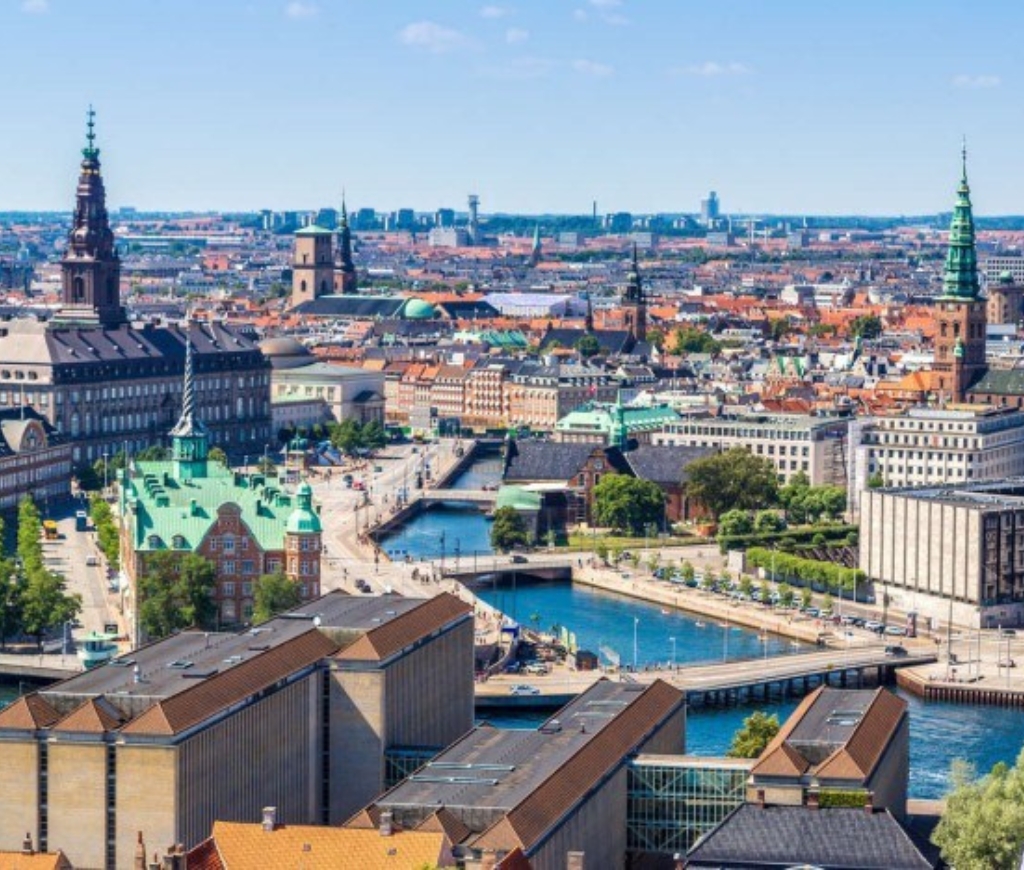
Copenhagen, Denmark
Copenhagen, the capital of Denmark, delights everyone – from history lovers eager to explore magnificent Baroque palaces to gourmands looking to indulge in Michelin-starred restaurants.
In the city center, you’ll find three impressive royal landmarks: Christiansborg Palace (seat of the Danish Parliament), Rosenborg Castle (home to the Danish crown jewels), and Amalienborg Palace (residence of the Danish royal family).
Culture and history enthusiasts can enjoy numerous museums and galleries, while those seeking relaxation will appreciate the city's laid-back pace, extensive cycling paths, and beautiful parks – we recommend a leisurely coffee along the Nyhavn canal or the thrill of historic rides at the Tivoli Gardens amusement park. The city’s symbol, The Little Mermaid statue, pays homage to the fairy tales of Hans Christian Andersen and is a must-see photo spot.
Whether you're looking for an urban adventure, royal grandeur, world-class dining, or simply want to soak up the atmosphere of Scandinavian life – Copenhagen will win you over with its effortless elegance and warm hospitality.

Le Havre (Paris), France
The local gastronomy is rich in fresh seafood and traditional Norman specialties such as cheeses, cider, and calvados.
Easily accessible from Paris, Le Havre is the perfect escape from the bustle of the capital and a chance to discover a unique mix of modern urban architecture and authentic French coastal charm.


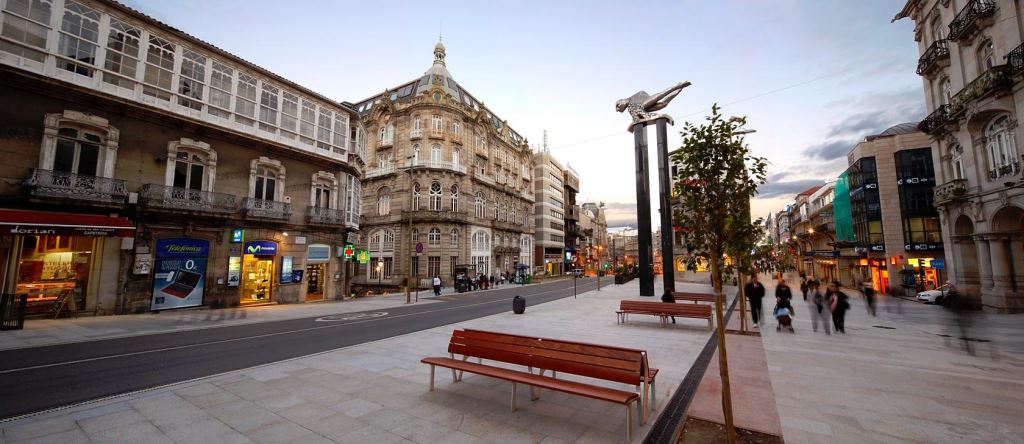
Vigo (Santiago de Compostela), Spain
Santiago de Compostela is one of the most famous holy places of Christianity; in Mediaeval times it was just as important as Jerusalem or Rome. According to legend, James the Apostle (Santiago) came to Spain after the death of Jesus to preach the Gospel. Later he returned to Judea where, under the orders of Herod, he was decapitated.
His disciples took his body back to Spain to be buried. At first the faithful came to his tomb to pray but, after years of war and disorder, it lay abandoned and forgotten. At the beginning of the 9th century a hermit noticed a star shining above a hill in a field ("campus stellae" or "field of the star"). An altar and a tomb were discovered on the site, containing a decapitated body. King Alfonso II of Asturias ordered a church to be built on the tomb of the saint, which was later replaced by a larger one in 900 AD. Al-Mansur sacked the city in 997 and destroyed the church, but the tomb was left intact.
The present cathedral was largely rebuilt in the 11th and 12th centuries. The cult of Saint James grew more and more with stories of his presumed brave intervention in the battles against the Moors. The Saint was seen to appear for the first time at the battle of Clavijo in 884. Over the years, Saint James killer of the Moors, who went down in history as "Santiago Matamoros", was honoured as the Patron Saint of the country. Pilgrims from all over Europe, ever greater in number, travelled along the so-called "Camino de Santiago" (The Way of Saint James) to the sanctuary, around which grew up a town.
Along the way they found hospitality with monks and knights of religious orders. With their rough cloaks, robust sandals and wide brimmed hats decorated with a mollusc shell - the symbol of the saint - the pilgrims on their way to Santiago were easy to recognise. Many visitors are surprised to find a baroque rather than a mediaeval cathedral at Santiago. The first view of the cathedral in fact is the highly ornate Obradoiro facade, added in the 18th century. Behind this, however, is the old church with its magnificent doorway, the Pórtico de la Gloria (1188), a Roman masterpiece by Maestro Matheo. The narthex is comprised of three portals decorated with figures and sculptures in relief.
In front of the central column, where there is a statue of St. James with a pilgrim's stick, the faithful would lean with their hands on the stone, which, repeated so often over the centuries, has left fingerprints in the stone. The inside of the cathedral, always in semi-darkness, is simple but enlivened by the magnificent ceremonies that take place on festival days, when eight men dressed in red carry an enormous silver thurible ("botafumeiro"), hang it from the vault and let it swing. Whistling and throwing off sparks, the thurible spreads the scent of incense throughout the cathedral evoking ancient rites. The immense Plaza de España, on the west side of the cathedral is lined with beautiful buildings from various eras and in various styles, but which nevertheless blend together harmoniously.
The Hostal de los Reyes Católicos was built by King Fernando and Queen Isabel, "The Catholic Monarchs", as a hostel and hospital for the pilgrims. Its plateresque facade conceals a magnificent hotel. You can treat your palate to some Spanish specialities par excellence: paella and gazpacho vary widely from one place to the next. In fact there are at least thirty recipes for gazpacho, a chilled soup of Moorish origin, whose main ingredients are tomatoes, cucumbers, peppers, oil, vinegar and basil. The saffron rice in paella can be accompanied by chicken, rabbit, sausage, ham, prawns, shellfish, squid and lobster.
The region produces the good white wines Albarino and Ribeiro; Agullo and Condado are slightly sparkling and go especially well with shellfish. As for shopping, we recommend leather goods, candlesticks and other handmade wrought-iron articles and silver jewellery, for which the Galicians are famous. In Santiago look for the pilgrim's symbol, the silver mollusc shell.
Lisbon (Cascais), Portugal
Lisbon, the capital and largest city of Portugal, is situated at the mouth of the Tagus River along the Atlantic coast. This historic and dynamic city is known for its unique blend of traditional charm, modern culture, and impressive architecture, making it one of Europe’s most attractive metropolitan destinations.
The city boasts a rich history dating back to Roman times, with vibrant neighborhoods like Alfama, Bairro Alto, and Belém exuding an authentic Mediterranean spirit. Narrow streets, picturesque squares, vintage trams, and the aromas of traditional cuisine create a special atmosphere that captivates visitors. Lisbon is also famous for its historic landmarks, including the imposing Belém Tower, the Jerónimos Monastery, and São Jorge Castle, which offers magnificent panoramic views of the city and the river.
A special highlight of Lisbon is fado – traditional Portuguese music filled with emotion and melancholy, often performed in small, intimate venues in the old quarters of the city. This unique musical form is deeply connected to the spirit of Lisbon and is a must-experience for anyone seeking authentic Portuguese culture. The gastronomy scene is especially notable, ranging from traditional pastéis de nata to top-tier restaurants blending Portuguese and international flavors.
The promenade along the Tagus River and lively squares such as Praça do Comércio are ideal spots for leisurely walks, coffee breaks, or evening outings. The city also offers numerous green spaces, parks, and viewpoints perfect for relaxation and enjoying the views.
Lisbon is a perfect destination for those wanting to experience a blend of history, culture, art, and modern urban life, with a warm Mediterranean atmosphere and welcoming local people.


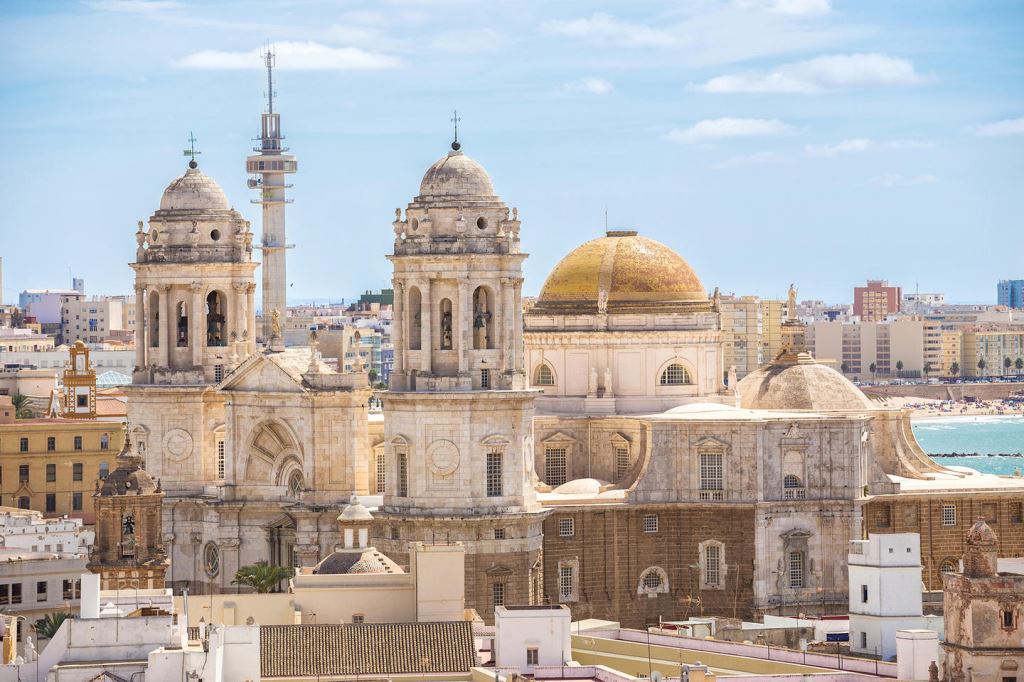
Cadiz (Seville), Spain
Cadiz is one of the oldest continuously inhabited cities in Europe, founded over 3,000 years ago by the Phoenicians as the trading port of Gadir. Throughout history, it was conquered by the Romans, Visigoths, and Moors, and during the Spanish Golden Age, it became an important port for trade with the New World. Today, the city offers a rich history and cultural landmarks.
Notable sights include the cathedral with its distinctive golden dome, the Torre Tavira tower with panoramic views and the Camera Obscura optical device, the Roman theater dating back to the 1st century BC, the Plaza de las Flores square, and the historic La Viña district known for its restaurants and authentic atmosphere. Cadiz also boasts beautiful beaches such as La Caleta and La Victoria Beach, which offer various activities and amenities.
The local cuisine is based on fresh seafood, with famous dishes like fried fish called ‘pescaíto frito’ and shrimp fritters known as ‘tortillitas de camarones’. The Mercado Central de Abastos market provides an opportunity to taste local delicacies.
The city is also known for the flamenco singer El Chano, whose music has become a symbol of authentic flamenco and an important part of the cultural heritage.

Barcelona, Spain
Barcelona, the capital of Catalonia, is a city with a rich and diverse history that dates back to the Roman era. Over the centuries, it was under Roman, Arab, Byzantine, and Christian rule, all of which have left a lasting mark on its architecture and cultural identity. During the Middle Ages, Barcelona became an important commercial and cultural center of Catalonia, and in the 19th century, it experienced significant industrial and urban development.
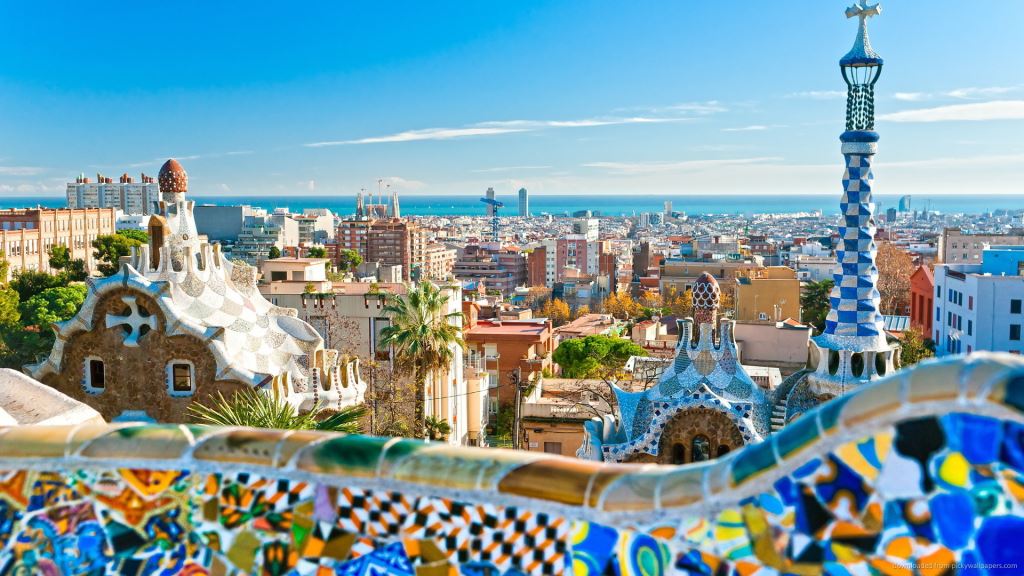
One of the most notable architects associated with Barcelona was Antoni Gaudí, whose works such as the Sagrada Família, Park Güell, Casa Batlló, and Casa Milà have become iconic symbols of the city. His unique style, which blends elements of Gothic, Modernism, and natural forms, has made Barcelona a uniquely vibrant urban space. Among the city’s most famous attractions are La Rambla, a lively promenade stretching from Plaça de Catalunya to the sea, and the Gothic Quarter (Barri Gòtic), the old part of the city filled with medieval alleys, buildings, and churches, including the Cathedral of Saint Eulalia. The artistic spirit of the city can also be felt in the Picasso Museum and the Joan Miró Foundation, which house works by two of Catalonia’s greatest artists.
Barcelona is also renowned for its famous football club, FC Barcelona, whose stadium Camp Nou attracts thousands of visitors eager to experience the passion and pride that Catalans have for their team.
The city also offers a rich culinary scene – from its famous tapas to traditional dishes such as paella, fideuà, zarzuela, and the dessert crema catalana. A highlight is the Boqueria Market, where visitors can taste local products and delicacies. Today, Barcelona is one of the most visited cities in Europe, offering a perfect blend of history, art, architecture, sport, gastronomy, and Mediterranean spirit.

Marseille (Provence), France
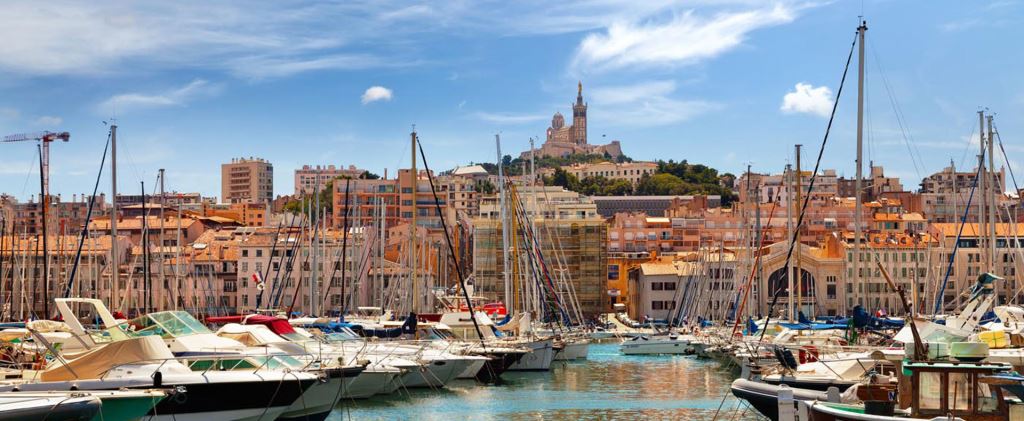
Marseille, the second largest city in France and one of the oldest cities in Europe, boasts a rich history and vibrant atmosphere, situated along the sparkling Mediterranean Sea. Founded by the Greeks over 2,600 years ago, the city has been influenced by many civilizations throughout the centuries, leaving a lasting mark on its architecture and identity.
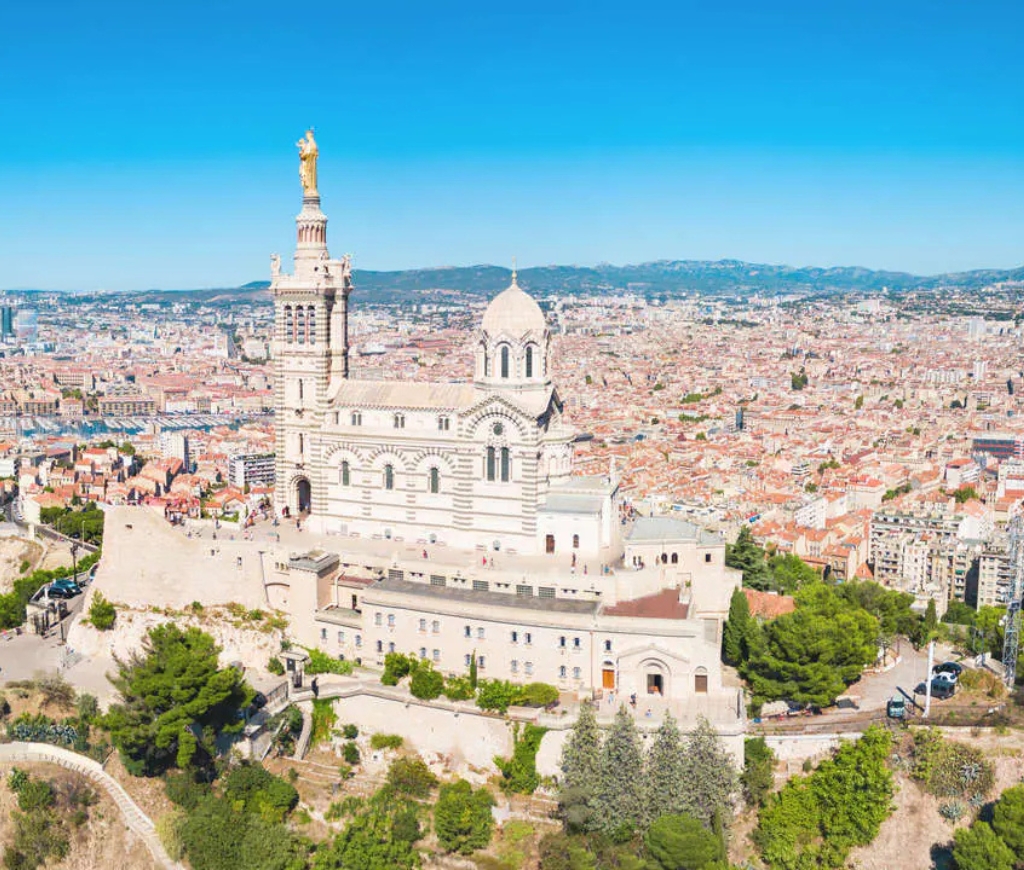
Among its main attractions is the Old Port (Vieux Port) – the heart of city life, recognizable by its boats, cafés, and restaurants. The impressive Notre-Dame de la Garde basilica, perched on a hill, offers panoramic views of the city, the islands, and Château d’If, the famous fortress from The Count of Monte Cristo. Also notable are the historic Le Panier district and MuCEM, a modern museum dedicated to Mediterranean culture.
Marseille’s cuisine includes specialties such as bouillabaisse – a traditional fish soup, and panisse – chickpea cakes. The city is full of authentic restaurants offering local flavors.
Nearby, the Calanques National Park is famous for its spectacular cliffs and clear waters, while charming towns like Aix-en-Provence and the fishing village of Cassis make perfect day trips. Wine lovers can explore the Provencal vineyards and enjoy tastings.
Colorful streets and historic buildings tell stories of the past, while sunsets over the sea create a special, warm atmosphere worth experiencing. Marseille is a place where tradition meets modern energy, ideal for pleasant moments and discovering authentic Mediterranean culture.
Savona, Italy
Savona, located on the Ligurian coast of Italy, is much more than just a seaport and a starting point for cruises – it is a historical and cultural treasure offering a rich experience for all lovers of art, architecture, and history. The city's numerous landmarks testify to its important role throughout the centuries. Among the most notable historical and cultural attractions is the Cathedral of San Giovanni Battista, built in the 16th century, featuring an elaborately decorated Baroque façade, frescoes, and an altarpiece dedicated to Saint John the Baptist. Nearby is Piazza del Duomo, the main city square, surrounded by important buildings such as the Town Hall (Palazzo del Comune).
A special experience is offered by the monumental Priamar Fortress from the 16th century, which used to defend the city and today provides panoramic views of the sea and hosts cultural events. Savona is also proud of the Renaissance Della Rovere Palace, associated with the powerful family of the same name, as well as the Church of San Francesco, known for its simple yet dignified architecture. History and art enthusiasts should definitely visit the Salvatori Museum, which offers insight into the city’s development through art collections, archaeological finds, and historical artifacts.
Even a short stay in Savona offers the opportunity to explore its rich historical and cultural heritage. The city is a perfect place to walk through history and enjoy the local atmosphere, providing you with an unforgettable experience.

Available cabins for Fri. 10.09. - Wed. 22.09.2027.


Costa Diadema
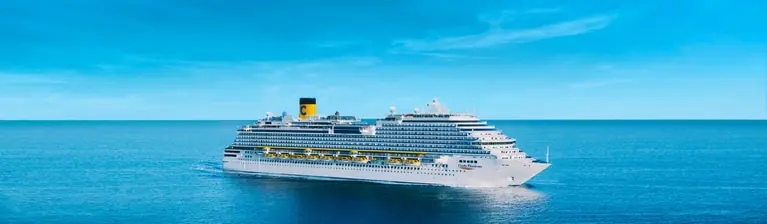
Welcome on board Costa Diadema
During the day and in the evening, you will be spoilt for choice of activities; from walks at sunset, to performances and theatre shows where international artists will perform.
Care for an aperitif? The Aperol Spritz Bar is waiting for you! And after dinner? A games room to bring out the kid in you, or an excellent beer in a real German pub.
You will find an entire deck dedicated to children that even has a Castle and Pirate galleon.
And for moments of pure relaxation, there is a great spa available where you can enjoy a massage while looking at the sea – a real treat!
Featured activities