

MSC WORLD AMERICA: Cruise from Miami to Mexico and Puerto Rico
9 available dates
Itinerary
Set sail on a grand cruise aboard MSC World America through the heart of the Caribbean. From sunny Miami, the route continues to the Honduran island of Roatan, Mexican Costa Maya and Cozumel with their rich Mayan heritage, the private island of Ocean Cay MSC Marine Reserve, Puerto Plata in the Dominican Republic, and colonial San Juan in Puerto Rico. Elegant European design meets American comfort aboard a ship powered by cleaner fuel.
-
 INTERNET BROWSE & STREAM - 2 DEVICES×Book now and save up to 25% vs onboard price!
The "Browse & Stream - 2 devices Cruise Package" keeps you connected with friends and family all cruise long.
With this package you can browse the web, send and receive emails and images, chat on messenger apps (e.g. WhatsApp), video chat, stream music and videos and post and live stream on social media.- Internet access for 2 devices
- Duration: entire cruise
- Data limit: unlimited
-
 DEEP TISSUE MASSAGE - 50 MIN×A DEEP RHYTHMIC FULL BODY MASSAGE THAT WORKS THERAPEUTICALLY TO TARGET THE DEEPER MUSCLE LAYERS WHICH ALLEVIATES STRESS, KNOTS AND DEEP MUSCLE TENSION.
 -
 Trilogy - Three Exclusive Dining Experiences×
Book now and save up to 15%!
Take the chance to taste the variety of our exclusive and distinctive cuisine available in the Specialty Restaurants of our ships.
Includes:
- Three unique dining experiences in three different Specialty Restaurants
- Great savings vs onboard prices
A dining experience (lunch or dinner) menu will be offered to guests who purchase the Trilogy package. The menu delivers the Specialty Restaurants concepts experience. The package includes food only. Day of booking to be confirmed on board. Specialty restaurants vary by ship and must be part of each ship's Trilogy Package selection.
-
 INTERNET BROWSE - 2 DEVICES×Book now and save up to 25% vs onboard price!
The "Browse - 2 devices Internet Cruise Package" keeps you connected with friends and family all cruise long.
With this package you can browse the web, send and receive emails and images and chat on messenger apps (e.g. WhatsApp)- Internet access for 2 devices
- Duration: entire cruise
- Data limit: unlimited
- Not recommended for video chat
-
 Swedish Massage - 50 min×Book now and save up to 45% vs onboard price!
A traditional full body massage that promotes relaxation and well being, easing tired and aching muscles.
- Duration: approx. 50 minutes of treatments
This offer is only valid to anyone over the age of 18 years old.Your package is valid for the full cruise length and can only be used during our opening hours depending on availability.To secure your preferred day and time, please visit the MSC Aurea Spa reception on your embarkation day.
-
 FANTASTICA EXPERIENCE BENEFITS×Fantastica Experience Benefits: Choice of cabin category and location (In the event of change cabin due to operational reasons, guests will be granted either a cabin category or a deck upgrade ) One free cruise change (Must be performed up to 30 calendar days before departure, for a cruise within 90 calendar days from the original departure) Discounted drink package option at the time the cruise is booked Dinner sitting preference (subject to availability) Full board available in buffet and main restaurant 24-hour room service (free delivery) Free continental breakfast in cabin (free delivery) Broadway-style theater shows Pool area Kids club and activities Fitness center free access (from 14 years Booking Terms and Conditions apply) Sport facilities Entertainment activities MSC for Me (where available) MSC Voyagers Club points Discounted packages offer.
Miami, United States
With a population of around 360,000, but almost 5 million in the entire urban area, Miami is Florida's most heavily populated city. It began to expand in 1896 when railway reached the city and Miami became a municipality. The pleasant climate and idyllic landscapes with numerous kilometres of beach propelled the city towards its first economic boom in the 1930s, although even greater development was to take place in the '50s.
Thanks to the mild climate, particularly in the winter when the majority of major cities on the East Coast of the US are at freezing point, Miami quickly carved out a role for itself in the tourism industry.
The city is also strategically located opposite the Caribbean and just 145km from Cuba: heavy Cuban immigration has consequently helped shape the identity of Miami in terms of culture and language. Indeed half of the city's population is now of Hispanic origin.
The city is divided into distinct neighbourhoods, some of which have separate and independent local governments, such as Miami Beach. Biscayne Boulevard is the main attraction in the area around the port and is flanked by large parks such as Bayfront Park and the Bicentennial Park; to the south of the port lies the financial district.
In downtown Miami, Flager Street is where to head to do a bit of shopping in the department stores and clothes, electronics, sports and jewellery shops. In the Metro Dade Center you can visit the Museum of Southern Florida, the city's main library, and the Museum of Fine Arts, which holds temporary modern art exhibitions. Coconut Grove is Miami's oldest district and has become, over time, an exclusive and refined residential area. Here you will find the local government offices, City Hall's home is an ex-1930s hangar. Other places of note in the neighbourhood include Peacock Park and the Dinner Key, Miami's tourist port.
Little Havana is the Cuban district characterised by an almost Caribbean atmosphere where Spanish is spoken more readily than English. The main road Calle Ocho runs through the district, which is lined with shops and cafés, whilst other places of interest include the Museum of the Cuban Arts and Culture, the Museum of Science and the Máximo Gómez Park.
Six kilometres to the east of Miami is Miami Beach, an island comprising a long, thin strip of sand connected to the mainland by a system of bridges. The southern end of Miami Beach is called South Beach and it is here that the city's recent rebirth began.
Miami's image had been tarnished in the '80s by heavy crime, racial violence, and the drugs and gambling culture that has been synonymous with the city since the 1930s when it was one of the few places in the States untouched by Prohibition.
The Art Deco Historic District, built up in the 1920s and noted for its pastel, rose, lavender and turquoise colour houses, has recently been restored and represents an excellent example of the urban restoration of modern architecture, attracting thousands of tourists each year. But Miami Beach also means the seafront and the famous Ocean Drive that separates the beach from the infinite numbers of bars and restaurants. An never-ending parade of bizarre cars, roller-skaters, skateboarders, and super-accessorised Harley Davidsons ensure that visitors remain amused.
As with the rest of the culture in Florida, food and drink in Miami has a heavy Cuban and Caribbean influence: the fish and seafood caught in the Atlantic and the Gulf of Mexico form the base of the most popular dishes.
Florida is also known for its large-scale production of fruit and vegetables, and is one of the biggest producers in the States.


At sea


Isla de Roatan, Honduras
The island of Roatán was discovered by Christopher Columbus during his fourth voyage in 1502, but soon became an English colony and a favourite haunt of pirates, who found safe shelter at Port Royal (as the capital Roatán City, or Coxen's Hole, was then known). At the turn of the seventeenth century the Spanish estimated that the island harboured around 5,000 English buccaneers. During the second half of the eighteenth century, the British deported the indigenous Caribs of the island of St. Vincent to Roatán, where they mixed with former black slaves.
In 1859 the island became part of Honduras and adopted Spanish as its official language. Roatán's population is thus composed of the descendents of the early settlers and pirates, descendents of the black slave population and Honduran Amerindians. Consequently, the somatic traits of its inhabitants are surprisingly mixed and the population features various types of people.
Situated 50 km from the northern coast of Honduras, Roatán has an area of 300 km2 and a population of approximately 7000. It is the largest of the Islas de la Bahia, an archipelago that also includes the islands of Guanaja and Utila and is the continuation of the Belize Barrier Reef. The long, narrow island of Roatán is around 50 km in length, although its maximum width is just 5 km, making it possible to see both the island's northern and southern coasts in some spots. The road network is still fairly new and indeed the island has just one surfaced road running from west to east, whilst the intersecting roads are actually just dirt tracks.
It rains frequently and the island has an average of 20 days of rain each month. The driest months are January and February. As a consequence of the abundant rainfall, Roatán is covered with masses of luxuriant vegetation with lush woods and forests. The rain has also favoured agricultural activity, most notably the cultivation of bananas, but also sugarcane and various precious woods.
Roatán City, located on the southeastern coast, is the island's capital and has a population of approximately 4,000. It is within easy reach of the best beaches such as Flowers Bay, French Harbour and Brick Bay, as well as the splendid and world-famous West Bay Beach. The waters around the island are simply spectacular and snorkelling and diving are among the favourite activities of visitors. The sea is teeming with tropical fish, various species of coral and sponges. Tropical groupers can be encountered by divers in the area known as Peter's Place. The wealth of marine fauna has also enabled the development of a fishing industry, which exports mainly prawns and lobster.
The village of Oak Ridge is another very interesting spot and is surrounded by canals with mangroves, a fishing port and colourful pile-dwellings. Here one can admire the remains of the British fortifications once visited by the admiral of the Royal Navy, Lord Nelson.
In addition to the typical, brightly coloured Caribbean garments, local crafts include pottery and various objects produced from wood, especially mahogany, which is used for sculptures, furnishings and cutlery. The local shops also sell plenty of cigars and interwoven wooden items.
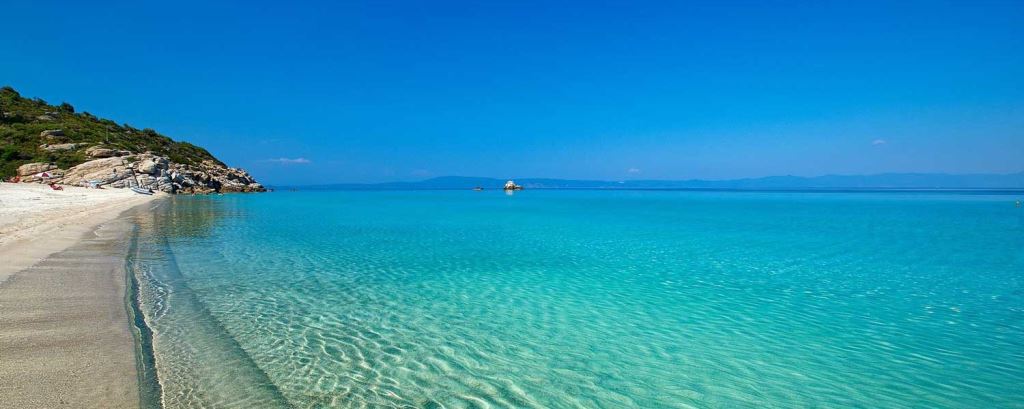
Costa Maya, Mexico
Cozumel, Mexico
The island of Cozumel is one of the most popular tourist destinations in the world, attracting an estimated 20 million people a year keen to enjoy its unique mix of glorious beaches, superb diving and ancient archaeological sites. The town of Cozumel is the perfect place to relax in the tropical sun and the perfect gateway to the island's ancient treasures.
The first evidence of civilisation on Cozumel dates back to the Mayans of 300 BC. Cozumel's importance to Mayan society came from its vantage point as a port and from its apparent powers of fertility. Mayan women would travel to the island in their thousands in the hope that the special properties of the area would furnish their children with good health and good luck. It is possible today to see the excavated ruins of San Gervasio, a holy Mayan monument, originally a temple built to honour Ixchel, the Mayan god of medicine, love and fertility.
The Mayans' fortunes suffered after the arrival of the Spanish conquistadors in 1519 and many of its culture masterpieces were plundered. This beleaguered state, during which the island remained virtually deserted, remained for several hundred years until Cozumel's importance as a trading post in the gum trade and then as an American anti-submarine base during World War II revived its importance.
On the south of the island, Chankanaab national park offers some delightful diving in a lagoon packed with a colourful array of tropical fish and turtles. It is also on this side of the island that the village of Cedral is situated, which includes a Mayan site decorated with ancient drawings.

At sea
Ocean Cay MSC Marine Reserve,Bahamas
Miami, United States
With a population of around 360,000, but almost 5 million in the entire urban area, Miami is Florida's most heavily populated city. It began to expand in 1896 when railway reached the city and Miami became a municipality. The pleasant climate and idyllic landscapes with numerous kilometres of beach propelled the city towards its first economic boom in the 1930s, although even greater development was to take place in the '50s.
Thanks to the mild climate, particularly in the winter when the majority of major cities on the East Coast of the US are at freezing point, Miami quickly carved out a role for itself in the tourism industry.
The city is also strategically located opposite the Caribbean and just 145km from Cuba: heavy Cuban immigration has consequently helped shape the identity of Miami in terms of culture and language. Indeed half of the city's population is now of Hispanic origin.
The city is divided into distinct neighbourhoods, some of which have separate and independent local governments, such as Miami Beach. Biscayne Boulevard is the main attraction in the area around the port and is flanked by large parks such as Bayfront Park and the Bicentennial Park; to the south of the port lies the financial district.
In downtown Miami, Flager Street is where to head to do a bit of shopping in the department stores and clothes, electronics, sports and jewellery shops. In the Metro Dade Center you can visit the Museum of Southern Florida, the city's main library, and the Museum of Fine Arts, which holds temporary modern art exhibitions. Coconut Grove is Miami's oldest district and has become, over time, an exclusive and refined residential area. Here you will find the local government offices, City Hall's home is an ex-1930s hangar. Other places of note in the neighbourhood include Peacock Park and the Dinner Key, Miami's tourist port.
Little Havana is the Cuban district characterised by an almost Caribbean atmosphere where Spanish is spoken more readily than English. The main road Calle Ocho runs through the district, which is lined with shops and cafés, whilst other places of interest include the Museum of the Cuban Arts and Culture, the Museum of Science and the Máximo Gómez Park.
Six kilometres to the east of Miami is Miami Beach, an island comprising a long, thin strip of sand connected to the mainland by a system of bridges. The southern end of Miami Beach is called South Beach and it is here that the city's recent rebirth began.
Miami's image had been tarnished in the '80s by heavy crime, racial violence, and the drugs and gambling culture that has been synonymous with the city since the 1930s when it was one of the few places in the States untouched by Prohibition.
The Art Deco Historic District, built up in the 1920s and noted for its pastel, rose, lavender and turquoise colour houses, has recently been restored and represents an excellent example of the urban restoration of modern architecture, attracting thousands of tourists each year. But Miami Beach also means the seafront and the famous Ocean Drive that separates the beach from the infinite numbers of bars and restaurants. An never-ending parade of bizarre cars, roller-skaters, skateboarders, and super-accessorised Harley Davidsons ensure that visitors remain amused.
As with the rest of the culture in Florida, food and drink in Miami has a heavy Cuban and Caribbean influence: the fish and seafood caught in the Atlantic and the Gulf of Mexico form the base of the most popular dishes.
Florida is also known for its large-scale production of fruit and vegetables, and is one of the biggest producers in the States.
At sea
Puerto Plata, Dominican Republic
San Juan, Puerto Rico
American-owned Puerto Rico is the largest and most populated of an archipelago of several islands. It is a rectangular shaped island with fertile coasts and a rugged, fairly mountainous interior with lush rainforest. The island is one of the most densely populated areas of land in the world, with more than a third of the three million-plus inhabitants living in the busy capital, San Juan.
Numerous American companies operate on the island, while tourism remains one of the main industries. Christopher Columbus first landed on Puerto Rico in 1493. Fifteen years later Spanish conquistadors arrived and fought off the objecting native Taino Indians, killing a large number of them. The first governor was Ponce de Leon, who had previously travelled with Columbus and who thought the island might be the location of the Fountain of Youth. When this proved not to be the case, he left the island to continue his quest elsewhere.
Spain continued to develop the island, exploiting its crops of sugar and cotton and expanding its maritime activities. The Spanish hung on to the island in the face of rivalry from the English, French and Dutch, before losing out to the US in the 1898 Spanish-American war. The status of the island was consolidated by legal statute in 1917, when the population was given US citizenship, but not the US vote.
The capital of San Juan is divided into two distinct areas. One, the walled old town, is reflected in delightful Spanish colonial buildings, cobbled streets and ancient churches, the other in modern hotels, restaurants and casinos. The cultural mix of the population is also distinctive, a combination of Taino Indians, Spanish and other Europeans, Africans, Americans and, more recently, Cubans. As one of Puerto Rico's best known citizens, Ricky Martin, once said of his country: "It is not one thing, it is one thousand things together and even if I could list them all, it would be better to simply say Puerto Rico; maybe this is why I find it so easy to sing in Spanglish, the language spoken in the quarter where I was born."

At sea
At sea
Ocean Cay MSC Marine Reserve,Bahamas
Miami, United States
With a population of around 360,000, but almost 5 million in the entire urban area, Miami is Florida's most heavily populated city. It began to expand in 1896 when railway reached the city and Miami became a municipality. The pleasant climate and idyllic landscapes with numerous kilometres of beach propelled the city towards its first economic boom in the 1930s, although even greater development was to take place in the '50s.
Thanks to the mild climate, particularly in the winter when the majority of major cities on the East Coast of the US are at freezing point, Miami quickly carved out a role for itself in the tourism industry.
The city is also strategically located opposite the Caribbean and just 145km from Cuba: heavy Cuban immigration has consequently helped shape the identity of Miami in terms of culture and language. Indeed half of the city's population is now of Hispanic origin.
The city is divided into distinct neighbourhoods, some of which have separate and independent local governments, such as Miami Beach. Biscayne Boulevard is the main attraction in the area around the port and is flanked by large parks such as Bayfront Park and the Bicentennial Park; to the south of the port lies the financial district.
In downtown Miami, Flager Street is where to head to do a bit of shopping in the department stores and clothes, electronics, sports and jewellery shops. In the Metro Dade Center you can visit the Museum of Southern Florida, the city's main library, and the Museum of Fine Arts, which holds temporary modern art exhibitions. Coconut Grove is Miami's oldest district and has become, over time, an exclusive and refined residential area. Here you will find the local government offices, City Hall's home is an ex-1930s hangar. Other places of note in the neighbourhood include Peacock Park and the Dinner Key, Miami's tourist port.
Little Havana is the Cuban district characterised by an almost Caribbean atmosphere where Spanish is spoken more readily than English. The main road Calle Ocho runs through the district, which is lined with shops and cafés, whilst other places of interest include the Museum of the Cuban Arts and Culture, the Museum of Science and the Máximo Gómez Park.
Six kilometres to the east of Miami is Miami Beach, an island comprising a long, thin strip of sand connected to the mainland by a system of bridges. The southern end of Miami Beach is called South Beach and it is here that the city's recent rebirth began.
Miami's image had been tarnished in the '80s by heavy crime, racial violence, and the drugs and gambling culture that has been synonymous with the city since the 1930s when it was one of the few places in the States untouched by Prohibition.
The Art Deco Historic District, built up in the 1920s and noted for its pastel, rose, lavender and turquoise colour houses, has recently been restored and represents an excellent example of the urban restoration of modern architecture, attracting thousands of tourists each year. But Miami Beach also means the seafront and the famous Ocean Drive that separates the beach from the infinite numbers of bars and restaurants. An never-ending parade of bizarre cars, roller-skaters, skateboarders, and super-accessorised Harley Davidsons ensure that visitors remain amused.
As with the rest of the culture in Florida, food and drink in Miami has a heavy Cuban and Caribbean influence: the fish and seafood caught in the Atlantic and the Gulf of Mexico form the base of the most popular dishes.
Florida is also known for its large-scale production of fruit and vegetables, and is one of the biggest producers in the States.
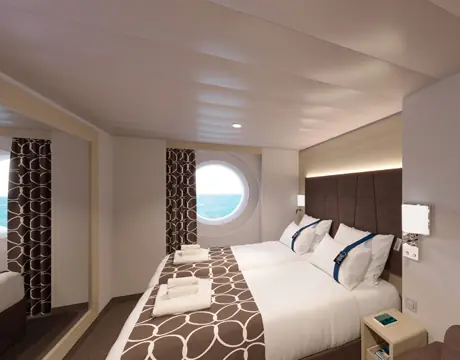
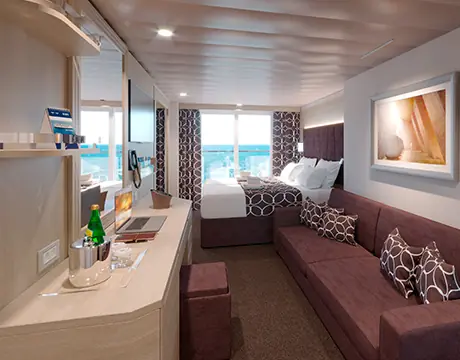
Available cabins for Sat. 05.12. - Sat. 19.12.2026.



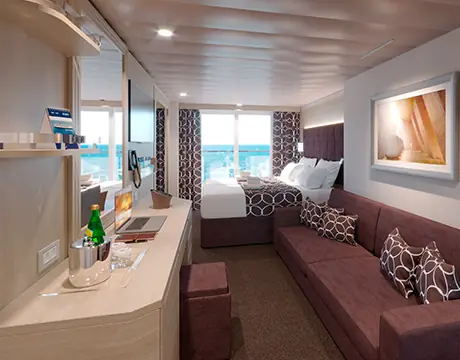


MSC WORLD AMERICA
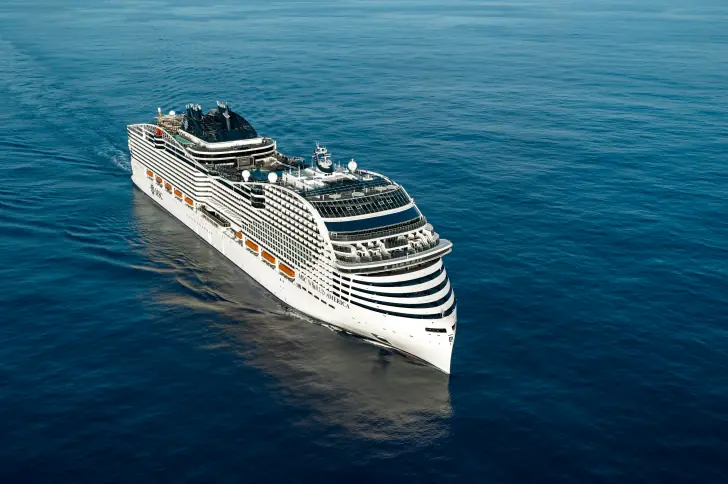
A New World of Cruising
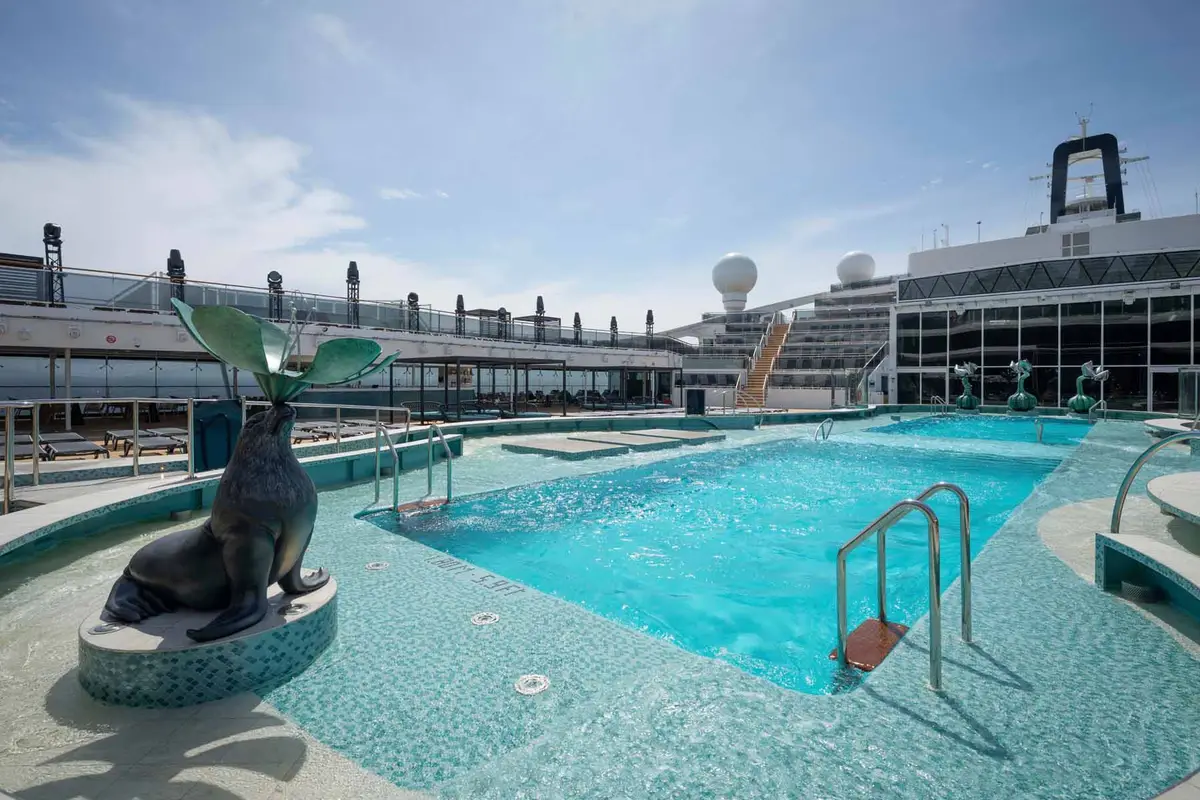
Discover A New World of Cruising on board MSC World America, MSC Cruises new World Class ship.
A world where the elegant European design meets American comfort. A world that’s revolutionary yet harmonious, for a ship that meets the needs of the present and the future. A ship for guests of all ages from all around the globe.